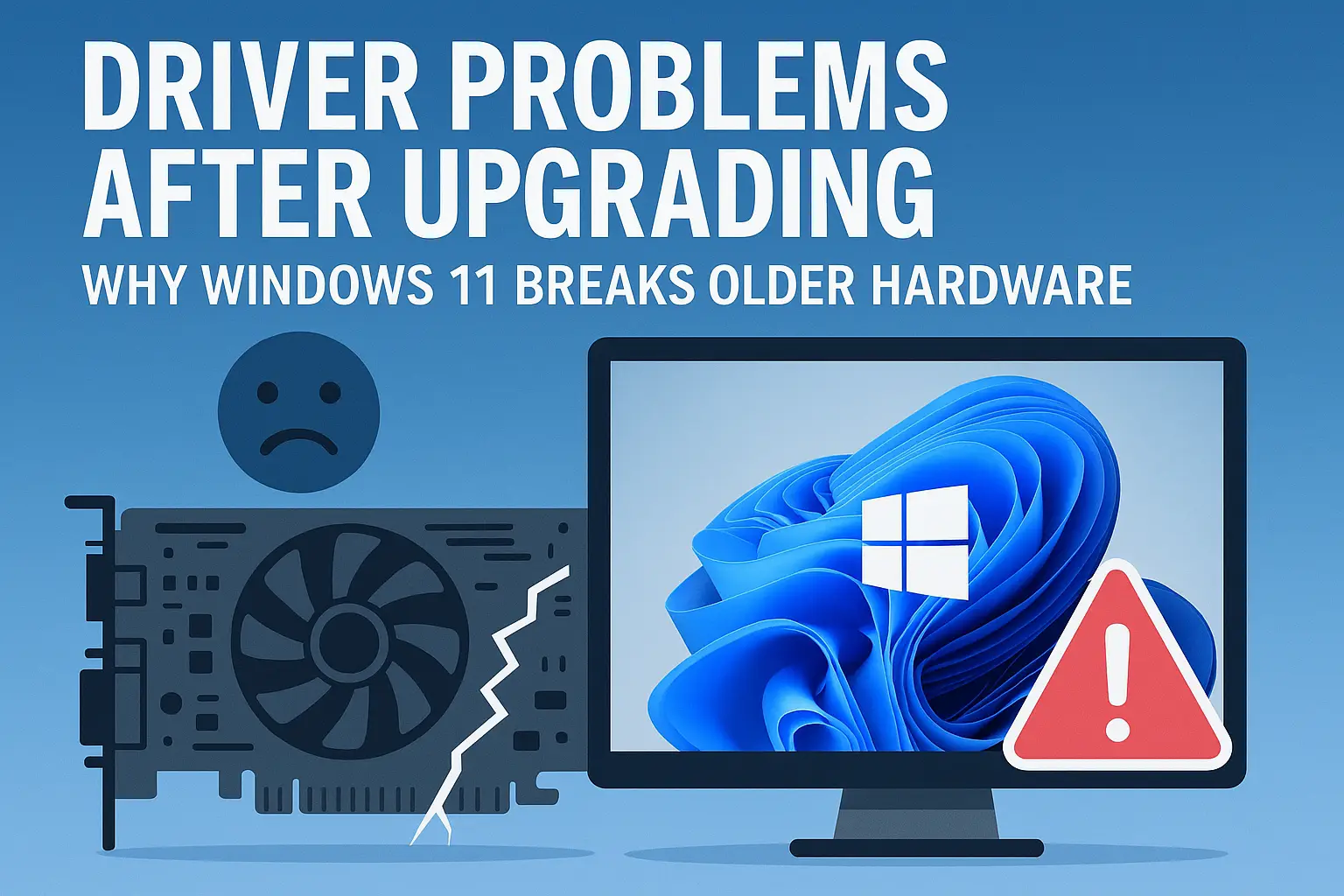
Voor veel organisaties, de overgang van Windows 10 naar Windows 11 brengt verbeterde veiligheid, gemoderniseerde UI-elementen, en nauwere integratie met cloud-diensten. De upgrade laat echter ook een kritiek pijnpunt zien: drivercompatibiliteit. Als IT-teams duwen Windows 11 over diverse hardware vloten, ze vaak geconfronteerd met problemen variërend van storing randapparatuur tot regelrechte apparaat storingen. Deze verstoringen zijn zelden te wijten aan één enkele oorzaak; in plaats daarvan zijn ze het gevolg van architectonische veranderingen, strengere veiligheidseisen en een evoluerend aandrijfecosysteem dat prioriteit geeft aan moderne hardware.
Begrijpen waarom Windows 11 worstelt met oudere stuurprogramma's is essentieel voor IT-professionals die operationele continuïteit moeten handhaven, downtime moeten minimaliseren en hardware strategisch moeten vernieuwen.
The Shift Toward Modern Driver Architecture
Windows 11 zet Microsoft zijn inspanningen voort om het model van het stuurprogramma van Windows te moderniseren. Legacy stuurprogramma's gebouwd op oudere kaders Veel van deze oudere bestuurders vertrouwen op verouderde functies die om veiligheidsredenen niet meer worden ondersteund of beperkt.
Het besturingssysteem verwacht dat stuurprogramma's voldoen aan nieuwere normen zoals DCH-conforme stuurprogrammapakketten, waardoor hardwarefabrikanten gedwongen worden stuurprogramma's te herpakken of te herontwerpen. Apparaten zonder leveranciersondersteuning of geschreven met verouderde architecturen breken vaak tijdens of na de upgrade.
Beperkingen op veiligheidsverharding en kernelniveau
Een van de bepalende doelen van Windows 11 is het versterken van endpoint security. Het besturingssysteem zorgt voor strengere kernelbeschermingen, waaronder Virtualization-Based Security (VBS), Hypervisor-Protected Code Integrity (HVCI) en geheugenisolatiemechanismen. Hoewel deze bescherming moderne aanvalsvectoren verzacht, blokkeren ze ook oudere kernelmodedrivers die niet voldoen aan de moderne vereisten inzake code-ondertekening en compliance.
Niet-signed of legature-signed stuurprogramma's die onder Windows 10 functioneren kunnen volledig worden afgewezen, waardoor oudere apparaten niet-functioneel totdat bijgewerkte stuurprogramma's worden gevonden.
Verouderde Hardware en Leverancier Verlaten
Een belangrijke bijdrage aan het falen van de bestuurder is simpelweg verlaten. Veel hardware leveranciers stoppen met het produceren van bijgewerkte stuurprogramma's zodra een apparaat einde-van-life status bereikt, vaak na slechts een paar jaar. Printers, scanners, webcams, industriële apparaten en consumentenrandapparatuur vallen vaak in deze categorie.
Windows 10 onderhouden brede achterwaartse compatibiliteit, waardoor veel veroudering apparaten te functioneren via generieke stuurprogramma's of compatibiliteit lagen. Windows 11 verplicht compatibiliteit veel strenger, wat betekent dat niet-ondersteunde hardware vaak verliest functies of stopt met werken volledig. Dit is vooral problematisch voor organisaties die oude apparatuur exploiteren die niet onmiddellijk kunnen worden vervangen.
Problemen met grafische en weergave stuurprogramma's
Grafische stuurprogramma's vertegenwoordigen een van de meest voorkomende probleemgebieden in Windows 11 upgrades. Systemen die oudere GPU's gebruiken, met name voor 2016 NVIDIA, AMD en Intel-modellen, kunnen gebroken weergave-uitvoer, ontbrekende resolutieopties, trage prestaties of instabiliteit tegenkomen.
Dit is te wijten aan het besturingssysteem dat nieuwere WDDM versies vereist die veel oudere grafische kaarten niet kunnen ondersteunen. Zelfs wanneer basis display functionaliteit werkt, geavanceerde functies zoals hardware versnelling, meerdere monitoren, of HDR vaak falen of degraderen.
Netwerk- en draadloze adapterstoringen
Netwerkstuurprogramma's zien ook aanzienlijke verstoring na het upgraden naar Windows 11. Legacy Wi-Fi-adapters, ethernetcontrollers en Bluetooth-modules kunnen connectiviteit verliezen of intermitterende storingen vertonen. In veel gevallen vervangt Windows 11 bestaande stuurprogramma's door generieke substituten die geen volledige functionaliteit of vermogensbeheeroptimalisaties hebben.
Dit kan leiden tot onstabiele VPN-verbindingen, verminderde doorvoer, of compatibiliteitsproblemen met enterprise authenticatieprotocollen zoals 802.1X. Voor IT-omgevingen die afhankelijk zijn van consistente connectiviteit, kunnen deze storingen wijdverspreide productiviteitsproblemen veroorzaken.
Ondersteuning voor randapparatuur die functies verliest
Zelfs wanneer oudere randapparatuur blijft functioneren op een basisniveau onder Windows 11, geavanceerde functies vaak stoppen met werken. Multifunctionele printers kunnen scanmogelijkheden verliezen, audio interfaces kunnen kanaalondersteuning laten vallen, en speciale hardware zoals biometrische apparaten, kaartlezers of medische hulpmiddelen kunnen gedeeltelijk of volledig onverenigbaar worden.
Deze storingen zijn meestal het gevolg van ontbrekende leverancier-specifieke stuurprogramma's die nooit zijn bijgewerkt voor Windows 11 of vertrouwen op verouderde API's. Organisaties in gereguleerde of van apparatuur afhankelijke industrieën voelen dit effect het sterkst, omdat ze hardware niet zomaar kunnen vervangen zonder substantiële operationele planning.
De limieten van Windows Update Driver-levering
Microsoft vertrouwt sterk op Windows Update om stuurprogramma's te leveren, met name voor apparaten zonder speciale leverancier management tools. Hoewel dit model handig is, brengt het risico's met zich mee. Windows Update kan generieke of niet-matched stuurprogramma's duwen tijdens of na een upgrade, het overschrijven van stabiele door de leverancier verstrekte versies. Dit leidt vaak tot prestatiedalingen, audioproblemen, perifere ontkoppeling, of systeem instabiliteit.
IT-professionals moeten daarom een streng beleid voeren om ongewenste updates te voorkomen, vooral voor missiekritische of legacy hardware.
BIOS en firmware afhankelijkheden
Veel Windows 11-compatibele stuurprogramma's vereisen bijgewerkte firmware om correct te functioneren. Systemen die verouderde BIOS versies kunnen falen tijdens de installatie van de bestuurder of onvoorspelbaar gedrag vertonen. Firmware-niveau afhankelijkheden zijn vooral gebruikelijk bij opslagcontrollers, USB-subsystemen, TPM-componenten en geïntegreerde GPU's.
Het waarborgen van stabiele werking vereist vaak gecoördineerde updates van BIOS, chipsetdrivers, en OS-niveau componenten een proces dat complex wordt bij het omgaan met grote of geografisch verspreide apparaten vloten.
Effect op IT-activiteiten en levenscyclusplanning
Driver problemen aanzienlijk verhogen ondersteuning overhead tijdens Windows 11 migraties. IT-teams worden vaak geconfronteerd met:
• Verhoogde helpdesk tickets na implementatie
• Onverwachte vervangingskosten voor hardware
• Uitgebreide compatibiliteit testcycli
• Uitdagingen die consistente eindpunten behouden
Organisaties met strakkere budgetten of gespecialiseerde apparatuur ondervinden de ernstigste verstoringen. Deze kwesties onderstrepen het belang van strategische levenscyclusplanning, leverancierscommunicatie en proactieve compatibiliteitsbeoordelingen.
Conclusie
Windows 11 introduceert betekenisvolle architectonische en veiligheid vooruitgang, maar deze verbeteringen komen met substantiële afwegingen voor oudere hardware. Driver incompatibiliteit is een van de meest ontwrichtende uitdagingen IT professionals geconfronteerd, vaak dwingen moeilijke beslissingen over hardware vervanging, uitgebreide testen, of alternatieve OS ondersteuning strategieën. Door inzicht te krijgen in de oorzaken van deze storingen en een gestructureerd migratieplan uit te voeren, kunnen organisaties de verstoring verminderen en een stabiele, veilige werkomgeving behouden als ze overgaan naar het Windows 11 tijdperk.

 12967
12967  IT Pro