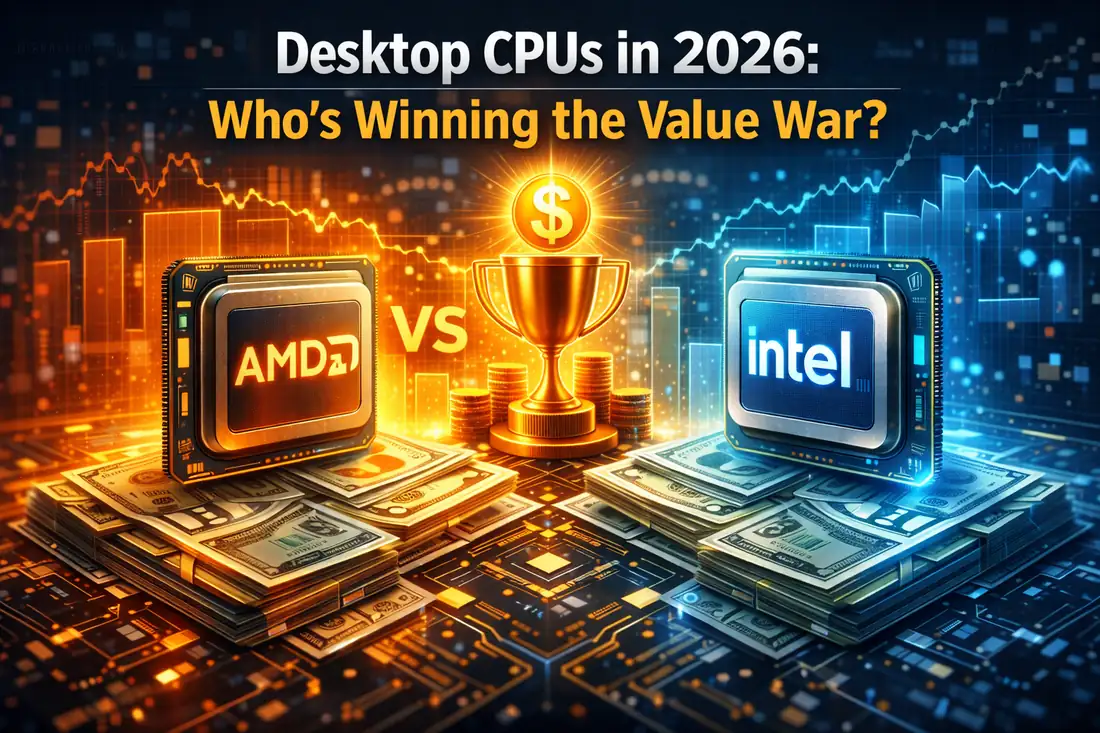
Desktop-CPUs im Jahr 2026 fühlen sich weniger wie ein einfacher "schnellster Chip gewinnt" -Wettbewerb an und eher wie ein Wertkrieg, der über die gesamten Plattformkosten, Strombudgets, Stabilität und die chaotische Realität gemischter Workloads geführt wird. Für IT-Profis geht es bei „Value selten um einen einzigen Benchmark. Es geht um die CPU, die eine vorhersagbare Leistung für Ihren Workload-Mix liefert, in Ihre thermische und Stromhülle passt, Plattformüberraschungen vermeidet und sinnvoll bleibt, wenn Sie Motherboard, Speicher, Kühlung, Lebenszyklus und Support-Overhead berücksichtigen.
Der heikle Teil: Die Definition von "Gewinn" ändert sich, je nachdem, ob Sie Entwickler-Workstations bereitstellen, einen kleinen Virtualisierungs-Host erstellen, Inhaltsersteller unterstützen oder Desktops der Gaming-Klasse für eine Labor- und Trainingsumgebung standardisieren. Aus diesem Grund ist der Wertkrieg von 2026 so wettbewerbsfähig: Der Mainstream-Desktop ist zu einer "Do-Everything" -Box geworden, und die CPU-Wahl bestimmt, wie viel Sie in den nächsten Jahren ausgeben (und wie viel Schmerz Sie absorbieren werden).
Was "Wert" tatsächlich in 2026 Desktop Procurement bedeutet
In einer Welt, in der rohe Leistungssteigerungen in kleineren, inkrementelleren Schritten ankommen als früher, verschiebt sich der Wert von Spitzenwerten zu Konsistenz und Gesamtkosten. Für die IT-Entscheidungsfindung umfasst die vertretbarste Definition des Desktop-CPU-Werts typischerweise:
- Preis-Leistung in Ihren realen Workloads (Compiles, VMs/Container, CAD, Content Creation, Analytics, Endpoint Security Overhead).
- Plattformkosten (Motherboard-Ebene, Speichertyp/Geschwindigkeitsanforderungen, erforderliche Kühlung, PSU-Headroom, Gehäuseluftstrom).
- Energieeffizienz unter Dauerbelastung (Stromkosten, Wärme, Lüftergeräusche, Drosselungsrisiko, Stabilität bei langen Arbeiten).
- Betriebsvorhersagbarkeit (BIOS-Reife, Firmware-Kadenz, Schedulerverhalten, Treiberstabilität, Kompatibilität mit Ihrer Toolchain).
- Lifecycle und Support (Plattform Langlebigkeit, Verfügbarkeit, Lieferantenvalidierung, Sicherheitshaltung, Garantie und Ersatzteilstrategie).
Der Fehler, den viele Teams immer noch machen, ist die Bewertung von "Wert" als Einzelpunktzahl. Im Jahr 2026 kann eine CPU, die wie ein Schnäppchen aussieht, teuer werden, wenn sie ein High-End-Board erzwingt, eine aggressive Kühlung erfordert oder sich unvorhersehbar mit Ihrem Hypervisor, EDR-Agenten oder Ihrer Creative Suite verhält.
Die versteckten Kosten von "Billig": Motherboards, Speicher und Kühlung
Desktop-CPUs existieren selten isoliert. Die Plattform um sie herum kann die Gesamtrechnung um Hunderte von Dollar pro Sitz schwingen, und das ist, bevor Sie Bauzeit, Fehlersuche und Ersatzteile zählen.
In der Praxis zeigt sich die Plattform „Value Trap meist an drei Stellen:
- Drift der Motherboard-Ebene: Funktionen, die Sie für optional hielten, werden obligatorisch (robustere VRM, zusätzliche M.2-Slots, bessere NICs, mehr USB, verbesserte BIOS-Unterstützung). Eine CPU, die Sie von einem Midrange-Board zu einem Premium-Board schubst, kann ihren Preisvorteil auslöschen.
- Gedächtnisverhalten: DDR5 ist die Norm, aber die Stabilität bei höheren Geschwindigkeiten und Kapazitätskonfigurationen variiert immer noch je nach Board- und Firmware-Reife. Für die IT kommt der beste Wert oft von "langweiligen" Speicherprofilen, die das RMA-Risiko und intermittierende Probleme reduzieren.
- Kühlung und Leistungsreserve: Wenn die beste Leistung einer CPU nachhaltig hohe Leistung erfordert, zahlen Sie Kühlkörper, Luftstrom und Lärm - plus die Kosten für die Drosselung von Überraschungen, wenn der Fall oder die Umgebungstemperatur nicht ideal ist.
Wenn Ihr Unternehmen Dutzende von Desktops bereitstellt, wird die „Plattformsteuer skaliert. Der Value-Gewinner ist oft die CPU, mit der Sie eine stabile, leicht verfügbare Motherboard-SKU, vorhersehbare Memory-Kits und eine bescheidene Kühlung standardisieren können, ohne Ihre Zielleistung zu beeinträchtigen.
Wie sich der Value War nach Workload und nicht nach Marke aufteilt
Der nützlichste Weg, um zu beurteilen, wer im Jahr 2026 „gewinnt, besteht darin, den Markt in arbeitslastgesteuerte Wertklassen aufzuteilen. In jeder Klammer kann sich der Value Leader verschieben, weil sich der Flaschenhals verschiebt:
1) Produktivität und Bürolast Flotten: Der Wert Sweet Spot ist "genug Kerne, starke Reaktionsfähigkeit, geringer Aufwand". Hier sind Energieeffizienz und iGPU-Verhalten wichtig, ebenso wie die Fähigkeit, in kleinen Formfaktorfällen leise und zuverlässig zu laufen.
2) Developer Workstations und Mixed Compute: Compils, Container und lokale Testumgebungen lieben Cores und Speicherbandbreite, bestrafen aber auch Instabilität. Sie wollen konsistente All-Core-Performance und gute I / O, nicht gelegentliche Benchmark-Heroiken.
3) Erstellung von Inhalten und „Prosumer-Produktion: time-to-complete für Renders, Encodes und KI-unterstützte Workflows ist wichtiger als Peak FPS. Effizienz wird zu echtem Geld, wenn Entwickler täglich nachhaltige Workloads ausführen.
4) Gaming- und Visualisierungs-Rigs: Der Wert wird zu einem Gleichgewicht aus starkem Single-Thread-Verhalten, Cache- und Latenzeigenschaften und genügend Kernen, um beim Streamen, Erfassen oder Ausführen von Hintergrundwerkzeugen glatt zu bleiben.
"Wer gewinnt" ist keine Antwort. Es ist eine Reihe von Antworten, je nachdem, für welche Klammer Sie kaufen - und ob Sie den Wert zum Kaufzeitpunkt oder nach 24 Monaten realer Nutzung messen.
The Midrange Battleground: Wo der Wert am wettbewerbsfähigsten ist
Die Mittelklasse bleibt das Zentrum des Wertekrieges, weil dort die meisten Unternehmen kaufen und wo die Performance-pro-Dollar-Gewinne normalerweise am steilsten sind. Im Jahr 2026 hängt der Mittelwert typischerweise von drei Merkmalen ab:
- Ausgewogene Kernzahlen: Genug Parallelität für modernes Multitasking und Hintergrundsicherheitstools, ohne eine Prämie für Kerne zu zahlen, die Sie selten verwenden.
- Plattform mit geringer Reibung: Mainstream-Chipsätze mit stabiler BIOS-Unterstützung und guter Verfügbarkeit.
- Effizienz ohne Drama: CPUs, die unter anhaltenden Lasten eine konstante Leistung erbringen, ohne dass eine „Enthusiastenkühlung erforderlich ist, um konsistent zu bleiben.
Für die IT ist der Mittelklasse-Gewinner oft die CPU, die in der täglichen Arbeit "nah genug" zu höheren Ebenen führt, während Sie Premium-Boards, extreme Kühlung und unnötigen Stromverbrauch vermeiden können. Wenn Sie in einer Flotte standardisieren, schlägt Konsistenz die Prahlereirechte.
Integrierte Grafik, Media Engines und der Vorteil „No Discrete GPU
Der Wert im Jahr 2026 beinhaltet zunehmend, was Sie vermeiden können, zu kaufen. Integrierte Grafiken (und insbesondere die Media-Engine und die damit verbundene Treiberreife) können ein legitimer Wertmultiplikator in Business-Desktops, Entwicklerboxen und sogar Creator-Rigs sein, die auf schnellen Codes und Vorschauen basieren.
Überlegen Sie, wo eine iGPU-zentrierte Strategie gewinnen kann:
- Kostensenkung: Der Wegfall einer diskreten GPU senkt die Stückkosten, reduziert die PSU-Anforderungen und verbessert den Luftstrom und die Akustik.
- Zuverlässigkeit: weniger bewegliche Teile, weniger Fahrerkonfliktflächen, weniger Ausfallpunkte.
- Einfachheit der Bedienung: einfachere Bildgebung und Bereitstellung für standardisierte Desktops.
Für einige IT-Umgebungen ist die "Value-Gewinner"-CPU diejenige, mit der Sie eine leistungsstarke iGPU bereitstellen können, um Multi-Monitor-Setups, Hardware-Decode / -Code und leichte GPU-beschleunigte Workflows abzudecken, während Sie diskrete GPUs für die Handvoll Rollen reservieren, die sie wirklich benötigen.
Leistung, Thermik und warum Effizienz ein Beschaffungsmerkmal ist
Im Jahr 2026 ist Effizienz kein Nice-to-have - es ist Beschaffungsmathematik. Die Stromkosten dominieren möglicherweise nicht das Budget eines einzelnen Desktops, aber sie sind absolut wichtig, wenn Sie Hunderte von Sitzen ausführen oder wenn eine Teilmenge von Benutzern täglich hohe Workloads aushält.
Effizienz beeinflusst auch:
- Leistungsstabilität: Weniger Drosselung unter langen Lasten bedeutet bessere Zeit bis zum Abschluss und weniger "Warum ist dieser Job plötzlich langsamer?"
- Akustik und Benutzerzufriedenheit: leisere Systeme reduzieren Beschwerden und erhöhen die wahrgenommene Qualität, insbesondere in offenen Büros.
- Langlebigkeit der Komponente: anhaltende Hitzebelastungen VRMs, Lüfter und Stromversorgung. Kühlere Plattformen neigen dazu, anmutiger zu altern.
Der Value War bei Desktops belohnt zunehmend CPUs, die eine starke nachhaltige Leistung liefern, ohne das gesamte System in ein thermisches Profil von Mini-Workstations zu versetzen. Für IT-Profis bedeutet dies weniger Supportanrufe und eine konsistentere Benutzererfahrung.
Scheduler und OS Reality: Windows, Linux und Mixed-Core-Verhalten
Desktop-CPU-Architekturen sind nuancierter geworden, und Wert ist nicht nur Silizium - so plant das Betriebssystem echte Arbeit. Für IT-Teams kann die „beste CPU variieren, je nachdem, ob Ihre Umgebung:
- Windows-zentriert mit Heavy Endpoint Security, Collaboration Tooling und Produktivitäts-Apps.
- Linux-schwer für Entwickler, CI-Tooling, Container und lokale Virtualisierung.
- Gemischt mit Dual-Boot, WSL und Hypervisoren in der Schleife.
Praktische Wertanleitung für die IT: Wählen Sie die Plattform, die sich vorhersehbar mit Ihrem tatsächlichen Betriebssystem-Build, Ihrem Hypervisor und Ihrem Sicherheitsstapel verhält. Wenn das Leistungsprofil einer CPU von einem sehr spezifischen Scheduler-Verhalten abhängt, sollten Sie es mit Ihrem realen Bild validieren, nicht mit einer sauberen Benchmark-Umgebung.
The Fleet Mindset: Wert ist auch Verfügbarkeit und Standardisierung
Verbraucherdiskussionen ignorieren oft die wichtigste IT-Frage: "Kann ich die gleiche Konfiguration für die nächsten 6-12 Monate zuverlässig kaufen?" Selbst eine großartige CPU wird zu einem schlechten Wert, wenn die Versorgungsvolatilität Sie dazu zwingt, SKUs in einer Flotte zu fragmentieren.
Standardisierungswert zeigt sich als:
- Weniger Bilder zu pflegen: weniger Edge Cases, weniger Treiber- und Firmware-Permutationen.
- Einfachere Ersatzteilstrategie: konsistente Boards, konsistentes RAM, konsistente Kühler.
- Wiederholbarere Leistung: Weniger Zeit jagen "Warum ist diese eine Maschine anders?" Anomalien.
In vielen realen IT-Umgebungen ist der Value-Gewinner die Anbieter-Plattform-Kombination, die konsistent verfügbar bleibt, mit stabilen Firmware-Updates und einem Motherboard-Ökosystem, das keine häufigen Substitutionen im mittleren Zyklus erzwingt.
Wie man entscheidet, wer gewinnt: Ein praktischer Value Evaluation Framework
Wenn Sie eine vertretbare Antwort auf "Wer gewinnt den Wertkrieg" wollen, brauchen Sie einen wiederholbaren Rahmen. Hier ist ein praktischer Ansatz, der sich gut für die IT-Beschaffung und die Standardisierung von Arbeitsplätzen eignet.
Beginnen Sie mit der Definition von drei internen "Value Scores" basierend auf Ihren Prioritäten:
- Workload Value Score: Leistung in Ihren Top-Workloads pro Dollar, getestet mit Ihren echten Softwareversionen und Einstellungen.
- Platform Value Score: CPU + Board + RAM + Kühlung + PSU Headroom, einschließlich Ihres Standardteilekatalogs und bevorzugter Anbieter.
- Operational Value Score: Stabilität, Firmware-Reife, Supportlast und Benutzererfahrung im Laufe der Zeit.
Dann validieren Sie mit einem Piloten, der die "lästigen Realitäten" enthält: EDR aktiviert, Verschlüsselung aktiviert, Ihre Standard-Browsererweiterungen, Collaboration-Apps und die Hintergrundtools, die Ihre Benutzer tatsächlich ausführen. Der Wertkrieg 2026 wird oft am Rande entschieden - wo sich eine Plattform entweder vorhersehbar unter Last verhält oder langsam Reibung ansammelt.
Wo Wert oft für gewöhnliche IT-Personas landet
Ohne den Wert als eine einzige universelle Antwort zu behandeln, können Sie dennoch typische Ergebnisse für gemeinsame Bereitstellungsprofile abbilden:
General Office und Admin Desktops: Der Wert neigt dazu, CPUs zu bevorzugen, die eine starke Reaktionsfähigkeit bei geringer Leistung bieten, sich gut mit einer bescheidenen Kühlung verbinden und zuverlässige Anzeige- und Medienfunktionen ohne diskrete GPU bieten.
Workstations für Entwickler: Der Wert begünstigt oft eine ausgewogene Multi-Core-Performance und Plattformstabilität mit vielen schnellen Speicheroptionen. Teams, die häufig bauen und Container lokal betreiben, profitieren in der Regel von mehr Kernen und höherer Speicherkapazität - vorausgesetzt, die Thermik bleibt gesund.
IT-Profis, die Heimlabore auf Desktop-Hardware betreiben: Der Wert hängt typischerweise von der Unterstützung der Speicherkapazität, dem I/O-Layout und dem anhaltenden All-Core-Verhalten ab. Eine "gute" CPU, die teure Boards erzwingt oder in einem 24/7-Szenario zu heiß läuft, hört schnell auf, ein Deal zu sein.
Content-Ersteller innerhalb der Organisation: Wertverschiebungen in Richtung Time-to-Complete, Glatt Timeline Scrubbing und zuverlässige Codierung / Decodierung Beschleunigung. Eine stabile, effiziente Plattform, die hohe Arbeitsbelastungen ohne thermisches Drama ausführen kann, gewinnt häufig eine etwas schnellere, aber temperamentvolle Alternative.
Gaming/Visualisierungs-Rigs für Training, Labor oder eSport: Der Wert bevorzugt oft ein starkes Single-Thread-Verhalten und Eigenschaften mit geringer Latenz, aber der Flottenwinkel ist immer noch wichtig - besonders wenn Sie konsistente Builds und minimale Fehlersuche benötigen.
The Bottom Line: Der "Value Winner" Ist die Plattform, die Ihnen Zeit spart
Desktop-CPUs im Jahr 2026 sind in einem engen Wertkrieg gefangen, und das sind gute Nachrichten für IT-Käufer - Wettbewerb macht es schwieriger, eine wirklich schlechte Wahl zu treffen. Aber die wirklichen Gewinner werden nicht von einem einzigen Chart bestimmt. Sie werden davon bestimmt, wie gut die CPU zu Ihrer Umgebung passt: Ihre Workloads, Ihr Imaging-Prozess, Ihr Support-Modell, Ihre Strom- und Kühlstandards und Ihre Beschaffungsrealitäten.
Wenn Sie die praktischste Definition von "Gewinn des Value War" für die IT wünschen, ist es dies: die CPU-Plattform, die die erforderliche Leistung mit der geringsten Reibung liefert - weniger Überraschungen, weniger thermische Probleme, weniger Fahrerkopfschmerzen, weniger Substitutionen im mittleren Zyklus - und die vorhersehbarsten Lebenszykluskosten.
Mit anderen Worten, die beste Desktop-CPU im Jahr 2026 ist diejenige, die Ihren Benutzern hilft, Arbeit zu erledigen, während Sie Ihrem Team helfen, sich aus dem Fehlerbehebungsmodus herauszuhalten. Benchmark-Gewinne sind schön. Operationelle Gewinne sind, was tatsächlich die Rechnungen bezahlen.


 12976
12976  IT Pro