Μπαταρίες δεν παίρνουν συνήθως την επεξεργασία κύκλου διαφημιστική που κάνουν οι ΚΜΕ και οι GPUs, αλλά το 2026 είναι ήσυχα αποφασίζουν τι «σύγχρονη IT» αισθάνεται σαν ημέρα με τη μέρα. Εάν οι χρήστες σας διαμαρτύρονται ότι οι φορητοί υπολογιστές γκάζι, τα τηλέφωνα λειτουργούν ζεστό, χειρός πεθαίνουν μέσης βάρδιας, ή η χρέωση στόλου EV είναι ένας συνεχής πονοκέφαλος προγραμματισμού, είστε ήδη ζουν σε μια μπαταρία-περιορισμένη κόσμο. Η διαφορά στο 2026 είναι ότι οι βελτιώσεις της μπαταρίας φθάνουν από πολλαπλές κατευθύνσεις ταυτόχρονα: χημεία, σχεδιασμός πακέτων, θερμική διαχείριση, αλγόριθμοι φόρτισης, και η στοίβα λογισμικού τυλιγμένο γύρω τους.
Για τους επαγγελματίες της πληροφορικής, η πραγματική ανακάλυψη δεν είναι ένα μόνο θαύμα υλικό. Είναι ένας νέος φάκελος λειτουργίας: ταχύτερη ανανέωση, λιγότερη θερμική δράμα κάτω από παρατεταμένο φορτίο, και μεγαλύτερη χρήσιμη ζωή πριν η ικανότητα ξεθωριάσει γίνεται ένα helpdesk και πρόβλημα προμηθειών. Το αποτέλεσμα είναι μια αλλαγή στον τρόπο με τον οποίο σχεδιάζουμε τους στόλους συσκευών, την επιτόπου χρέωση, την πολιτική ασφάλειας, και τον προϋπολογισμό του κύκλου ζωής. Αυτό το άρθρο αναλύει τι αλλάζει σημαντικά, γιατί έχει σημασία σε περιβάλλοντα επιχειρήσεων, και πώς να αξιολογήσει τους ισχυρισμούς χωρίς να παγιδευτεί από αριθμούς μάρκετινγκ που δεν ταιριάζουν με πραγματικό φόρτο εργασίας.
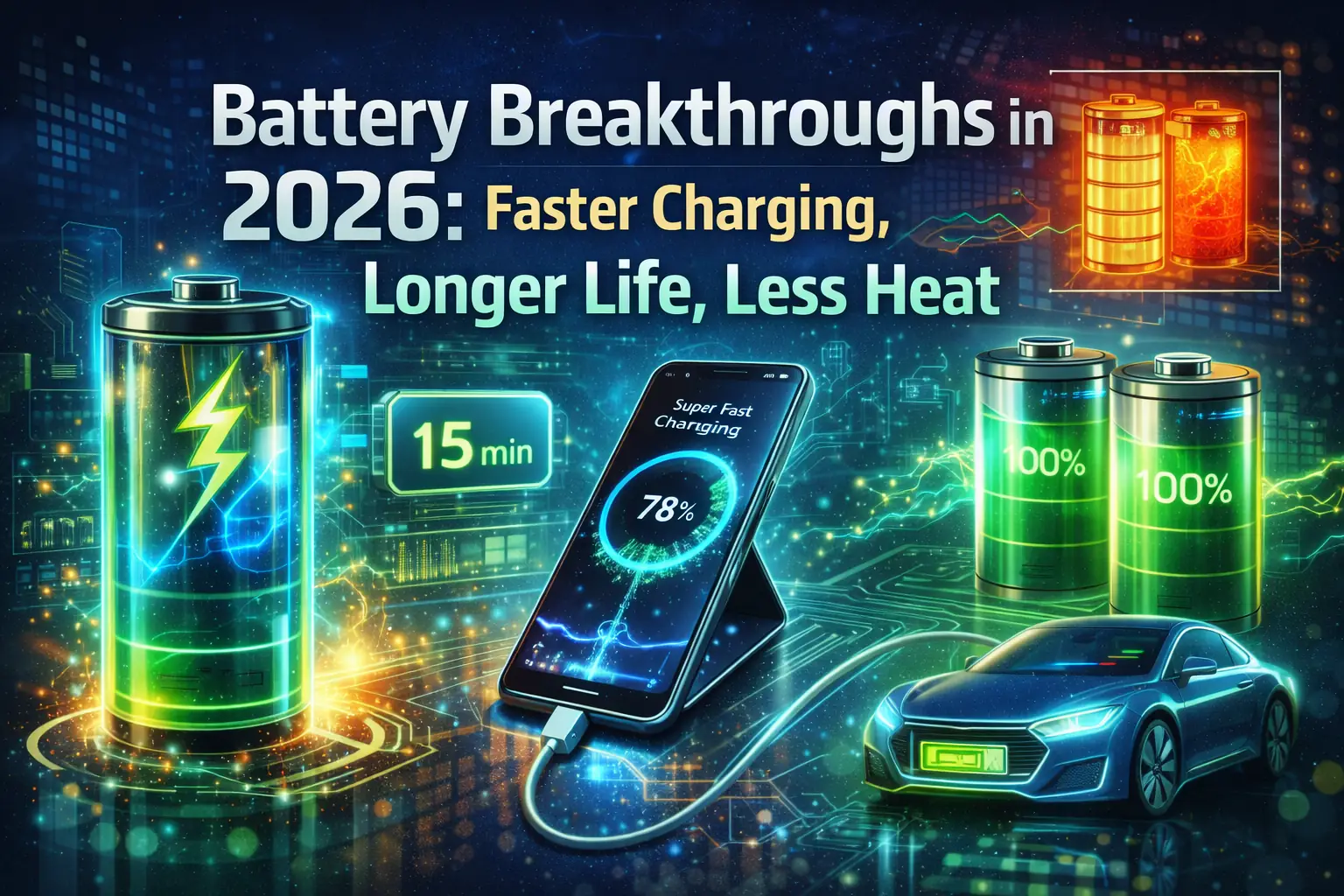
Γιατί το 2026 αισθάνεται διαφορετικά από “Ακόμα ένα έτος μπαταρίας”
Η πρόοδος της μπαταρίας ήταν ως επί το πλείστον αυξητική: μικρά κέρδη στην ενεργειακή πυκνότητα και μικρές βελτιώσεις φόρτισης, ακολουθούμενη από μια μεγάλη αναμονή για τα κέρδη αυτά να εμφανιστούν σε προϊόντα που μπορείτε πραγματικά να αγοράσετε. Το 2026, η «σωλήνα προς την παραγωγή» φαίνεται πιο ενεργή. Τα πακέτα φωσφορικών λιθίου σιδήρου ταχείας φόρτισης (LFP) έχουν γίνει ένα σημαντικό σημείο αναφοράς στις συζητήσεις EV, με ευρέως διαδεδομένα σημεία αναφοράς όπως το Σενξινγκ της CATL να ισχυρίζεται περίπου 400 χιλιόμετρα της εμβέλειας που προστίθεται σε περίπου 10 λεπτά για συμβατά οχήματα. :contentReference[oaicite:0]{index=0}
Την ίδια στιγμή, η εργασία μπαταρίας στερεάς κατάστασης δεν είναι πλέον μόνο δοκιμαστικά εργαστήρια και προσεκτικοί χάρτες πορείας. Βλέπουμε πρωτοσέλιδα-αρπαγή ανακοινώσεις προϊόντων ότι θέση στερεά κατάσταση ως παραγωγή-έτοιμη σε συγκεκριμένες κόγχες -όπως η CES του Verge 2026 ανακοίνωση μιας μοτοσικλέτας παραγωγής χρησιμοποιώντας μια all-στερεή-κατάσταση μπαταρία, με ισχυρισμούς που δίνουν έμφαση τόσο σειρά και πολύ γρήγορη φόρτιση. :contentReference[oaicite:1]{index=1}
Εν τω μεταξύ, εναλλακτικές λύσεις για την mainstream ιόντων λιθίου ωριμάζουν παράλληλα. Το ιόν νατρίου μετακινείται από το «ενδιαφέρον» στο «στρατηγικά σχετικό» για σταθερές εγκαταστάσεις αποθήκευσης και ανάπτυξης που είναι ευαίσθητες στο κόστος, ακόμα και όταν οι αναλυτές σημειώνουν ότι εξακολουθεί να παρακολουθεί την LFP στο κόστος σήμερα και δεν μπορεί να πλήξει την ισοτιμία κόστους για μεγάλο χρονικό διάστημα. [oaicite:2] {index=2} Η λήψη της πληροφορικής: το τοπίο της μπαταρίας διευρύνεται και οι επιλογές προμηθειών εξαρτώνται όλο και περισσότερο από το προφίλ του φόρτου εργασίας και τους λειτουργικούς περιορισμούς, όχι μόνο τις ωμές ώρες watt ανά χιλιόγραμμο.
Ταχύτερη φόρτισης: Από το “Nice Spec” στο εργαλείο προγραμματισμού
Ταχύτερη φόρτιση που χρησιμοποιείται για να πλαισιωθεί ως ευκολία. Για IT, γίνεται ένας λειτουργικός μοχλός. Η χρονική στιγμή φόρτισης πέφτει κάτω από τυπικά διαλείμματα βάρδιας, παράθυρα γεύμα, ή σύντομο χρόνο στροφής οχημάτων, μπορείτε να αναδιαρθρώσετε τις ροές εργασίας. Αυτό έχει σημασία για τους φορητούς υπολογιστές, τους σκληρούς φορητούς υπολογιστές, τα ιατρικά καροτσάκια, τους σαρωτές αποθηκών, τα περίπτερα και τους στόλους EV.
Η πιο ορατή πρόοδος είναι σε μπαταρίες κλίμακας EV, όπου η φόρτιση “10 λεπτών” χρησιμοποιείται ως μετρικός τίτλος. Η ανακοίνωση του CATL για το Shenxing συσκευάζει ρητά αυτή την ιστορία— γρήγορη φόρτιση ως έναν τρόπο για τη μείωση του «αγχού φόρτισης» με την προσθήκη μεγάλης εμβέλειας γρήγορα. :contentReference[oaicite:3]{index=3} Στην πράξη, η αξία της επιχείρησης δεν είναι ο καλύτερος αριθμός-περίπτωση? είναι αν η καμπύλη φόρτισης παραμένει ισχυρή σε ένα σημαντικό state-of-charge παράθυρο, και αν η υποδομή σας υποστηρίζει χωρίς στρόβιλο.
Για IT pros αξιολόγηση γρήγορα αξιώσεις φόρτισης, η κρίσιμη απόχρωση είναι ότι οι περισσότερες συσκευές δεν χρεώνουν στην αιχμή ισχύος για την πλήρη συνεδρία. Ακολουθούν μια καμπύλη: επιθετική πρόωρη παράδοση ισχύος, στη συνέχεια, κλιμάκωση καθώς η μπαταρία πλησιάζει μια υψηλότερη κατάσταση φόρτισης. Ένας πωλητής μπορεί να παραθέσει “X% σε Y λεπτά” και εξακολουθεί να σας αφήσει με αργή φόρτιση για το τελευταίο τρίτο της μπαταρίας. Αυτό δεν είναι εξαπάτηση— είναι φυσική και ασφάλεια— αλλά αλλάζει τον τρόπο που σχεδιάζεις.
Η γρήγορη φόρτιση πολλαπλασιάζει επίσης τη σημασία των ελέγχων λογισμικού:
- Οι πολιτικές του συστήματος διαχείρισης της μπαταρίας (BMS) που ισορροπούν την ταχύτητα έναντι της αποδόμησης σε πραγματικές συνθήκες θερμοκρασίας.
- Προσαρμοσμένα προφίλ φόρτισης που συνδέονται με τα πρότυπα χρήσης και γεγονότα ημερολογίου (παράθυρα φόρτισης φλιτ, προγράμματα βάρδιας, εναλλάξ.
- Η ενσωμάτωση με τη διαχείριση της ισχύος έτσι “φόρτισε γρήγορα” δεν σημαίνει “κάνε το πακέτο” σε υψηλές θερμοκρασίες περιβάλλοντος.
Εάν τρέχετε στόλους συσκευών, η ταχύτερη φόρτιση μπορεί να μειώσει τις απαιτήσεις εφεδρικής απογραφής—αλλά μόνο αν τυποποιήσετε φορτιστές, ποιότητα καλωδίων, και πολιτική firmware. Διαφορετικά απλά ανταλλάσσετε “χαμηλή downtime μπαταρία” για “μυστηριώδη μεταβλητότητα φόρτισης” εισιτήρια.
Μεγαλύτερη ζωή: Το διάλειμμα σας αισθάνονται σε προϋπολογισμούς και εισιτήρια Helpdesk
Το “Battery life” ερμηνεύεται συνήθως ως runtime ανά χρέωση. Στην επιχείρηση IT, η “ζωή” συνήθως σημαίνει κάτι άλλο: πόσο καιρό η μπαταρία παραμένει χρήσιμη πριν γίνει κίνδυνος αξιοπιστίας, ένας περιοριστής επιδόσεων, ή ένας κίνδυνος διόγκωσης που προκαλεί επείγουσα αντικατάσταση. Η ζωή του μεγαλύτερου κύκλου αλλάζει τα μαθηματικά σου. Μπορεί επίσης να μειώσει τον κρυφό φόρο των συμβάντων υποστήριξης που προκαλούνται από τα ηλικιωμένα πακέτα που συμπεριφέρονται απρόβλεπτα υπό φορτίο.
Το 2026, επιδιώκεται μεγαλύτερη ζωή μέσω πολλαπλών μοχλών:
- Υλικά που ανέχονται την ποδηλασία καλύτερα (συμπεριλαμβανομένων των συνεχιζόμενων εργασιών γύρω από ανόδους λιθίου-μεταλλικού μετάλλου σε αρχιτεκτονικές στερεάς κατάστασης, και άλλων οδών με στόχο την υψηλότερη πυκνότητα και τη βελτίωση της ασφάλειας). :contentReference[oaicite:4]{index=4}
- Πιο έξυπνος περιορισμός φόρτισης ότι οι προεπιλογές για μερική χρέωση για χρήση ρουτίνας και πηγαίνει μόνο στο 100% όταν πραγματικά χρειάζεται.
- Θερμικές στρατηγικές που διατηρούν τα κύτταρα εκτός της “ζώνης επιτάχυνσης της γήρανσης” κατά τη διάρκεια τόσο της φόρτισης όσο και της βαριάς εκκένωσης.
- Καλύτερη μηχανική σε επίπεδο πακέτων (διαπόσταση κυττάρων, διασκορπιστές θερμότητας, κόλλες και μηχανικοί περιορισμοί που μειώνουν το στρες με την πάροδο του χρόνου).
Το πρακτικό αποτέλεσμα είναι ότι οι “μπαταρίες’ ορίζονται όλο και περισσότερο από προβλέψιμη γήρανση. Θέλετε μια συσκευή όπου η χωρητικότητα μειώνεται σταδιακά και παραμένει σταθερή στη συμπεριφορά, παρά μια συσκευή που αισθάνεται καλά μέχρι να καταρρεύσει ξαφνικά σε κρύο καιρό, γκάζι υπό φορτίο, ή παράγει θερμικές προειδοποιήσεις.
Για IT, η μεγαλύτερη διάρκεια ζωής της μπαταρίας επιτρέπει:
- Εκτεταμένοι κύκλοι ανάπτυξης για φορητούς υπολογιστές και σκληρές συσκευές χωρίς να μετατρέπονται το έτος τέσσερα σε κύμα αντικατάστασης μπαταρίας.
- Περισσότερη εμπιστοσύνη στις πισίνες hot-desking και shared-device, όπου τα πακέτα βλέπουν συχνά μερικούς κύκλους.
- Υψηλότερη χρήση του κινητού εξοπλισμού (καρτ, σαρωτές, χειρός) χωρίς να χρειάζεται \"μπαταρία babysitting\" διαδικασίες.
Αν χτίζετε μοντέλα κόστους, μετατοπίστε από το “διαστήματος αντικατάστασης της μπαταρίας” σκεπτόμενοι να “χωρητικότητα το έτος Ν κάτω από το φόρτο εργασίας μας” σκέψης. Ο καλύτερος πωλητής για τους καταναλωτές δεν είναι πάντα ο καλύτερος πωλητής για μια αποθήκη όπου οι συσκευές χρεώνουν ευκαιριακά όλη την ημέρα, ενώ η θερμοκρασία περιβάλλοντος παραμένει αυξημένη.
Λιγότερο Θερμότητα: Γιατί Θερμική Διαχείριση Είναι ο Ήσυχος Ήρωας
Η θερμότητα είναι εκεί όπου η χημεία της μπαταρίας συναντά την εμπειρία του χρήστη, την πολιτική ασφάλειας και την απόδοση της συσκευής. Ένα σύστημα μπαταρίας που λειτουργεί ψυχρότερα κάτω από το φορτίο κάνει τρία πράγματα για τα οποία το ΙT νοιάζεται: μειώνει το θερμικό θρόμβωμα, βελτιώνει την άνεση και την αξιοπιστία, και μειώνει τον κίνδυνο.
Η θερμική συμπεριφορά δεν είναι μόνο ένα “μπαταρικό πρόβλημα”. Είναι ένα πρόβλημα οικοσυστήματος:
- Η δύναμη SOC της συσκευής έλκει και διατηρεί την ώθηση συμπεριφορά.
- Φόρτιση ποιότητας κυκλωμάτων και αποδοτικότητας.
- Υλικά περίπτωσης και εσωτερική εξάπλωση θερμότητας.
- Πολιτική firmware που καθορίζουν πότε να δώσει προτεραιότητα στην ταχύτητα έναντι της θερμοκρασίας.
- Περιβαλλοντικές συνθήκες— φως σε οχήματα, θερμοκρασίες αποθήκης, σφραγισμένα ανθεκτικά καταλύματα.
Η έρευνα για την ασφάλεια των μπαταριών συνεχίζει να δίνει έμφαση στις συναλλαγές ασφάλειας– απόδοσης μεταξύ των χημικών: το LFP συχνά συνδέεται με ισχυρότερη θερμική ανοχή ενώ οι καθόδους με πλούσια σε νικέλιο υψηλότερης ενέργειας μπορούν να προσφέρουν περισσότερη πυκνότητα αλλά τυπικά απαιτούν αυστηρότερη διαχείριση αντοχής στην κατάχρηση. [oaicite:5] {index=5} Δεν είναι μόνο ακαδημαϊκό. Επηρεάζει πόσο επιθετικά μια συσκευή μπορεί να φορτίσει, πώς συμπεριφέρεται σε θερμά κλίματα, και τι τρόπους αποτυχίας θα πρέπει να προγραμματίσετε.
Τα σχέδια στερεάς κατάστασης είναι συχνά τοποθετημένα ως ασφαλέστερα επειδή αντικαθιστούν εύφλεκτους υγρούς ηλεκτρολύτες με στερεά υλικά, μειώνοντας ορισμένους κινδύνους πυρκαγιάς και επεκτείνοντας το εύρος θερμοκρασίας λειτουργίας. [oaicite:6]{index=6} Ακόμα και αν η επιχείρησή σας δεν αγοράσει “στερεά-κατάσταση” προϊόντα σε όγκο ακόμα, οι σχεδιαστικές ιδέες—λιγότερο εύφλεκτα συστατικά, βελτιωμένοι διαχωριστές, καλύτερα θερμικά εμπόδια— καταλήγουν να συρρικνωθούν σε mainstream πακέτα με την πάροδο του χρόνου.
Τι Είναι Πραγματικά Νέο στις Συσκευές που Υποστηρίζετε
Αν διαχειρίζεστε τα τελικά σημεία, νοιάζεστε λιγότερο για τις ετικέτες χημείας και περισσότερο για το τι εμφανίζεται στις συσκευές που αγοράζει ο οργανισμός σας. Το 2026, αρκετά «προϊόντα-αντιμετώπιση» μοτίβα γίνονται πιο συχνές:
Πιο επιθετική γρήγορη φόρτιση με κουπιά.
Οι φορτιστές διαπραγματεύονται την ισχύ και τα θερμικά όρια πιο δυναμικά, και οι συσκευές βασίζονται όλο και περισσότερο σε αισθητήρες θερμοκρασίας και ηχητικές χρήσεις για να αποφασίσουν αν η γρήγορη φόρτιση είναι κατάλληλη εκείνη τη στιγμή.
Προσεγγίσεις πυριτίου-άνθρακα εμφανίζονται σε κινητές συσκευές.
Τα τηλέφωνα καταναλωτών και προσούμερ έχουν διαφημίσει την ιδέα των μπαταριών πυριτίου-άνθρακα ως ένα μονοπάτι για μεγαλύτερη χωρητικότητα και καλύτερη συσκευασία. Κάλυψη στο χώρο smartphone τονίζει ότι το πυρίτιο-άνθρακας χρησιμοποιείται ως μια πρακτική, ναυτιλιακή τεχνολογία και όχι μια μακρινή υπόσχεση. [oaicite:7] {index=7} Για την πληροφορική, το βασικό ερώτημα είναι αν αυτά τα οφέλη μεταφέρουν σε συσκευές business-grade με μακροπρόθεσμη υποστήριξη firmware και προβλέψιμες αλυσίδες εφοδιασμού.
Modularity και uptime προσανατολισμένη στη σχεδίαση της μπαταρίας σε τραχύ εξοπλισμό.
Βιομηχανικά τηλέφωνα και συσκευές πεδίου τονίζουν όλο και περισσότερο τις αφαιρούμενες ή θερμές μπαταρίες για uptime και όχι τη μέγιστη κομψότητα. :contentReference[oaicite:8]{index=8} Αυτό έχει σημασία για τους οργανισμούς όπου “διατήρηση του εργαζόμενου σε απευθείας σύνδεση” χτυπά “λεπτή συσκευή” κάθε φορά.
Η θερμική ασφάλεια αντιμετωπίζεται ως χαρακτηριστικό, όχι μόνο ως συμμόρφωση.
Οι προμηθευτές μαθαίνουν ότι η θερμική συμπεριφορά είναι η εμπειρία του χρήστη. Οι συσκευές που παραμένουν πιο δροσερές κάτω από το φορτίο αισθάνονται πιο γρήγορα, διαρκούν περισσότερο και προκαλούν λιγότερα παράπονα. Αυτό είναι ιδιαίτερα ορατό σε συμπαγείς συσκευές που καλούνται να κάνουν περισσότερα—AI φόρτο εργασίας, συνεχή βίντεο, οθόνες υψηλής φωτεινότητας, και σταθερή συνδεσιμότητα.
Οι Διακοπές Μπαταριών συναντιούνται παντού
Το 2026, οι «ανακαλύψεις της μπαταρίας» συγκρούονται άμεσα με το AI και πάντα-για φόρτο εργασίας. Οι λειτουργίες AI on-device μπορούν να αυξήσουν τη διαρκή έλξη ισχύος, ειδικά όταν τα μοντέλα τρέχουν τοπικά για ιδιωτικότητα, λανθάνουσα ικανότητα, ή offline ικανότητα. Ακόμη και όταν οι NPUs είναι αποδοτικοί, το καθαρό αποτέλεσμα μπορεί να είναι ακόμα υψηλότερη μέση χρήση ενέργειας, επειδή οι συσκευές απλά κάνουν περισσότερη εργασία πιο συχνά.
Αυτό δημιουργεί μια νέα βασική προσδοκία: οι μπαταρίες πρέπει να υποστηρίζουν τη διαρκή απόδοση χωρίς να μετατρέπουν τις συσκευές σε θερμαντήρες χεριών. Αυτό τροφοδοτεί πάλι την προμήθεια με έναν πολύ πληροφοριακό τρόπο:
- Οι φορητοί υπολογιστές με δυνατότητα AI διατηρούν την απόδοση της μπαταρίας χωρίς επιθετικό στρόβιλο;
- Η συσκευή παραμένει εντός της αποδεκτής θερμοκρασίας του δέρματος κάτω από συνεχή φόρτο εργασίας συνεργασίας;
- Όταν λειτουργεί με μπαταρία, η πλατφόρμα συμπεριφέρεται με συνέπεια σε ενημερώσεις OS και αναθεωρήσεις οδηγών;
Εάν ο οργανισμός σας είναι κυλώντας έξω AI-βοηθημένες ροές εργασίας, αντιμετώπιση θερμική και τη συμπεριφορά της μπαταρίας ως μέρος της δοκιμής αποδοχής χρήστη. Πολλές “παραπονέσεις απόδοσης” είναι στην πραγματικότητα “παραπονέματα πολιτικής ισχύος” που εμφανίζονται ως θρόμβωση, θόρυβος ανεμιστήρα, ή διαρροή μπαταρίας.
The Enterprise View: Φόρτιση είναι υποδομή τώρα
Η ταχύτερη φόρτιση μετατοπίζει τον κίνδυνο από τη συσκευή στο περιβάλλον. Όσο περισσότερη δύναμη προσπαθείτε να πιέσετε γρήγορα, τόσο περισσότερο η υποδομή φόρτισης σας γίνεται εμπόδιο στην απόδοση και μια εξέταση της ασφάλειας.
Για τις ομάδες πληροφορικής και εγκαταστάσεων, η συζήτηση χρέωσης 2026 μοιάζει με αυτή:
- Τυποποίηση: λιγότερα μοντέλα φορτιστή, γνωστά-καλά συγκροτήματα καλωδίων, και συνεπείς πολιτικές παράδοσης ενέργειας σε όλους τους στόλους.
- Προϋπολογισμός ενέργειας: Οι κόμβοι φόρτισης έλκουν σαν μίνι κέντρα δεδομένων όταν κλιμακώνονται, και η αιχμή της ζήτησης μπορεί να δημιουργήσει κόστος έκπληξη.
- Τηλεμετρία: θέλετε ορατότητα σε συνεδρίες φόρτισης, αποτυχίες, προειδοποιήσεις θερμοκρασίας και υγεία φορτιστή.
- Πολιτική ασφάλειας: οι κανόνες για την αφύλακτη φόρτιση, αποθήκευση, μεταφορά και διάθεση πρέπει να ταιριάζουν με τον τύπο της χημείας και της συσκευής.
Οι στόλοι EV προσθέτουν ένα επιπλέον στρώμα: η φόρτιση δεν είναι μόνο εξάρτημα συσκευής, είναι προγραμματισμός και λειτουργίες. Η υπόσχεση της “πολύ γρήγορης φόρτισης” πραγματοποιείται μόνο όταν ο σταθμός, το όχημα, και η μπαταρία όλα το υποστηρίζουν - και όταν η σύνδεση του πλέγματος και το σχεδιασμό του χώρου δεν αναγκάζουν στρόβιλο.
Νάτριο-Ιόν και η γωνία IT: Αποθήκευση, ανθεκτικότητα και καμπύλες κόστους
Οι μπαταρίες ιόντων νατρίου έχουν σημασία για το IT ακόμα και αν τα καταληκτικά σημεία σας παραμένουν με βάση το λίθιο, επειδή η μεγάλη περιοχή ανάπτυξης είναι σταθερή αποθήκευση: συστήματα UPS, ανθεκτικότητα κτιρίων, μικρογρήιδες και αποθήκευση ενέργειας που υποστηρίζει κρίσιμες λειτουργίες. Το ιόν νατρίου συχνά πλαισιώνεται ως ένας τρόπος διαφοροποίησης των αλυσίδων εφοδιασμού και μείωσης της εξάρτησης από περιορισμένα υλικά. Η IRENA έχει συζητήσει τη βιωσιμότητα, τη διαθεσιμότητα των πόρων και τις ανησυχίες της εφοδιαστικής αλυσίδας ως οδηγούς πίσω από εναλλακτικές χημικές μπαταρίες. :contentReference[oaicite:9]{index=9}
Το κόστος είναι ο έλεγχος πραγματικότητας. Η ανάλυση της βιομηχανίας έδειξε ότι το ιόντα νατρίου μπορεί να κοστίζει περισσότερο από το LFP σε ισοδύναμη παραγωγική ικανότητα στα μέσα της δεκαετίας του 2020, με την ισοτιμία δυνητικά πολύ έξω. :contentReference[oaicite:10]{index=10} Αυτό δεν το καθιστά άσχετο—το καθιστά κατάσταση. Εάν το ιόν νατρίου προσφέρει καλύτερες επιδόσεις στο κρύο, ασφαλέστερα χαρακτηριστικά αποθήκευσης, ή πλεονεκτήματα προσφοράς-αλυσίδας για μια συγκεκριμένη ανάπτυξη, μπορεί να αξίζει να εξετάσει ακόμη και πριν από την ισοτιμία κόστους.
Για τον σχεδιασμό της ανθεκτικότητας στην πληροφορική, το πρακτικό ερώτημα γίνεται: μπορεί η αποθήκευση με βάση το νάτριο-ιονίου να παραδώσει το προφίλ uptime που χρειάζεστε, με αποδεκτή συντήρηση και παρακολούθηση γενικά, και με υποστήριξη του πωλητή που ταιριάζει με τις προσδοκίες των επιχειρήσεων;
Πώς να αξιολογήσετε τους ισχυρισμούς του Προμηθευτή χωρίς εργαστήριο
Οι περισσότερες ομάδες πληροφορικής δεν μπορούν να εκτελέσουν ηλεκτροχημεία δοκιμές, αλλά μπορείτε ακόμα να αξιολογήσετε ισχυρισμούς μπαταρίας σαν επαγγελματίας. Το κόλπο είναι να αντιμετωπίζεις τις προδιαγραφές της μπαταρίας ως ένα σύστημα αλληλεπιδρώντων μεταβλητών και όχι ως έναν μόνο αριθμό.
Ρωτήστε για την καμπύλη φόρτισης, όχι μόνο την επικεφαλίδα.
Εάν μια συσκευή ισχυρίζεται “X% σε Y λεπτά,” ask τι συμβαίνει από εκεί. Φόρτιση που είναι γρήγορη στο 60% και αργή στο 100% μπορεί να εξακολουθεί να είναι εξαιρετική - αν η ροή εργασίας σας είναι χτισμένο γύρω από top-ups - αλλά αλλάζει τις προσδοκίες.
Απαιτεί θερμική συμπεριφορά κάτω από ρεαλιστικά φόρτο εργασίας.
Ζητήστε δεδομένα για σενάρια διαρκούς φορτίου σχετικά με το περιβάλλον σας: τηλεδιάσκεψη για φορητούς υπολογιστές, σάρωση barcode για φορητούς υπολογιστές, πλοήγηση και χρήση ραδιοφώνου για εργαλεία τοποθετημένα στο όχημα, συνεχής έκθεση στο ηλιακό φως για εξωτερικές συσκευές.
Διευκρίνιση των υποθέσεων κύκλου ζωής.
Ο κύκλος ζωής συχνά αναφέρεται υπό ελεγχόμενες συνθήκες. Ρωτήστε ποια όρια φόρτισης και εύρος θερμοκρασίας χρησιμοποιήθηκαν. Μάθετε αν η συσκευή υποστηρίζει διαχειριζόμενα καλύμματα φόρτισης μέσω πολιτικής ή MDM.
Ψάξτε για “βαρετά” σήματα επιχειρήσεων.
Οι πιο σημαντικοί δείκτες δεν είναι πάντα λαμπεροί:
- Firmware ενημέρωση cadence και πώς η εξουσία / θερμικές πολιτικές που ανακοινώνονται σε σημειώσεις έκδοσης.
- Διαθεσιμότητα ανταλλακτικών μπαταριών και η πραγματικότητα των μολυβδοχρονιών.
- Τηλεμετρία για την υγεία της μπαταρίας: αριθμός κύκλων, υπολειπόμενες εκτιμήσεις χωρητικότητας, συμβάντα θερμοκρασίας, ιστορικό φόρτισης.
- Διαφανείς διαδρομές τέλους ζωής και ανακύκλωσης ευθυγραμμισμένες με τις απαιτήσεις συμμόρφωσης.
Όταν ακούτε το “breakthrough”, το μεταφράζουν σε επιχειρησιακές ερωτήσεις: μειώνει το χρόνο διακοπής, επεκτείνει τους κύκλους ανανέωσης, μειώνει τα περιστατικά ασφάλειας, ή απλοποιεί την υποδομή; Αν δεν το κάνει, μπορεί να είναι ακόμα δροσερό, αλλά δεν είναι ακόμα μια ανακάλυψη IT.
Πολιτική και λειτουργίες: Μπαταρίες ως επιφάνεια κινδύνου
Καθώς οι μπαταρίες φορτίζουν γρηγορότερα και συσκευάζουν περισσότερη ενέργεια σε μικρότερους όγκους, η πολιτική στάση σας πρέπει να συμβαδίζει. Αυτό δεν είναι για το φόβο? Είναι για την επαγγελματισμό πώς μπορείτε να χειριστείτε μια τεχνολογία που αποθηκεύει ουσιαστική ενέργεια.
Σκεφτείτε σύσφιξη ή ενημέρωση:
- Κανόνες χρέωσης χωρίς επιτήρηση για φορτιστές υψηλής ισχύος και πυκνούς σταθμούς φόρτισης.
- Οδηγίες αποθήκευσης για εφεδρικές μπαταρίες, συμπεριλαμβανομένης της θερμοκρασίας και της φυσικής προστασίας.
- Βιβλία για περιστατικά για το πρήξιμο, τους συναγερμούς υπερθέρμανσης, τις ανωμαλίες φόρτισης και την απόκριση καπνού/πυρός.
- Ροές εργασίας διάθεσης και ανακύκλωσης με σαφή όρια ευθύνης μεταξύ πληροφορικής, εγκαταστάσεων και προμηθευτών.
Η τηλεμετρία μπαταρίας μπορεί να βοηθήσει εδώ. Εάν οι συσκευές σας αναφέρουν συμβάντα θερμοκρασίας ή υποβαθμισμένη υγεία, μπορείτε να αφαιρέσετε προληπτικά επικίνδυνα πακέτα πριν γίνουν περιστατικά. Αυτή είναι η ίδια φιλοσοφία που χρησιμοποιεί παντού: παρατήρηση, τάση, παρέμβαση νωρίς.
Πρακτικό Εγχειρίδιο για τις Προμήθειες και τον Προγραμματισμό του 2026
Εάν σχεδιάζετε κύκλους ανανέωσης, επεκτάσεις στόλου, ή αναβαθμίσεις site, εδώ είναι ένας πρακτικός τρόπος για να εφαρμόσετε 2026 βελτιώσεις μπαταρίας χωρίς να πάρει παρασύρονται από διαφημιστική διαφήμιση.
Καθορίστε τα σημεία πόνου της μπαταρίας σας σε λειτουργική γλώσσα.
Παραδείγματα: “οι συσκευές πεθαίνουν πριν από το τέλος της βάρδιας”, “οι σταθμοί φόρτισης συμπιέζονται”, “οι μπαταρίες υποβαθμίζονται πολύ γρήγορα σε θερμά περιβάλλοντα”, “ο θερμός θρόμβος προκαλεί απώλεια παραγωγικότητας”, “τα EVs δεν μπορούν να γυρίσουν αρκετά γρήγορα”.
Ταιριάξτε τη χημεία και την τάξη συσκευών με το περιβάλλον.
Το προφίλ θερμικής ανοχής της LFP είναι συχνά ελκυστικό όταν η ύλη ανθεκτικότητας ασφάλειας και θερμοκρασίας. [oaicite:11]{index=11} Οι φαρμακοβιομηχανίες υψηλής πυκνότητας μπορεί να είναι κατάλληλες όταν κυριαρχούν το βάρος και ο χρόνος λειτουργίας, αλλά μπορούν να απαιτήσουν αυστηρότερους θερμικούς ελέγχους. Μην το αντιμετωπίζετε αυτό ως ηθική επιλογή— αντιμετωπίστε το ως μηχανική του φόρτου εργασίας.
Το σχέδιο φορτίζει όπως ο σχεδιασμός χωρητικότητας δικτύου.
Η γρήγορη φόρτιση είναι μόνο “γρήγορη” κατάληξη αν ολόκληρη η διαδρομή την υποστηρίζει. Τυποποίηση φορτιστές, επαλήθευση της ηλεκτρικής ικανότητας, και σχεδιασμό φυσικές διατάξεις που αποφεύγουν την κατάχρηση καλωδίων και τη θερμική παγίδευση.
Απαιτεί δυνατότητα διαχείρισης.
Το 2026, η δυνατότητα μπαταρίας χωρίς δυνατότητα διαχείρισης είναι παγίδα. Προτεραιότητα στις συσκευές που:
- Εκθέστε τις μετρήσεις υγείας της μπαταρίας με συνεπή τρόπο.
- Όρια φόρτισης και προγραμματισμός, κατά περίπτωση, με γνώμονα την πολιτική στήριξης.
- Παρέχετε διαφανή θερμική συμπεριφορά και σαφή μηνύματα χρήστη.
Επικυρώστε με έναν πιλότο που μιμείται την πραγματική συμπεριφορά.
Μην συγκρίνετε ένα laptop παίζοντας ένα βίντεο για μια ώρα και αποκαλώντας το «ζωή της μπαταρίας». Εντοπίστε το τρέχοντας τα ακριβή εργαλεία που τρέχουν οι χρήστες σας, στις ακριβείς συνθήκες δικτύου που αντιμετωπίζουν, με τη φωτεινότητα και το περιφερειακό φορτίο που ζουν με.
Κοιτάζοντας Μπροστά: Τι να Παρακολουθήσετε Μετά το Κύμα του 2026
Το πιο ενδιαφέρον πράγμα για το 2026 είναι ότι η βιομηχανία δεν είναι στοίχημα σε ένα μόνο νικητή. Η στερεά κατάσταση κινείται προς την παραγωγή σε στοχευμένα τμήματα, η ταχεία φόρτιση της LFP συνεχίζει να εξελίσσεται ως σημείο αναφοράς, και το νάτριο-ιόντων χαράσσει έναν αυξανόμενο ρόλο στην αποθήκευση, ακόμη και ενώ οι καμπύλες κόστους παραμένουν μια συζήτηση. :contentReference[oaicite:12]{index=12}
Θα δείτε επίσης περισσότερες «επίπεδο συστήματος» ανακαλύψεις που δεν κάνουν splashy πρωτοσέλιδα, αλλά σημασία για την IT:
- Καλύτερη πρόβλεψη του κινδύνου για την υγεία και την αποτυχία της μπαταρίας χρησιμοποιώντας τηλεμετρία και ιστορικό συσκευών.
- Έξυπνες πολιτικές φόρτισης που ευθυγραμμίζονται με τα προγράμματα και μειώνουν τη μακροχρόνια φθορά.
- Ασφαλέστερες αρχιτεκτονικές συσκευασίας που περιορίζουν τη διάδοση σε περίπτωση που ένα μόνο κύτταρο αποτύχει.
- Πιο διαφανή πρότυπα σχετικά με τις αξιώσεις φόρτισης και τη θερμική συμπεριφορά.
Τελικά, “ταχύτερη φόρτιση, μεγαλύτερη ζωή, λιγότερη θερμότητα” δεν είναι απλά μια ιστορία των καταναλωτών. Είναι μια ιστορία πληροφορικής για το uptime, την εμπιστοσύνη των χρηστών, την υποδομή και την ασφάλεια. Το 2026, οι μπαταρίες γίνονται λιγότερο περιοριστικές και περισσότερο μια σχεδιαστική μεταβλητή μπορείτε να προγραμματίσετε γύρω—αν τις αντιμετωπίζετε όπως τα μηχανικά συστήματα που είναι.

 12991
12991  IT Pro