- Details
- Written by: IT Pro
- Category: Blog
- Hits: 5407
Big Trends & What They Mean for Buyers
Before diving into specific laptops, it’s worth understanding the macro-shifts in laptop design, performance, and value in 2025 — especially as we move into Q4. These contextualize why certain models matter.
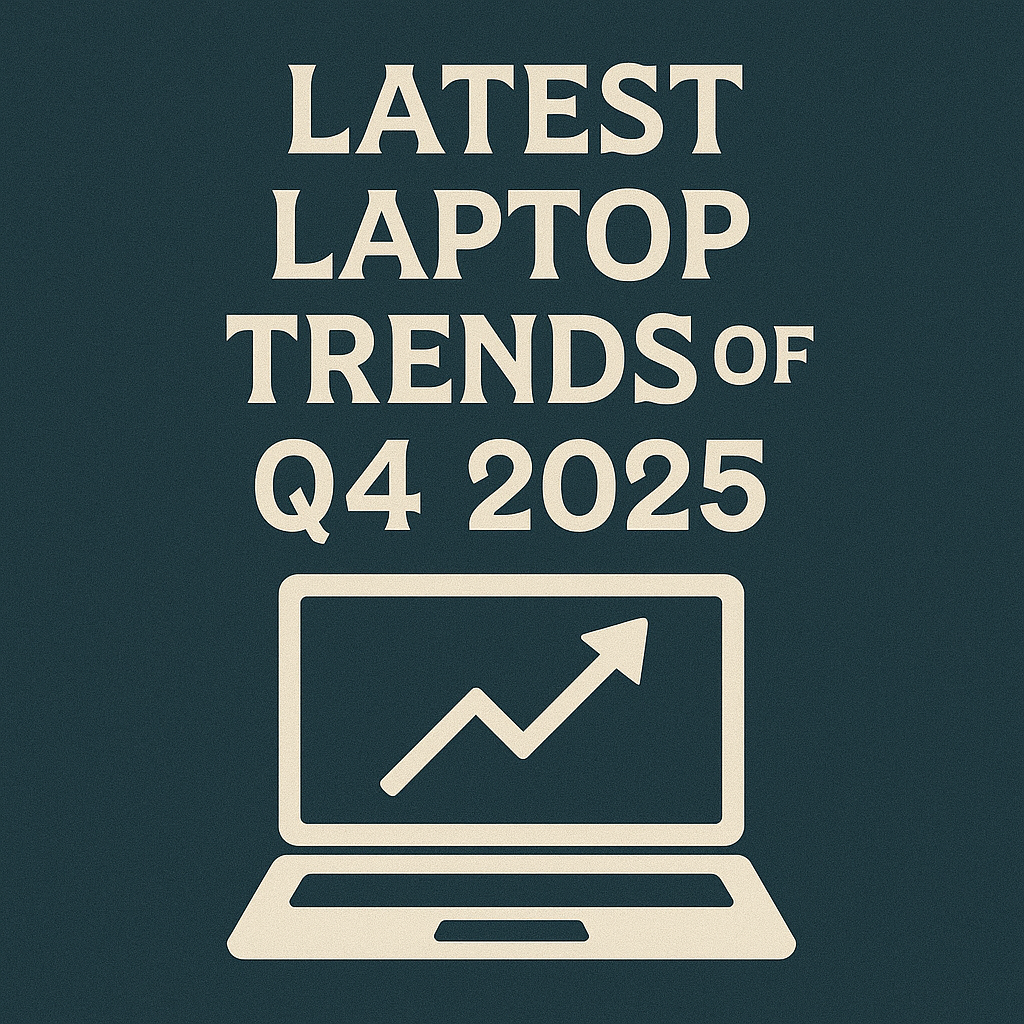
On-Device AI & “Copilot+” PC Movement
Manufacturers have ramped up laptops with dedicated NPUs (neural processing units) and “AI PC” marketing. For example, an article noted 2025 as a breakout year in which laptops increasingly support on‐device AI features. PCWorld
What this means:
-
Laptops are being designed not just for CPU/GPU throughput, but also for AI inference, pre-processing, local ML work.
-
Buyers should consider whether “AI PC” features matter: if you do creative workflows, AI-assisted editing, or offline inference, the NPU matters.
-
The value proposition of a “general-purpose laptop” is shifting: you’re paying for more than just raw cores—also special silicon & software integration.
Gaming / Content Creation Performance Jumps
Thanks to new GPUs and architecture upgrades (e.g., mobile versions of NVIDIA RTX 50-series) the performance ceiling for gaming/creator laptops has moved up. Wikipedia+2Tom's Hardware+2
What this means:
-
Laptops that were “good enough” in 2023–24 now feel modest; new hardware lets you run richer workflows (4K editing, high-refresh screen, etc.).
-
For buyers: if you’re into gaming, video editing or GPU-heavy workloads, paying for the latest GPU matters more than ever.
-
Thermal, battery and weight trade-offs become bigger: high performance often means more heat, bulk, or shorter runtime.
Display, Form Factor & Battery Innovation
OLED panels, high refresh rates, ultra-light chassis, extended battery life are more common. For example, one article says OLED hits the mainstream in 2025. PCWorld
What this means:
-
Ultrabooks and premium laptops are getting very thin/light with strong battery life and premium screens.
-
For buyers: choose based on your use-case — portability (thin & light + long battery) vs. performance (heavier + shorter battery) vs. hybrid (2-in-1).
-
Expect more variability in price and differentiation across chassis.
Timing, Supply & Value
With new hardware launches through 2025 (e.g., CPUs/GPUs scheduled for late Q4) buyers need to consider: is now the time to buy? For example, Intel’s “Panther Lake” mobile CPUs are expected late Q4 2025. Wikipedia
What this means:
-
If you buy early in Q4, you may miss out on next-gen silicon arriving imminently.
-
On the other hand, current “2025” models already incorporate many of the big features — so balance value vs chasing every drop.
-
For enterprises/creatives: buying now vs waiting a quarter may make a difference in performance or longevity.
Sustainability, Repairability & Modularity
More laptop models emphasize repairability, modular upgrades, and eco-friendly materials. One of the trend articles points this out. PCWorld
What this means:
-
If you plan to keep a laptop long term (4-5 years), choose one with upgradeable SSD/RAM, good service support.
-
Consider battery lifetime, cooling design, ease of disassembly.
-
Also consider total cost of ownership: how long you can use it, how upgradeable it is, how future-proof.
Top 8 Laptop Picks to Consider in Q4 2025
Here are eight laptop models (or representative entries) worth watching/considering. Some are major flagship releases; others show interesting value or niche angles.
And here’s a deep dive on each:
-
Apple MacBook Air (2025): Apple’s 2025 ultrabook offering. As listed: 15.3″ Liquid Retina display, Apple M4 chip, 10-core CPU, 10-core GPU, 16-core Neural Engine. This is representative of the premium ultrabook market: extremely light, long battery, tight hardware/software integration.
Why it stands out: For Mac-ecosystem users or cross-platform workflows, this is top-tier.
Considerations: Price premium, less flexibility for upgrades, Windows users may prefer alternatives. -
Xiaomi Redmi Book Pro 16 (2025): A premium mid-16″ model from Xiaomi, with “Ultra5-225H U / Ultra7-255H” indicated in listing, 32 GB RAM/1 TB SSD / 3.1K/165 Hz display.
Why it stands out: Larger screen size, high refresh, strong specs, good value for money.
Considerations: Brand/service support may vary depending on region (Israel market note: check local warranty/parts). For many buyers outside China, availability may lag. -
HP 14″ 2025 Intel N150: A budget 14-inch 2025 laptop from HP, with Intel N150, 16 GB RAM, 128 GB UFS storage listed.
Why it stands out: Entry-level device for students, productivity, general use — good “everyday” laptop.
Considerations: Specs are modest; if you anticipate heavy workloads (video editing, gaming) you’ll want higher tier. -
Thin & Light 14″ Gaming/Office Laptop 2025 Core i7: A thin & light 14″ “gaming/office” curated model (Core i7, 14″ size). While specific name less clear, this type is emerging: blend of portable size + decent GPU/CPU.
Why it stands out: For users who want portability + more than basic performance.
Considerations: Weight/thermal/battery are still trade-offs; may cost significantly more than basic ultrabooks. -
Lenovo IdeaPad 15.6″ 2025: A 15.6″ mainstream laptop from Lenovo (spec listing indicates 2025 model: 20 GB RAM, 1 TB SSD).
Why it stands out: Good size for general work, larger screen, better for productivity; decent storage.
Considerations: Larger form factor may reduce portability; specs moderate compared to “performance” models. -
HP Laptop 14″ Touchscreen Ryzen 7 (2025): Another 14-inch laptop, this time with AMD Ryzen 7 (8-core) inside, 32 GB RAM in listing.
Why it stands out: AMD is competitive; for mixed workloads (office + light content creation) this may be strong value.
Considerations: Check thermal design, GPU (if any) and display quality — “Ryzen 7 + 14″” may span many different tiers. -
Apple MacBook Air 15.3″ (2025): Larger-screen version of the premium ultrabook above. For users who want “Air” portability but larger real estate.
Why it stands out: For creative professionals or those wanting more screen space without moving to heavier “Pro” class.
Considerations: Even higher cost; may sacrifice some battery or portability vs 13-14″ models. -
16″ Gaming Laptop 2025 Intel Core i7: A 16″ high-performance gaming laptop (Intel Core i7). While listing is generic, it represents the category of full-size 16″ performance machines in 2025.
Why it stands out: For heavy workloads: video production, 3D, advanced gaming, creator workflows.
Considerations: Weight, cost, battery life may be worse. Not ultra-portable.
Buying Considerations (for Q4 2025)
Given what’s on offer, here’s a checklist of what you should factor in before purchase:
-
Processor / GPU / NPU
-
If you need heavy multitasking, editing, GPU acceleration → go for H-series CPUs, discrete GPU (RTX 50-series or equivalent).
-
If you are more “office/productivity” oriented → U-series or efficient CPUs can suffice.
-
If AI features matter (on-device NPU) → ensure the model supports it (dedicated NPU, good drivers, AI software support).
-
-
Display & Size
-
Screen size: 13–14″ for portability; 15–16″ for productivity; 16″+ for creators/gamers.
-
Panel type: OLED is increasingly mainstream; high refresh (120 Hz+) for gaming or smoother UI.
-
Resolution: 1920×1080 still common; higher res (2.8K, 3.1K) for creators.
-
Form factor: 2-in-1 convertible may matter if you want tablet mode.
-
-
Thermals / Battery / Weight
-
Performance models often weigh more, run hotter, have shorter battery life.
-
Ultrabooks may give excellent battery but less raw power.
-
Check reviews for sustained workload behaviour (not just burst performance).
-
Q4 models may incorporate newer silicones with better efficiency.
-
-
Upgradeability & Serviceability
-
RAM/SSD: Is it soldered or upgradeable? For long lifespan, upgradeable is a plus.
-
Warranty/support: Especially for creators or business use.
-
Repairability: If you plan to keep laptop 4+ years, this matters.
-
-
Connectivity & Future Proofing
-
Ports: USB-C/Thunderbolt, USB-A, HDMI, card reader.
-
Wireless: Wi-Fi 7, Bluetooth 5.x becoming more common.
-
AI/Software features: Check if specific OS features or AI services supported (Windows on ARM, etc.).
-
Timing: Given upcoming hardware (e.g., Intel Panther Lake late Q4), if you are willing to wait you may get “next-gen” for similar cost.
-
-
Use-Case Matching & Budget
-
Student/office: Good battery, moderate performance, lighter weight.
-
Creator/workstation: Larger screen, discrete GPU, high RAM/SSD.
-
Gaming: Highest GPU/CPU, cooling, size heavy.
-
Travel/ultra-portable: <1.3-1.4 kg weight, <15″ screen, long battery.
-
-
Regional Factors (Israel / Middle East)
-
Stock and warranty: Some models (especially imported Chinese brands) may have limited local service.
-
Local pricing and taxes: Compare vs USD list-price; availability may lag.
-
Power/plug considerations: Ensure adapter compatible; warranty coverage.
-
Language/keyboard layout: Local keyboard (Hebrew + English) or how easily convertible.
-
Final Thoughts
Q4 2025 is a very good time to buy a laptop if you prepare well. Many of the major performance leaps (AI NPUs, OLED screens, high refresh, GPU power) are already present in today’s models. At the same time, there’s still a short tail of next-gen hardware (e.g., Intel’s Panther Lake, further GPU improvements) coming, so timing and trade-off matter.
If I were to summarise key advice:
-
If you need a laptop now: pick a model from 2025 with good current specs (CPU, GPU, display) and upgradeability/portability that matches your workflow.
-
If you can wait a quarter or two: you might be able to secure even better hardware (slightly higher performance, better efficiency) or catch discounted 2025 models as stock cycles turn over.
-
Match to use-case: Don’t overpay for “gaming beast” if you just do office work; don’t buy “thin ultrabook” if you need GPU power.
-
Future-proof where possible: Better display, better connectivity, upgradeable internals will give you more years of value.
-
Local support counts: In Israel, pay attention to warranty, service, stock availability, local version specifics.
- Details
- Written by: IT Pro
- Category: Blog
- Hits: 6954
Over the past decade, hyperscale cloud architectures have centered on predictable x86 server fleets optimized for general-purpose compute. That era is ending. With generative AI, foundation models, simulation, and accelerated analytics now consuming unprecedented amounts of compute, hyperscalers are rapidly shifting toward GPU-first architectures — where graphics processing units, accelerators, and custom silicon are not secondary add-ons, but the primary engines of compute.
This transition is reshaping datacenter design, economics, supply chains, and software ecosystems at a global scale. Here’s how hyperscalers are preparing for a GPU-first future, and what this means for the rest of the industry.

Redesigning Datacenters for High-Density GPU Clusters
Historically, racks were engineered around CPU thermals — rarely exceeding 8–12 kW per rack.
Modern AI clusters exceed 30 kW, 60 kW, and even 100+ kW per rack.
Hyperscalers are responding with:
Liquid Cooling as a Default
-
Direct-to-chip cold plate loops for GPU nodes
-
Rear-door heat exchangers for hybrid fleets
-
Facility water infrastructure upgrades
-
Coolant distribution units (CDUs) in row-level designs
Specialized High-Density Pods
-
GPU-only rows with strict thermal zoning
-
Segregated airflow corridors
-
Power and cooling independent of general-purpose compute halls
Thermal-aware capacity planning
AI clusters now drive site selection, not CPUs.
Cooling capacity determines:
-
how many GPUs can be deployed
-
where they can be placed
-
how rapidly clusters can scale
Reinventing Datacenter Power Delivery
A single rack of AI accelerators can draw 50+ kW, causing massive strain on power infrastructure.
Hyperscalers are reacting by:
Building substation-adjacent campuses
To ensure multi-hundred-MW availability for GPU capacity expansions.
Heavy use of redundant HV distribution
Operators are adding:
-
110 kV – 230 kV incoming feeds
-
advanced switching stations
-
grid-resilience designs
Power orchestration + throttling
GPU clusters are subject to:
-
dynamic power caps,
-
load-shifting,
-
scheduled inference,
-
and even thermal-based workload evacuation.
Strategic GPU Procurement & Silicon Pipelines
The new battleground is silicon supply.
Aggressive GPU Pre-Purchasing
Hyperscalers now place orders 12–24+ months in advance, securing:
-
NVIDIA H-series clusters,
-
AMD Instinct,
-
Intel Gaudi,
-
and emerging accelerator lines.
Multi-Vendor Strategy
Nobody is all-in on one vendor.
Hyperscalers now routinely:
-
mix vendors across clusters,
-
adopt specialized accelerators per task,
-
evaluate cost-per-token vs cost-per-TFLOP vs cost-per-watt.
Custom Silicon Programs
Everyone is building their own chips:
-
Google TPU
-
AWS Trainium & Inferentia
-
Microsoft Maia
-
Meta MTIA
GPU-first doesn’t always mean GPU-only.
It means accelerated-first.
Network Fabrics Built for GPU Megaclusters
GPUs only perform well when they can communicate at low latency and high bandwidth.
Hyperscalers are investing in:
Mass-Scale HPC-Style Fabrics
-
400G → 800G → 1.6T transitions
-
AI-optimized topologies
-
congestion-aware routing
Ultra-large cluster scheduling
Clusters spanning:
-
thousands of nodes,
-
tens of thousands of GPUs,
-
coordinated fabric management.
Retraining the network control plane
Including:
-
AI traffic classification,
-
cluster-level bandwidth prediction,
-
thermal + power + network interdependency modeling.
Networking is now a bottleneck.
Hyperscalers are attacking it aggressively.
Software & Scheduling Transformation
The shift is not just hardware.
The operational model is being rewritten.
GPU-Aware Schedulers
Schedulers adapt for:
-
GPU memory fragmentation
-
tensor parallelism
-
multi-GPU replication
-
model checkpoint patterns
Dynamic allocation vs reservation
GPUs move between:
-
training workloads,
-
tuning workloads,
-
inference clusters,
-
batch pipelines
Often in minutes.
Runtime & platform standardization
Hyperscalers are converging on:
-
PyTorch as a baseline
-
CUDA/XLA/ROCm toolchains
-
unified drivers & kernel stacks
Software cohesion is critical to scaling accelerators efficiently.
AI-Focused Cluster Operations
Operating GPU clouds requires new expertise, including:
Temperature-aware task scheduling
Jobs shift based on:
-
cooling performance
-
external weather conditions
-
power pricing signals
Telemetry explosion
Hyperscalers now collect:
-
per-GPU thermal maps
-
per-rack energy data
-
real-time network utilization
-
model training efficiency metrics
-
cooling loop health scores
Predictive maintenance (AI-assisted)
Using ML to pre-detect:
-
GPU failure probability
-
fan degradation
-
cold-plate efficiency loss
-
thermal paste aging
-
NIC failure modes
GPU ops teams are becoming as specialized as HPC engineers.
GPU-First Economics & Business Strategy
This shift is not cheap.
Hyperscalers are restructuring their financial models around:
CapEx megacycles
Billions budgeted for:
-
AI clusters,
-
high-density expansions,
-
and silicon commitments.
GPU monetization strategies
Including:
-
AI training SKUs
-
inference capacity tiers
-
GPU reserved instances
-
spot GPUs
-
GPU “regions within regions”
Distributed global placement
Not every region can support GPU density.
Expect:
-
AI-first regions
-
inference-first regions
-
edge inference zones
Preparing the Workforce
Hyperscalers can’t scale GPU infrastructure without changing workforce capabilities.
Expect:
-
More HPC engineers than ever before
-
Cross-trained network + compute + cooling specialists
-
Hardware lifecycle analysts
-
Cluster physics engineers
-
Silicon supply planners
-
Fab-partnership program managers
This workforce transition is already underway.
The Road to 2026–2028
Between now and the late 2020s, expect hyperscalers to:
-
Build more GPU-optimized megacampuses
-
Invest in multiple silicon pipelines
-
Deploy exabyte-scale storage for AI checkpoints
-
Evolve cooling from air-first → liquid-first → hybrid liquid/immersion
-
Standardize on accelerator-native cloud services
-
Introduce increasingly automated training environments
-
Expand sovereign & private GPU cloud offerings
GPU-first is not a temporary trend.
It’s the new architectural center of gravity.
Conclusion
Hyperscalers are preparing for GPU-first workloads at every layer of architecture — from silicon sourcing to datacenter design, network fabrics, cooling topologies, software stacks, cluster scheduling, and global capacity planning.
This shift is profound:
-
CPUs are becoming the support act
-
GPUs and accelerators are the stars
-
AI is shaping infrastructure from the ground up
The companies that master this transition will define the next decade of cloud computing, model training, and global compute economics.
The GPU era has begun.
And hyperscalers are racing to dominate it.
- Details
- Written by: IT Pro
- Category: Blog
- Hits: 5915
Introduction
New datacenter cooling technologies are evolving fast, and by 2026 a lot of what’s considered “cutting-edge” today is likely to become mainstream in hyperscale facilities and even advanced enterprise sites. As AI workloads, high-density racks, and sustainability regulations converge, cooling is shifting from “keep it under 27°C” to “optimize every watt of heat, every liter of water, and every square meter of white space.”
Here are the key datacenter cooling technologies to watch going into 2026, and what they mean for operators, cloud providers, and enterprises.

Liquid Cooling Goes Mainstream (For Real This Time)
We’ve been hearing “this is the year of liquid cooling” for a decade. 2026 is when that statement finally becomes boring because liquid will just be normal.
1.1 Direct-to-Chip (Cold Plate) Cooling
What it is:
Coolant (usually water or a dielectric fluid) is circulated through cold plates mounted directly on CPUs/GPUs, pulling heat away much more efficiently than traditional air.
Why it matters in 2026:
-
AI & HPC density: Racks with 30–100 kW+ thermal loads simply can’t be cooled reliably with air alone. Cold plates enable high-density, GPU-heavy racks without derating.
-
Energy efficiency: Lower fan speeds, smaller CRAH/CRAC units, and more targeted cooling deliver better PUE and lower OPEX.
-
Retrofit-friendly: Direct-to-chip can reuse much of the existing air-cooled infrastructure, so operators can upgrade incrementally rather than redesign entire halls.
What to watch:
-
Vendor-neutral quick-disconnects and manifolds for easier service.
-
Standardized coolant chemistry to avoid corrosion and leaks.
-
Integration with rack-level CDU (coolant distribution units) to separate facility loop from IT loop.
1.2 Rear-Door Heat Exchangers (RDHx) 2.0
What it is:
A liquid-cooled door attached to the back of the rack, absorbing heat from exhaust air and removing it via a water loop.
Why it matters:
-
Allows gradual transition to liquid without touching server internals.
-
Useful for mixed environments where some racks are high-density AI clusters and others are “cold” business workloads.
-
Can bring legacy rooms up to modern density without a full mechanical overhaul.
By 2026, expect “smart doors” with embedded sensors, automated valves, and integration into DCIM systems for fine-grained control.
Immersion Cooling: From Niche to Strategic
Immersion cooling is moving from “cool demo” to a serious option for certain types of workloads.
2.1 Single-Phase Immersion
What it is:
Servers are fully submerged in a dielectric fluid. The fluid is pumped through a heat exchanger to remove heat; it does not boil.
Benefits:
-
Very high heat transfer efficiency
-
Dramatic noise reduction and less dependence on fans
-
Potential IT component life extension due to stable temperatures
2026 implications:
-
Hyperscalers and AI labs will adopt it for GPU-dense clusters and inference farms.
-
Hardware is becoming more “immersion-friendly” (no spinning drives, sealed components, compatible plastics).
-
Facilities will standardize on a few vetted fluids to avoid compatibility and supply risks.
2.2 Two-Phase Immersion (Boiling Fluids)
Two-phase immersion uses a dielectric fluid that boils at a low temperature. The phase change (liquid → vapor → liquid) removes heat very efficiently.
Pros:
-
Extremely high heat density support
-
Minimal pumping energy
Cons / watchpoints for 2026:
-
Fluids and regulations: Environmental impact, safety, and long-term availability of working fluids are under scrutiny.
-
Hardware certification: OEM support and warranties remain key limitations.
Expect more pilot deployments and vertical-specific adoption (finance, defense, research) where density and performance justify complexity.
AI-Driven Thermal Management & Digital Twins
The cooling hardware is only half the story. The “brains” that control it are where a lot of innovation is happening.
3.1 AI-Based Cooling Optimization
Instead of static setpoints and manual tuning, AI/ML models will:
-
Predict thermal hotspots based on workload patterns.
-
Dynamically adjust fan speeds, pump rates, and valve positions.
-
Optimize chiller/CRAH operation for best PUE at the current load and external conditions.
By 2026, many operators will treat “cooling control” as a software problem as much as a mechanical one, with:
-
Closed-loop optimization across IT + facilities.
-
Integration with workload schedulers (e.g., moving jobs across clusters or regions based on thermal and energy conditions, not just capacity).
3.2 Datacenter Digital Twins
A digital twin is a high-fidelity virtual model of the datacenter, combining:
-
3D layout and airflow modelling
-
CFD (computational fluid dynamics)
-
Real-time sensor data (temperature, pressure, flow, power)
Why it matters:
-
Test new cooling designs, layout changes, and capacity expansions before you roll them out physically.
-
Evaluate “what-ifs” like rack moves, AI cluster expansion, or legacy server retirement.
-
Support continuous commissioning – identifying drifts, inefficiencies, and risks automatically.
By 2026, digital twins will become a standard tool in large facilities and a growing differentiator for colocation providers.
Heat Reuse: Cooling as a Revenue (or ESG) Source
As power usage and regulatory scrutiny increase, wasting heat is becoming unacceptable—especially in regions with aggressive climate targets.
4.1 District Heating Integration
Datacenters will increasingly:
-
Pipe waste heat into district heating networks, supplying homes, offices, and public buildings.
-
Use water-cooled loops at temperatures suitable for direct reuse (e.g., 40–60°C) instead of only cooling to very low temperatures.
4.2 On-Site Heat Reuse
Beyond district heating, some facilities will:
-
Use heat for industrial processes nearby (greenhouses, manufacturing, aquaculture).
-
Combine heat reuse with thermal storage (e.g., hot water tanks) to smooth demand and supply.
In 2026, you’ll see more operators marketing heat reuse as part of their sustainability and ESG story, not just an engineering curiosity.
Sustainable Cooling: Low-Water, Low-Carbon Designs
Cooling technology is now heavily influenced by water scarcity and carbon accounting.
5.1 Water-Free or Low-Water Cooling
Blow-down and evaporation water usage is a big target for regulators and communities. Expect:
-
Wider adoption of air-cooled chillers and adiabatic systems that reduce or eliminate evaporative cooling.
-
More deployment in cooler climates where free-air or indirect evaporative cooling can be used for a large part of the year.
-
Tight tracking of WUE (Water Usage Effectiveness) alongside PUE.
5.2 Next-Gen Refrigerants and Regulatory Pressure
Regulations around high-GWP (Global Warming Potential) refrigerants will drive:
-
Migration to low-GWP refrigerants and alternative cooling topologies.
-
New chiller designs that prioritize leak detection, containment, and retrofit options.
By 2026, cooling decisions will be heavily influenced by upcoming refrigerant phase-downs, not just efficiency specs.
Edge & Modular Datacenter Cooling Innovations
As compute moves closer to users and devices, cooling must adapt to constrained, distributed environments.
6.1 Prefabricated, High-Density Modules
Modular containers and micro-datacenters will:
-
Ship with integrated liquid cooling (often rear-door or direct-to-chip), fully factory tested.
-
Provide “plug-and-play density” – just add power and network.
This is especially relevant for:
-
Telecom edge sites (5G, Open RAN).
-
Retail, logistics, and industrial edge deployments.
-
Remote or harsh environments where traditional mechanical rooms aren’t feasible.
6.2 Passive and Hybrid Cooling for Edge
In constrained edge sites where maintenance is rare:
-
Passive cooling (heat pipes, phase-change materials, natural convection) will be used for lower-power edge nodes.
-
Hybrid solutions mixing small liquid loops with smart airflow will stretch density without complex mechanical systems.
Rack & Server Design Co-Evolving With Cooling
Cooling innovation doesn’t exist in a vacuum; server and rack design are changing to match.
7.1 “Liquid-Ready” Servers
By 2026, more servers and GPU systems will be:
-
Sold with factory-installed cold plates and liquid manifolds.
-
Designed for quick conversion from air-cooled to liquid-cooled with minimal changes.
7.2 Standardized Manifolds and Connectors
Industry groups and hyperscalers are pushing for:
-
Standard liquid interface form factors at the rack boundary.
-
Common safety and leak-detection standards, which should reduce operator hesitation to deploy liquid at scale.
This standardization will make multi-vendor liquid solutions much more realistic.
Operational Shifts: Cooling as a First-Class Design Constraint
The biggest change by 2026 might not be the hardware itself, but how organizations think about cooling.
8.1 Cooling-First Capacity Planning
Instead of:
“How many racks can I fit into this room?”
the question becomes:
“How many kW of reliable, sustainable cooling can I deliver, and what IT load does that support?”
Cooling capacity, water availability, and regulatory constraints will drive:
-
Site selection
-
Cluster design
-
AI workload placement strategies
8.2 Cross-Team Collaboration
Facilities, IT, cloud operations, and ESG teams will be forced to collaborate more closely. For example:
-
Facilities teams will expose APIs for cooling capacity and thermal status.
-
IT and cloud teams will adjust scheduling, autoscaling, and placement based on thermal and energy conditions.
How to Prepare for 2026 Today
If you operate or design datacenters, here’s how to get ready:
-
Benchmark your current state
-
Know your PUE, WUE, and true rack-level densities.
-
Map current cooling topology and near-term constraints.
-
-
Start small with liquid cooling
-
Pilot direct-to-chip or rear-door solutions on a few high-density racks.
-
Involve facilities, operations, and vendors early.
-
-
Invest in monitoring and analytics
-
Increase sensor density (temperature, pressure, flow).
-
Pilot AI-driven cooling control or at least advanced DCIM with predictive capabilities.
-
-
Evaluate heat reuse potential
-
Talk to local utilities and municipalities about district heating links.
-
Analyze the business case: capex vs OPEX savings and potential revenue/ESG benefits.
-
-
Plan for regulatory change
-
Track upcoming rules on refrigerants, water use, and energy reporting.
-
Make sure new investments are future-proof with flexible refrigerant and topology options.
-
Final Thoughts
By 2026, datacenter cooling will no longer be a back-room mechanical concern; it will be a strategic differentiator. Operators who embrace liquid cooling, intelligent control, heat reuse, and sustainable designs will be able to:
-
Run denser AI and HPC workloads.
-
Meet tight environmental targets and community expectations.
-
Reduce total cost of ownership in an era of rising energy and water costs.
- Details
- Written by: IT Pro
- Category: Blog
- Hits: 5751
For more than two decades, Intel’s x86 Xeon platform was the default choice in the data center. If you were buying servers, you were buying Intel (or at least x86 via Intel or AMD). That era is ending. ARM, once associated with phones and tiny embedded boards, is now a serious contender in cloud and enterprise servers — and in some hyperscalers, it’s already the preferred option.
This article explains why ARM is suddenly competitive, what’s changed on both the ARM and Intel sides, and what this means for cloud buyers, on-prem admins, and performance-obsessed IT pros.

The Big Picture: From Niche to Nearly Half the Hyperscaler Compute
ARM’s data-center push is not theoretical anymore — it shows up in market share, silicon roadmaps, and hyperscaler deployments:
-
Research firms estimate that in 2024, ARM-based servers powered ~17–21% of global server shipments / deployed servers, up from single-digit share just a couple of years ago. Market Growth Reports+1
-
IDC data for 2025 says ARM server shipments grew around 70% year-over-year, representing over 21% of total server shipments. IDC
-
ARM itself and industry analysts expect that around 50% of compute shipped to top hyperscalers in 2025 will be ARM-based, driven by AWS, Google Cloud, Microsoft Azure, and Nvidia’s AI platforms. TechRadar+1
In other words: ARM has gone from “interesting alternative” to first-class citizen in the cloud. The question is no longer if ARM can challenge Intel in the server market — it already is.
Why ARM Suddenly Works in Servers
2.1 The performance-per-watt advantage
ARM’s core strength is efficiency:
-
Multiple independent benchmarks and hosting providers report 10–20% better performance per watt for ARM vs traditional x86 in web servers and containerized workloads, while x86 often still holds a small edge (5–15%) in complex database queries and some legacy workloads. Onidel Cloud+1
-
For hyperscalers paying massive power bills and facing real grid constraints, that efficiency isn’t a “nice to have” — it’s a strategic advantage.
This maps perfectly onto today’s world of:
-
Cloud-native microservices
-
Kubernetes clusters running thousands of containers
-
AI inference and edge services where energy cost and density matter as much as raw speed.
2.2 Cloud providers building their own ARM chips
The second big shift is who designs the CPUs:
-
Amazon Web Services: Graviton2/3 and now Graviton4, all based on ARM Neoverse, power millions of EC2 instances. Many AWS-managed services run on Graviton by default.
-
Google Cloud: Axion, its custom ARM server CPU, is now used for general-purpose and AI-adjacent workloads.
-
Microsoft Azure: Cobalt 100 (first-gen ARM) is already deployed; the newly announced Cobalt 200 — a 132-core ARM server chip delivering about 50% more performance than Cobalt 100 — is set to arrive in production in 2026. TECHCOMMUNITY.MICROSOFT.COM+2heise online+2
-
Nvidia: The Grace and Grace-Blackwell superchips pair ARM CPUs with Nvidia GPUs as tightly coupled AI compute engines, optimized for massive memory bandwidth and energy efficiency. TechRadar
ARM isn’t selling finished server CPUs itself (at least not primarily) — it sells IP. Hyperscalers then create custom silicon tuned exactly to their workloads, something Intel can’t directly match with its generic Xeon line.
2.3 Software finally caught up
The main barrier to ARM in the data center used to be software:
-
Apps were compiled and optimised for x86.
-
Many enterprise stacks and performance-critical libraries weren’t available or mature on ARM.
This is changing fast:
-
Major Linux distros (Ubuntu, RHEL, SUSE, Debian) have first-class ARM server support.
-
Container ecosystems (Docker, Kubernetes, containerd) run on ARM just as happily as on x86, and multi-arch images are now common. CloudPanel+1
-
Big runtimes (Java, .NET, Python, Node.js) and key libraries (OpenSSL, NGINX, PostgreSQL, MySQL/MariaDB, Redis, etc.) have ARM-optimised builds.
-
Hyperscalers added tooling to auto-rebuild or transparently run workloads on ARM instances (e.g., AWS Graviton adoption programs, migration advisors).
Result: For many cloud-native workloads, switching to ARM is now as simple as changing instance types.
Intel’s Response: Core Count, Efficiency Cores & Platform Muscle
Intel obviously hasn’t been standing still. On the server side, it’s brought:
-
Sierra Forest: high-density E-core Xeon 6 CPUs with up to 288 efficiency cores, targeting scale-out workloads where thread count and perf/watt matter. Wikipedia+1
-
Granite Rapids: performance-core Xeon 6 series delivering strong single-thread performance, 12-channel DDR5, massive PCIe 5.0 lane counts, and CXL 2.0 support for memory expansion. Wikipedia+1
These platforms are Intel’s answer to ARM’s efficiency story: use E-cores for dense, cloud-style workloads, and P-cores for heavy HPC, databases, and AI.
But here’s the catch:
-
Intel still carries the legacy x86 baggage: larger cores, more complex decode, extensive backward-compatibility.
-
Manufacturing transitions (Intel 7 → Intel 3 → Intel 20A/18A) have been bumpy and slower than many customers hoped.
-
ARM’s hyperscaler partners can tape out chips on the latest TSMC nodes (N5, N3) with extremely aggressive timelines.
So while Intel’s newer Xeons are very capable, they’re no longer the default. They are one of several options, facing real architectural competition.
Where ARM Is Winning — Workload by Workload
4.1 Cloud-native microservices & web workloads
This is ARM’s sweet spot:
-
High core counts, simple out-of-order cores, strong integer performance, and excellent perf/watt make ARM ideal for microservices, API backends, and web frontends. Onidel Cloud+1
-
Hyperscalers can pack more ARM cores per rack within the same power budget, resulting in higher revenue per kWh for them and lower prices or better specs for customers.
If you’re running:
-
Kubernetes clusters
-
REST / GraphQL APIs
-
NGINX / Envoy / HAProxy frontends
-
Lightweight real-time services
ARM instances are often the best default choice in 2025 in AWS/Azure/GCP, especially if you care about cost efficiency.
4.2 Scale-out data services and analytics
For distributed databases, caching layers, and message queues:
-
ARM’s efficiency and high core counts help with scale-out workloads like Elasticsearch/OpenSearch, Cassandra, Redis, Kafka, and some NoSQL databases. CloudPanel
-
For complex analytical queries and heavily vectorised OLAP workloads, x86 CPUs (Intel/AMD) still frequently lead, but the gap is narrowing as ARM designs integrate better memory bandwidth and larger caches. Onidel Cloud+1
The pattern emerging:
-
Use ARM for control planes, ingestion, stateless processing, caching.
-
Keep heavy OLAP / columnar / vectorised workloads on x86 or specialised accelerators — at least for now.
4.3 AI inference and accelerator-centric clusters
AI training and inference are increasingly GPU- or accelerator-bound. Here, the CPU’s job is to:
-
Feed the GPUs
-
Manage I/O
-
Handle orchestration and pre/post-processing
This is where ARM’s efficiency shines:
-
Nvidia’s Grace and Grace-Blackwell pair ARM CPUs with GPUs in a tightly integrated package, focusing on memory bandwidth and energy efficiency per TFLOP, not on raw scalar CPU performance. TechRadar
-
When the GPU is the star, the CPU that burns fewer watts per unit throughput is the one you want.
ARM doesn’t need to “beat” Intel in scalar performance here — it just needs to be good enough while using less power.
Where Intel Still Holds the Line
ARM’s rise doesn’t mean Intel is dead. Far from it. There are areas where Intel (and x86 generally) still has advantages:
5.1 Legacy enterprise software and ecosystems
-
Many commercial apps are certified only on x86: older databases, proprietary ERP/CRM systems, vertical industry software, security tools, and appliances.
-
Some workloads include hand-tuned x86 assembly, specific AVX-512 usage, or rely on x86-only optimizations.
For these, running on Intel (or AMD) is still the path of least resistance.
5.2 Heavily vectorised numeric code & HPC
-
Intel’s Xeon line offers rich SIMD and matrix extensions (AVX-512, AMX) and has decades of compiler and library tuning behind it. Wikipedia+1
-
Certain HPC codes, financial modeling, and scientific workloads can still run faster on a mature x86 stack than on current ARM implementations — especially where those codes were never ported or retuned for ARM.
5.3 Enterprise infrastructure inertia
-
Large enterprises with thousands of existing x86 servers, licensing tied to cores/sockets on x86, and teams trained in that ecosystem don’t flip to ARM overnight.
-
Intel’s long relationships with OEMs (Dell, HPE, Lenovo, Supermicro) and long-term support guarantees still carry a lot of weight in conservative IT shops.
So the near-term reality is heterogeneous: ARM in the cloud and for new workloads; x86 in many legacy and performance-tuned deployments.
Economics: Why Cloud and Data Centers Love ARM
From a business perspective, ARM is attractive because it helps solve three pain points:
-
Power and cooling
-
With data-centre power demand projected to surge and power constraints already biting in some regions, perf/watt is becoming a primary design constraint, not an afterthought. ARM’s energy efficiency helps hyperscalers fit more compute into the same power envelope. Reuters+1
-
-
Custom silicon and differentiation
-
By licensing ARM IP, hyperscalers build custom CPUs that match their workloads perfectly and differentiate their clouds from competitors. Intel can’t give each hyperscaler a totally bespoke Xeon.
-
-
Licensing and control
-
ARM’s licensing model lets these companies control their silicon roadmaps, align them with internal services (databases, analytics, AI), and capture more margin versus buying commodity CPUs.
-
That’s why you see headlines like “ARM winning over AWS, Google, Microsoft and Nvidia in data centers” — it’s not a fad; it’s a structural economic shift. CRN+1
Practical Advice: What This Means for IT Pros and Architects
If you’re planning infrastructure today — whether for your own apps, benchmarking, or cloud-native platforms — here’s how to think about ARM vs Intel on the server side.
7.1 For cloud-only deployments
-
Make ARM the default for new stateless services.
In AWS, GCP, or Azure, start with the ARM instance families (Graviton, Axion, Cobalt) for microservices, APIs, and background jobs. Only fall back to x86 if you hit compatibility or performance issues. -
Benchmark your real workloads.
Don’t rely solely on synthetic benchmarks. Measure:-
Requests/sec
-
Latency
-
Cost per million requests
-
Energy metrics if available
Many users find that ARM wins on cost and often matches or beats x86 on performance for typical web workloads. Onidel Cloud+1
-
7.2 For hybrid and on-prem data centers
-
Plan for a mixed architecture world.
It’s increasingly realistic that your environment will include:-
x86 servers (Intel/AMD)
-
ARM servers (from cloud providers or future on-prem offerings)
-
GPU/accelerator nodes with ARM hosts (e.g., Nvidia Grace)
-
-
Review software supply chain and toolchains.
Make sure your CI/CD pipeline can produce multi-arch containers and artifacts (amd64 + arm64). This makes it far easier to shift workloads between Intel and ARM when needed. -
Watch the OEM space.
Traditional server vendors are introducing more ARM-based platforms, especially for edge and telco. As these mature, on-prem ARM will become more mainstream.
7.3 For performance-obsessed / benchmarking scenarios
Given your own interest in benchmarking and low-level performance:
-
Include ARM in all future benchmark matrices.
When evaluating clouds or hardware, test:-
ARM vs Intel (and AMD) on real workloads
-
Perf/watt and cost-per-unit-work, not just raw throughput
-
-
Test AI-adjacent scenarios.
Especially where the CPU is “just” feeding GPUs, measure whether ARM-based hosts give you better efficiency and total system throughput at similar or lower cost.
So… Has ARM “Won”?
Not yet — but it has definitively moved from “outsider” to co-equal architecture in the data center:
-
In hyperscale cloud, ARM is already on track to account for roughly half of new compute shipped in 2025, according to ARM and industry analysts. TechRadar+1
-
In overall server shipments and revenue, ARM is climbing fast but still trails x86. Grand View Research+1
-
In traditional enterprise data centers, x86 remains dominant — but ARM is knocking on the door as more software becomes multi-arch and as energy constraints bite.
The real story isn’t “ARM kills Intel” but “heterogeneous compute is the new normal”:
-
ARM where efficiency and scale-out matter most
-
Intel (and AMD) where legacy support, single-thread muscle, and vectorised code still dominate
-
Accelerators (GPUs, TPUs, NPUs, DPUs) doing the heavy AI lifting, with both ARM and x86 acting as orchestrators
- Details
- Written by: IT Pro
- Category: Blog
- Hits: 5747
Introduction
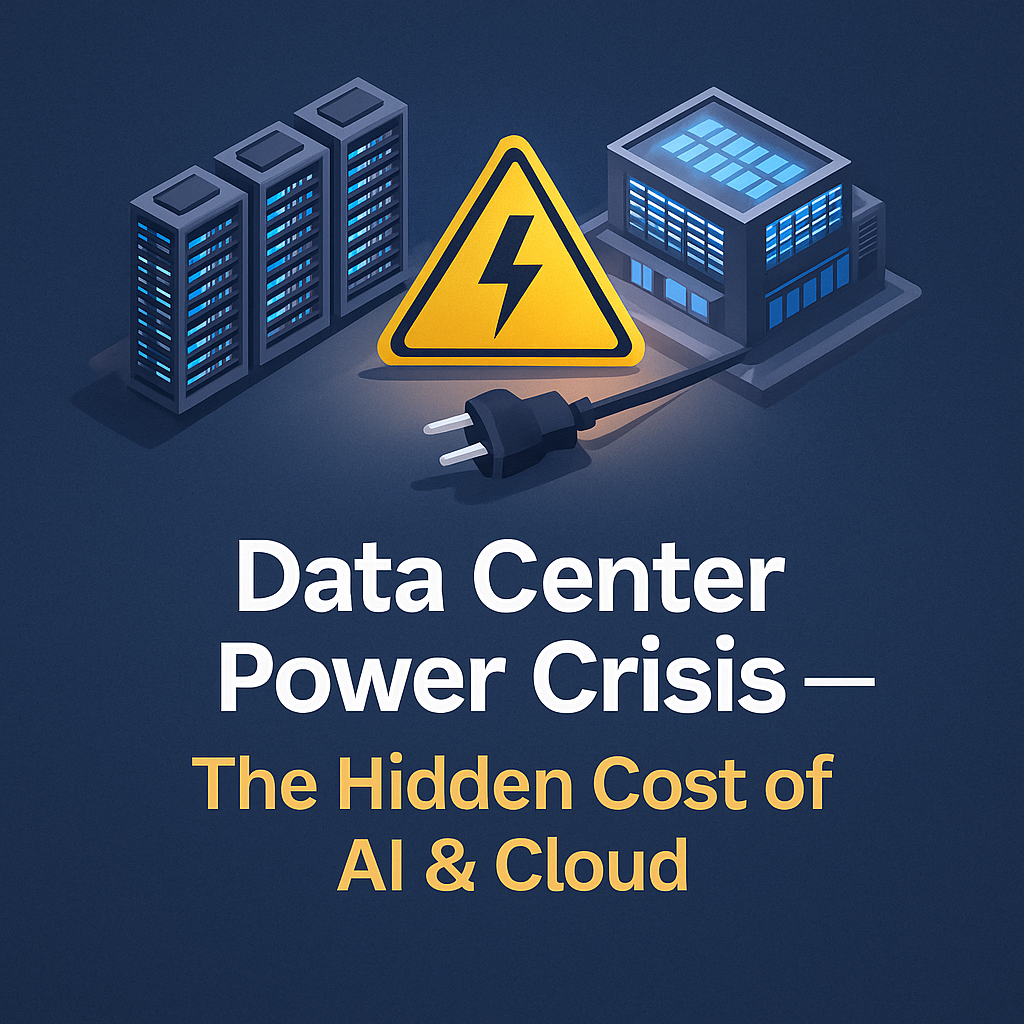
The rise of cloud computing and artificial intelligence (AI) has triggered a dramatic shift in the infrastructure that underpins the digital economy. What often remains hidden behind the communal excitement of “AI everywhere” and “cloud ubiquity” is the enormous energy and power infrastructure burden that modern data-centres now impose. In this article I examine the emerging “power crisis” in data centres — what it is, why it’s happening, what its costs are (economic, environmental, social), and what it means for organisations (including those running heavy workloads such as GPU/CPU benchmarking, virtualization and high-performance cloud infrastructure).
The Scale of the Problem
1.1 Electricity consumption at global scale
-
According to the International Energy Agency (IEA), global electricity consumption from data centres is currently around 415 terawatt-hours (TWh) — about 1.5% of global electricity consumption in 2024. IEA+2The Department of Energy's Energy.gov+2
-
Projections show that this could nearly double by 2030 (to ~945 TWh) in IEA’s base-case scenario — which would represent just under 3% of global electricity consumption at that time. IEA+1
-
In the U.S., for example, data centres burned through ~183 TWh in 2024 (≈ 4 % of U.S. electricity consumption) and this is projected to more than double by 2030 (to ~426 TWh). Pew Research Center+1
1.2 The rapid growth of AI workloads
-
The growth is not just from “more data centres” but from accelerated workloads — GPU/TPU clusters, large language model training, inference-at-scale. For accelerated servers (AI-specific) IEA projects growth of ~30 % per year versus ~9 % for conventional servers. IEA
-
A report from Goldman Sachs projects data centre global power demand rising by up to 165% by end of decade (compared with 2023) driven heavily by AI & cloud infrastructure. Goldman Sachs
-
In the U.S., Morgan Stanley warns of a power shortfall of up to 20% for data-centres through 2028, driven by this AI build-out. Yahoo Finance
1.3 Implications for power grids and infrastructure
-
As demand spikes, the strain on transmission, generation, grid inertia and local utilities increases. For example, many states and utilities already see data-centre clusters requiring upgrades to substations and grid interconnects. World Resources Institute+1
-
In certain regions, data-centres are already consuming significant shares of local electricity supply — which has knock-on effects for local households, industry and infrastructure planning. Pew Research Center
Why This Is Happening: The Drivers
2.1 Hyperscale AI and cloud workloads
-
The shift to generative AI, large model training, inference at scale (real-time, 24/7) imposes far higher power densities than earlier generations of server workloads. For example, a hyperscale server rack housing many GPUs may draw tens of kilowatts rather than a few. arXiv+1
-
Because of economies of scale and the need for performance, these facilities often push the envelope of cooling, power delivery, redundancy, uptime — all of which increase cost and complexity.
2.2 Location-based scaling and clustering
-
Many data centres are clustering in regions with favourable conditions (e.g., low power cost, cooler climate, tax incentives). But such clustering creates localised stress on the grid — even if the global picture may look manageable. Pew Research Center
-
The infrastructure to support these big sites — power-substations, high-capacity transformers, long transmission lines — often lags behind the build-out pace.
2.3 Energy inefficiencies & cooling overheads
-
Beyond compute power draw, a significant share of data-centre electricity goes into cooling, ventilation, power-distribution losses. The more power-dense the facility, the greater the ancillary overhead. Pew Research Center+1
-
Some cooling systems can consume up to ~30% (or more) of total data-centre power in less efficient facilities. The higher-efficiency hyperscale ones reduce this, but as densities increase, cooling demands rise. Pew Research Center
2.4 Renewable integration and intermittency challenges
-
Many operators aim to use renewable energy (wind/solar) or even nuclear to power their data centres. However, renewables are intermittent, and the real-time demands of AI compute often require stable, high-quality power. Utilities report long lead-times to add capacity or transmission lines, complicated permitting, and difficulty aligning renewables with load. Business Insider
-
Hence, in practice many facilities still rely on fossil-fuel backup or grid power from traditional sources — which raises emissions and complicates sustainability narratives.
Hidden Costs — Beyond the Server Bill
3.1 Economic / grid cost externalities
-
When data-centres demand large portions of the grid’s capacity, the cost for utility upgrades (generation, transmission, substations) often gets passed on to other customers — households and smaller businesses. For instance, households in some U.S. states are seeing higher bills because utilities must raise rates to cover infrastructure changes. Pew Research Center+1
-
In regions where grid capacity is tight, waiting times for data-centre interconnects can stretch years — delaying business launches or forcing relocation. MLQ
3.2 Environmental and carbon-footprint implications
-
The electricity powering data-centres still comes in large part from fossil fuels in many regions. If usage doubles and renewables don’t scale accordingly, emissions rise. Some data-centre expansions risk locking in fossil-fuel-dependent infrastructure for years. Financial Times+1
-
Cooling and power infrastructure use water (especially evaporative cooling) — which means data-centres in water-stressed regions create secondary environmental pressures. Wikipedia
3.3 Opportunity cost & infrastructure competition
-
Land, power, water and cooling resources used by giant data-centres could otherwise serve manufacturing, local communities or smaller businesses. This raises questions about regional equity, especially if local benefits (jobs, tax revenue) are limited relative to resource consumption.
-
For businesses that rely on power-intensive workflows (e.g., GPU-based benchmarking, high-throughput virtualization), the rising competition for power & cooling may result in:
-
Higher cost of hosting / cloud compute
-
Longer lead times for capacity
-
Possibly lower access to “premium” power/low-latency infrastructure
-
3.4 Reliability and resiliency risk
-
Over-load or near-capacity grids risk reduced slack, less resilience to failures or extreme weather, and a higher chance of brown-outs or reduced redundancy. Both for the data-centres themselves and for surrounding infrastructure (homes, hospitals, etc). Utilities already warn of these stress points. Business Insider+1
What It Means for Heavy Workloads: Benchmarking, Virtualization & Cloud Architecture
Given your focus on GPU/CPU benchmarking, virtualization, packaging and hybrid/cloud deployments, the power-and-infrastructure dimension is increasingly relevant. Here’s how:
4.1 Benchmark frameworks need to incorporate infrastructure cost
-
When you design benchmarking suites or virtualization stacks (e.g., GPU off-load, multi-node clusters, virtualization with VMware/VirtualBox, AI inference pipelines), consider not just raw compute metrics (GFLOPS, bandwidth) but also power cost, cooling overhead, and energy-efficiency per job.
-
For cloud deployments (e.g., on Microsoft Azure / AWS / GCP), cost is increasingly affected by underlying infrastructure constraints (power & cooling) — which may influence pricing, availability and performance.
4.2 Virtualization and hybrid compute implications
-
If you are deploying hybrid or on-prem + cloud models (e.g., your Windows VMs, GPU/CPU off-load from local boxes to cloud), you’ll want to assess the marginal cost and energy-footprint of those data-centre hops. Some workloads may be more efficient locally (depending on cooling/power cost) than on cloud if hosted in a region with constrained power.
-
Virtualization orchestration needs to monitor power quotas, especially in multi-tenant/hyperscale environments. Workload scheduling might need to pick times/locations when power-rates/availability are favorable.
4.3 Geographical and energy-sourcing choices matter
-
When choosing cloud or data-centre regions for deployment, energy source mix, grid capacity, power-cost escalation risk, cooling-environment matters. Some regions may have latent risk of power shortfall or higher future cost due to data-centre penetration.
-
For example, a data-centre region with low spare generation margin may face rate hikes or curtailment. This may affect SLAs, cost, and performance of your heavy workloads.
4.4 Sustainability & marketing angle
-
If you publish benchmarking results, articles, or modules (as you often do), then adding the energy/efficiency dimension (e.g., “X GFLOPS per kWh in this region”) may become pitched interest for your audience — especially as environmental pressure grows.
-
For your community of IT professionals and performance enthusiasts, highlighting energy-cost per task, cooling-efficiency, server-power draw per benchmark, adds a differentiator.
Strategies to Mitigate the Crisis
Here are some actionable strategies both at the macro (industry/utility) level and micro (enterprise/deployment) level.
5.1 At the industry/utility level
-
Demand-response programmes: Large data-centres can participate in grid-demand-response schemes (reducing load during peaks) to relieve grid stress. For example, Google LLC signed agreements in the U.S. to scale back its AI-data-centre power use during peak grid demand. Reuters
-
Grid and transmission investment: To support the build-out, utilities need to add generation capacity, transmission lines and substations — often a decades-long process. Delays here increase risk of bottlenecks. Deloitte
-
Green power sourcing + microgrids: Data-centres can source renewables, build on-site generation, battery storage or microgrids to reduce reliance on strained grids.
-
Transparency & reporting: Operators need to report actual power usage, cooling metrics, PUE (power usage effectiveness), etc., to allow regulators and communities to assess impact. Many analysts call out the lack of disclosure. Financial Times
5.2 At the deployment/enterprise level
-
Select region & energy source carefully: Choose data-centre regions with good grid capacity, favourable power-rates, strong renewable mix, and low risk of constraints.
-
Optimize workload scheduling: For heavy workloads (benchmark runs, model training), schedule during off-peak hours or when power cost is lower. Use regional differences in cost/time.
-
Power-aware benchmarking & architecture design: Measure not only compute time, but energy consumed (kWh) per benchmark. Optimize for energy per result, not only for raw speed.
-
Cooling & efficiency improvements: For on-prem or edge deployments, consider high-efficiency cooling, liquid-cooling, rack-density trade-offs, server selection for energy-efficiency.
-
Explore hybrid/edge alternatives: In scenarios where cloud data-centres may face constraints or higher cost, local or edge compute may be a better trade-off.
Risks and Outlook
6.1 What if growth continues unchecked?
-
Key analysts warn of shortages of grid capacity, especially in power-intensive regions. The Morgan Stanley estimate of a 20% shortage in U.S. data-centre power through 2028 is a sobering indicator. Yahoo Finance
-
If power remains constrained, potential risks include:
-
Higher operational cost (power price rises)
-
Longer lead-times for data-centre deployment
-
More frequent curtailments or restrictions on compute-intensive workloads
-
Slower rollout of AI infrastructure (contrary to rosy growth expectations)
-
Possibly higher environmental footprint if fossil fuels are used to fill gaps
-
6.2 Positive outlooks / levers for change
-
Efficiency gains: Even as compute demand rises, improvements in chip architecture, cooling, and workload scheduling can moderate power growth.
-
Renewable & nuclear power build-out: Some large tech companies already sign power-purchase agreements with nuclear or large-scale renewables to keep up. For example, some data-centres are being paired with revived nuclear plants to meet demand. Le Monde
-
Smarter grid integration: Data-centres may become flexible loads, shifting compute to times when power is cheap or renewables are abundant (demand-response).
-
Metrics and transparency: As stakeholders (governments, investors, communities) ask more questions, data-centres will likely publish more energy/cooling metrics — enabling smarter planning and benchmarking.
Recommended Actions for You & Your Audience
Given your interest and work in benchmarking, virtualization, packaging, IT community content, here are specific actions you may consider:
-
Include an energy-metric in your benchmarking reports
-
When you run GPU/CPU benchmarks, capture not only “runtime” but “energy consumed (kWh)” and compute “GFLOPS per kWh” or similar efficiency measure.
-
Compare different clouds/regions not only on cost but on energy-efficiency.
-
-
Write content for your site/forum
-
Craft an article or a series titled “The energy cost of cloud compute: what every IT pro should know” — profile power constraints, regional grid stress, cooling concerns, cost risk.
-
Offer a guide for “Selecting cloud region by power & performance” which complements your other performance-/virtualization-focused content.
-
-
Virtualisation and hybrid use-cases
-
Explore how on-prem GPU/CPU off-load (your GPU compute off-loading with GTX 770 + Quadro K420, etc) compares energy-wise versus using a hyper-scale cloud cluster in a constrained region.
-
Publish case-studies or tooling (e.g., Power Profiler, Plug-in for measuring GPU cluster energy) for your community.
-
-
Packaging & deployment considerations
-
When designing modules/plugins/apps (e.g., your Joomla modules, GPU/AI benchmarking apps), consider adding “eco-mode” options: e.g., schedule jobs during off-peak hours, throttle for lower power draw, log power-consumption metrics.
-
For virtualization (VMware/VirtualBox etc), document best-practices to reduce power‐draw, e.g., avoid over-provisioning, consolidate idle workloads, enable cooling/host power-features.
-
-
Engage with cloud providers’ transparency
-
Keep track of which cloud/data-centre providers publish metrics (PUE, energy mix, water usage) and highlight them in your content.
-
Encourage community members to ask: “What is the energy source of this region? What is the spare grid capacity? Are there power quotas/cut-off risks?”
-
Conclusion
The hidden cost of cloud and AI isn’t just the dollars paid in subscription fees — it’s the massive, rapidly accelerating power and infrastructure burden that lies behind all those “compute cycles”. Data-centres are no longer passive back-rooms of the internet; they are industrial-scale power customers whose growth carries far-reaching implications for utilities, grids, households, industries, the environment—and for performance-oriented IT professionals like yourself.
The crisis (or perhaps challenge) is real: growing demand, constrained supply, ageing grids, cooling & environmental burdens all point to the need for more responsible planning, region-aware deployment, energy-efficient architecture, and transparent metrics. For anyone building heavy workloads — benchmarking GPU/CPU, virtualization, packaging modules, cloud deployments — this dimension can no longer be ignored.


 11914
11914  IT Pro