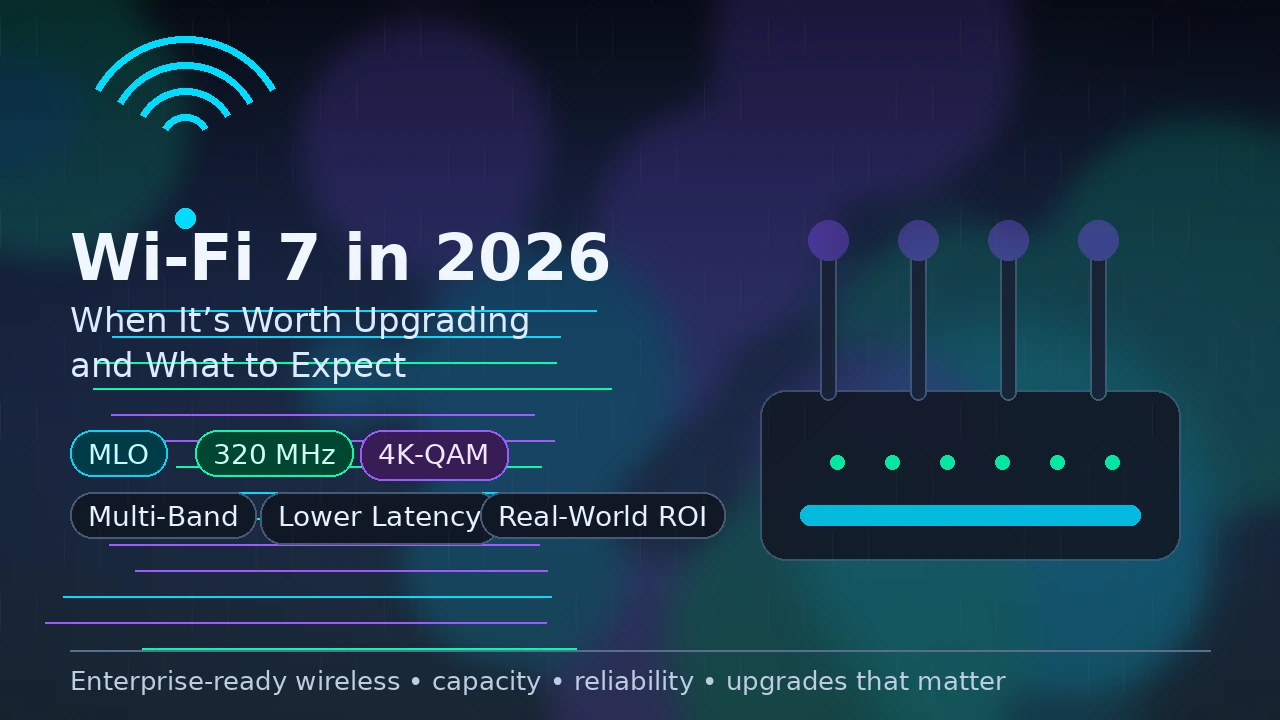
Entro il 2026, il Wi-Fi 7 (IEEE HbA) è passato da "sintravvisabilità precoce" a un'opzione pratica nelle reti reali. La questione più importante per le squadre informatiche non è più se il Wi-Fi 7 è veloce, ma se le sue capacità specifiche si traducono in miglioramenti misurabili per il vostro ambiente. Se si gestiscono le reti di imprese, le reti di campus, l'ospitalità, il commercio al dettaglio, i siti industriali o i piani d'ufficio, il Wi-Fi 7 introduce una serie di caratteristiche che possono cambiare in modo significativo il modo in cui si progetta per capacità, latenza e affidabilità.
Questo articolo si concentra sui tempi e sulle aspettative di aggiornamento: dove il Wi-Fi 7 offre benefici tangibili, ciò di cui avete bisogno negli strati cablati e RF per evitare delusioni e come pianificare una diffusione che non crea un costoso "passaggio Wi-Fi 7" con risultati Wi-Fi 6E.
Che cosa cambia il Wi-Fi 7
Le generazioni Wi-Fi sono spesso commercializzate come aggiornamenti di velocità, ma la storia più importante è come si occupano di contenziosi e interferenze quando l'aria è occupata. I miglioramenti principali del Wi-Fi 7 si concentrano su tre temi: più parallelismo, più uso intelligente dello spettro e migliore comportamento sotto carico. In reti reali, che si traduce in un più alto flusso aggregato per AP, migliori prestazioni in ambienti densi e un percorso più chiaro verso un wireless a bassa latenza per carichi interattivi.
Un concetto chiave è che il Wi-Fi 7 cerca di passare meno tempo ad aspettare. In condizioni di tempo libero, l'attesa è ciò che rovina l'esperienza degli utenti. La modulazione più rapida aiuta solo quando la qualità del segnale è eccellente; le vincite più grandi derivano da meccanismi che riducono le ritrasmissioni, sfruttano al massimo gli ambienti multibanda e permettono una programmazione più efficiente.
L'operazione multi-link e perché è importante per l'IT
L'operazione multi-link (MLO) è una delle capacità più utili di Wi-Fi 7 negli scenari aziendali. Invece di trattare 2,4 GHz, 5 GHz e 6 GHz come mondi separati, MLO può permettere a un cliente e a un AP di coordinarsi tra più collegamenti. L'immediato vantaggio pratico è la resilienza: quando una banda è congestionata o subisce interferenze transitorie, il traffico può cambiare o essere bilanciato in modo più intelligente. In dispiegazioni ben progettate, ciò significa meno bancarelle e meno picchi di latenza "mistero" che gli utenti provano come congelamento di video, chiamate a pipa o risposte a basso costo.
MLO può anche aiutare alcuni tipi di clienti sensibili alla latenza. Gli strumenti di collaborazione, le sessioni VDI, i softphone e i flussi di lavoro SaaS interattivi soffrono spesso di più per i ritardi del jitter e dei brevi pacchetti rispetto ai limiti del flusso grezzo. Il valore di MLO non è solo un test di velocità più veloce, ma una maggiore coerenza quando molti clienti condividono il tempo di volo.
La gestione delle aspettative è importante qui. I benefici di MLO dipendono dal supporto del cliente e dall'implementazione del AP e possono essere limitati dal piano RF. Se hai una debole copertura a 6 GHz o una potenza di trasmissione mal sintonizzata che costringe i clienti a unirsi a una banda, MLO non ripara magicamente le basi. Trattalo come un vantaggio che si apre dopo aver fissato la copertura, la pianificazione della capacità e il controllo delle interferenze.
Larghezza del canale, 6 GHz e realtà di 320 MHz
Il Wi-Fi 7 introduce supporto per canali molto ampi, compresi 320 MHz nella banda 6 GHz. Su carta, questo è un enorme strumento di controllo. In pratica, i grandi canali sono un compromesso: aumentano le prestazioni di punta, ma riducono il numero di canali non sovrapposti disponibili in un dato spazio, che possono aumentare i contenuti dei co-canali in dispiegamenti fitti.
In molti ambienti d'impresa, l'obiettivo non è il massimo rendimento a singolo cliente, ma la massima capacità totale e le prestazioni prevedibili in dozzine o centinaia di dispositivi. Ciò significa che continuerai a pianificare canali più ristretti (come 80 MHz o 160 MHz) a seconda della densità, delle necessità di riutilizzo delle RF e dell'ambiente acustico. I grandi canali hanno più senso nelle aree a bassa densità dove si può permettersi di canalizzare la larghezza senza provocare l'autointerferenza tra i vicini AP.
La banda 6 GHz rimane il vantaggio strategico che continua a rimodellare il design della rete. Offre uno spettro più pulito delle bande tradizionali, che è fondamentale per la stabilità delle prestazioni. La capacità del Wi-Fi 7 di usare meglio la 6 GHz è una ragione importante per cui gli aggiornamenti diventano attraenti nel 2026, supponendo che tu possa schierare e sostenere efficacemente la 6 GHz attraverso l'impronta.
Latency and Jitter: The "Hidden KPI" of Wi-Fi 7
Per molte squadre IT, il successo è misurato con i biglietti, la qualità delle chiamate e la sensibilità percepita piuttosto che con i megabit grezzi. Il Wi-Fi 7 mira a un comportamento di latenza inferiore, e anche miglioramenti modesti qui possono avere più di un numero di picco impressionante. Se la tua organizzazione esegue comunicazioni unificate pesantemente, usa i desktop cloud, supporta le applicazioni di inventario in tempo reale o si basa sui cruscotto interattivi, l'esperienza dell'utente è spesso dominata da variazioni di latenza.
I maggiori miglioramenti si presenteranno dove il Wi-Fi 6/6E già lotta: zone di conferenze affollate, sale di formazione, piani per uffici aperti durante le ore di punta, e ovunque si disponga di una combinazione di dispositivi "bursty" e di endpoint " latenti". In questi scenari, le strategie di programmazione e multi-link del Wi-Fi 7 possono ridurre i dolorosi picchi di jitter che provocano la degradazione delle chiamate e le applicazioni per "sentire lentamente".
Il Wi-Fi 7 sarà un complemento, non un sostituto, per una buona politica di QoS. Se la tua politica in materia di rete, la progettazione di VLAN, le impostazioni di roaming e il percorso WAN non sono gestiti, i miglioramenti senza fili da soli non forniranno una voce sempre eccellente o VDI. Pensate al Wi-Fi 7 come a dare ai vostri strati di RF e MAC più spazio per far sì che le vostre politiche esistenti funzionino sotto controllo.
Quando si arriva al Wi-Fi 7 è davvero degno di questo
Il momento migliore per aggiornarsi è quando Wi-Fi 7 risolve un vero vincolo che si può chiamare e misurare. Se non si può indicare congestione, problemi di qualità delle chiamate, instabilità del roaming o carenze di capacità, un aggiornamento può essere prematuro. Nel 2026, il Wi-Fi 7 diventa più convincente in diverse situazioni comuni.
L'ambiente adatto ai clienti è un primo candidato. Se gestite uffici con alta densità di posti, aule, spazi per eventi o proprietà di ospitalità dove dozzine di clienti competono per AP, beneficerete di un uso più efficiente del tempo aereo e di un migliore coordinamento multibanda. Il dolore in questi ambienti non è "velocità"; si tratta di contenziosi, retrie e prestazioni imprevedibili.
Anche le organizzazioni che si standardzzano a 6 GHz sono candidati forti. Se sta già pianificando o espandendo la copertura a 6 GHz, il Wi-Fi 7 è un endpoint logico perché sfrutta più aggressivamente questo spettro. Un'AP Wi-Fi 7 implementata senza una copertura pratica a 6 GHz è come installare una CPU più veloce in un sistema strozzato dalla memoria; funziona, ma non giustifica la spesa.
I carichi di lavoro in tempo reale e interattivi forniscono un'altra forte giustificazione. Se la voce, il video, i VDI, la formazione assistita da AR, le sovrapposizioni di controllo industriale o la reattività del punto vendita sono fondamentali per le imprese, vale la pena pagare per miglioramenti che riducono i picchi di latenza. I team IT spesso sottovalutano l'impatto della produttività di piccoli ma frequenti bancarelle senza fili.
Infine, i cicli di rinfresco contano. Se l'hardware Wi-Fi 6/6E si avvicina alla fine del supporto, o il modello di licenza e manutenzione della piattaforma rende costoso un rinfresco intermedio, può essere più razionale saltare gli aggiornamenti incrementali e passare direttamente al Wi-Fi 7 dove si può standardizzare per più anni.
Quando si deve interrompere
Ci sono anche casi chiari dove aspettare. Se la maggior parte della vostra flotta è ancora Wi-Fi 5 o Wi-Fi 6 clienti senza supporto 6 GHz, il beneficio immediato dell'utente può essere limitato. Il Wi-Fi è un'equazione a due lati: la capacità di AP è importante, ma l'adozione dei clienti determina spesso se una nuova generazione produce ROI oltre le migliori caratteristiche di gestione.
Dovrebbe anche resistere se lo strato di accesso non è pronto. I PA Wi-Fi 7 possono spingere un aumento del flusso aggregato, specialmente in ambienti con molti clienti capaci. Se i tuoi collegamenti sono vincolati, il tuo "aggiornamento senza fili" può semplicemente spostare la strozzatura verso la porta dell'interruttore. Analogamente, se il tuo percorso WAN è il fattore limitante per la maggior parte delle applicazioni cloud, il Wi-Fi 7 può migliorare le prestazioni locali, ma non l'esperienza che gli utenti si preoccupano di più.
I fondamentali RF sono un'altra ragione per ritardare. Se il Wi-Fi esistente soffre di una cattiva pianificazione dei canali, di AP iperpotenti che causano clienti appiccicosi, fonti di interferenza incontrollate o di roaming inaffidabile a causa di impostazioni mal configurate, il Wi-Fi 7 non risolverà questi problemi. Potrebbe anche renderle più complesse perché gestirete più opzioni di spettro e comportamenti più avanzati.
Ripresa delle infrastrutture: la parte che fa o rompe l'aggiornamento
Molti aggiornamenti Wi-Fi deludenti falliscono per lo stesso motivo: l'hardware della rete è stato potenziato, ma gli strati di supporto non lo erano. Nel 2026, la pianificazione del Wi-Fi 7 dovrebbe includere uno sguardo sincero al cambiamento, ai bilanci del PoE, al cabling e alla strategia di collocamento.
Inizia con la capacità di collegamento. Anche se il tuo tipico traffico di utenti è modesto, gli ambienti densi possono generare un flusso aggregato significativo quando molti dispositivi si sincronizzano, aggiornano o trasmettono corrente. Assicurare che gli interruttori di accesso e i collegamenti abbiano abbastanza spazio, specialmente nelle aree che storicamente generano un alto volume di biglietti.
Anche la consegna di elettricità è importante. I moderni AP con radio e caratteristiche avanzate possono richiedere più energia delle generazioni più vecchie. Se i vostri interruttori sono già vicini al loro budget di PoE, potreste finire per disinvolgere le caratteristiche o sottopotere le AP, pagando efficacemente per le prestazioni che non potete usare.
Il collocamento in cabina e in AP diventa ancora più importante man mano che si abbraccia la 6 GHz. Le frequenze più alte generalmente hanno una propagazione meno favorevole attraverso muri e ostacoli. Ciò non significa che la 6 GHz sia "cattivo", ma significa che potrebbe aver bisogno di ulteriori AP o di un diverso collocamento per fornire la stessa copertura. L'impasse più comune attende un progetto a 5 GHz per fornire un comportamento identico a 6 GHz senza aggiustamenti.
Sicurezza e politica: WPA3, segmentazione e realtà operativa
La postura di sicurezza dovrebbe far parte del caso. I dispiegamenti Wi-Fi 7 nel 2026 in genere coincidono con una più ampia modernizzazione: maggiore adozione del WPA3, migliore segmentazione e migliore integrazione con sistemi di identità e postura. Se è ancora in possesso di sistemi di sicurezza tradizionali per motivi di compatibilità, un rinfresco AP è un'opportunità per ripulire il debito tecnico.
Detto questo, gli aggiornamenti di sicurezza sono raramente "gratuiti". Alcuni dispositivi IoT più vecchi lottano con le moderne modalità di sicurezza e le reti degli ospiti sono spesso un punto di pressione. Un approccio pratico consiste nell'accoppiare il Wi-Fi 7 con una strategia di segmentazione più chiara: isolare l'eredità dell'IoT, mantenere il traffico degli ospiti e applicare un'autenticazione più forte per i clienti aziendali, ove possibile. Questo può ridurre il rischio di movimento laterale e semplificare la risoluzione dei problemi quando qualcosa si comporta inevitabilmente male.
Si assicuri che il monitoraggio e il disboscamento possano distinguere le questioni RF dall'autenticazione, DHCP, DNS e i problemi del percorso di applicazione. La connessione Wi-Fi più veloce può cambiare le aspettative degli utenti, e può dare la colpa alla rete per una lentezza che effettivamente vive in un servizio cloud o in una politica locale di firewall. Una migliore accessibilità ti impedisce di reagire in modo eccessivo e di apportare modifiche alla RF per risolvere i problemi non legati al FER.
Realtà del cliente nel 2026: Flotta mista e problema "Due livelli"
La maggior parte delle organizzazioni del 2026 gestiscono ancora flotte di clienti miste. Potrete avere computer portatili e telefoni nuovi insieme a dispositivi più vecchi, scanner specializzati, stampanti, telecamere e sistemi incorporati che si aggiornano lentamente. Questo crea un'esperienza a due livelli: i dispositivi moderni beneficiano di nuove frequenze e di nuove caratteristiche, mentre i clienti più vecchi rimangono in bande congestionate e possono continuare a guidare l'inefficienza del tempo aereo.
Il vostro piano di aggiornamento dovrebbe considerare la diversità dei clienti come un requisito di prima classe. Progettare per una piacevole coesistenza. Ciò significa spesso mantenere 2,4 GHz focalizzati su esigenze di IoT a bassa velocità, assicurare che 5 GHz restino forti e non troppo affollati, e usare 6 GHz come la corsia di prestazione primaria per gli endpoint moderni dove la copertura permette.
Significa anche gestire le aspettative con la leadership. Il Wi-Fi 7 non renderà immediatamente ogni dispositivo più veloce. I miglioramenti più evidenti saranno visti dai clienti Wi-Fi 7 e 6E, e da tutti durante il picco di contentione quando l'efficienza complessiva della rete migliora. Se il vostro caso d'affari prevede un miglioramento uniforme in tutti gli endpoint, potreste essere delusi.
Un programma di aggiornamento pratico per le squadre IT
La strategia di spiegamento Wi-Fi 7 è mirata, misurabile e messa in scena. Iniziare identificando i luoghi in cui le prestazioni senza fili sono un problema operativo ricorrente: piani ad alta densità, aree di incontro, sale di addestramento o luoghi con picchi di carico stagionali. Impiegare il Wi-Fi 7 e definire i criteri di successo che si riferiscono ai risultati delle imprese: meno lamentele voce/video, tassi di ritrasmissione più bassi, latenza più stabile, biglietti ridotti e migliori prestazioni durante i periodi di punta noti.
Accoppiate il pilota con le indagini aggiornate. Se si sta espandendo l'uso di 6 GHz, si può convalidare la copertura piuttosto che assumere. Assicurare che la vostra strategia di trasmissione non crei cellule troppo grandi che incoraggino clienti appiccicosi. Confermare il comportamento in roaming con i dispositivi che l'organizzazione utilizza, non solo un telefono generico.
Avanti, convalidare lo strato cablato. Confermare che i collegamenti, i bilanci del PoE e la capacità di interruttore supportano i nuovi AP. Se non si riesce ad affrontare immediatamente la strozzatura cablata, si può ancora usare il Wi-Fi 7, ma si dovrebbe essere onesti che si sta comprando stabilità e futura prontezza più del picco del throughput.
Infine, creare una tabella di marcia per l'adozione. Se il ciclo di aggiornamento dell'endpoint sposterà una parte significativa della vostra flotta al Wi-Fi 7 nel prossimo anno o due, un aggiornamento dell'AP nel 2026 potrà essere in tempo per raggiungere quella curva. Se il rinfresco dell'endpoint è lento, un'impronta Wi-Fi 7 più piccola focalizzata su aree ad alto impatto potrebbe essere la migliore scelta finanziaria.
Cosa aspettarsi dopo il dispiegamento
In un'installazione ben eseguita, ci si dovrebbe aspettare miglioramenti che si presentino nelle operazioni quotidiane: meno lamentele intermittenti, migliore stabilità della collaborazione e meno collasso delle prestazioni quando le stanze si riempiono. Si può anche vedere un aumento dei picchi, ma è raramente il risultato più prezioso nell'ambiente imprenditoriale.
Dovrebbe anche aspettarsi una curva di apprendimento. Il Wi-Fi 7 introduce più parti in movimento e le implementazioni dei venditori differiranno nel modo in cui espongono e sintonizzano nuove capacità. La vostra squadra trarrà vantaggio da basi di base più forti, telemetria più chiara e l'abitudine di convalidare i cambiamenti con i veri dispositivi client e i veri flussi di lavoro per l'applicazione.
Soprattutto, aspetta che il Wi-Fi 7 premi la disciplina del progetto RF. Se la vostra organizzazione tratta il Wi-Fi come uno strato di accesso strategico piuttosto che un "migliore servizio di sforzo", il Wi-Fi 7 nel 2026 può essere un miglioramento significativo. Se il Wi-Fi è gestito in modo reattivo, la nuova generazione può semplicemente creare nuove variabili senza affrontare le cause profonde del dolore degli utenti.
Linea di fondo per le IT Pros
Il Wi-Fi 7 vale la pena di essere aggiornato nel 2026, quando risolve problemi specifici che si possono misurare: contenzioso basato sulla densità, latenza incoerente, instabilità della collaborazione o passaggio strategico a 6 GHz. I migliori risultati arrivano quando l'aggiornamento senza fili è abbinato alla disponibilità nello strato cablato, a un'attenta pianificazione delle RF e a aspettative realistiche sulle flotte con clienti misti.
Se l'attuale rete Wi-Fi 6/6E è stabile, la flotta dei clienti è per lo più un'eredità, e i suoi principali vincoli vivono nel WAN o nello strato di applicazione, può aspettare con sicurezza mentre si concentra sui fondamentali. Ma se si utilizzano ambienti wireless ad alta richiesta o si affidano pesantemente a flussi di lavoro in tempo reale, la strategia Wi-Fi 7 e multi-link possono trasformare "problemi senza fili" in livelli di servizio prevedibili e supportabili.

 12966
12966  IT Pro