Em 2026, discussões de CPU laptop dentro de equipes de TI soam menos como “Qual SKU é mais rápido?” e mais como “Qual máquina fica rápido tempo suficiente sem se tornar um aquecedor de ambiente ou queimar através da bateria ao almoço?” Essa mudança não é marketing fluff. É a realidade prática de plataformas móveis modernas onde comportamento agressivo impulso, projetos de núcleo híbrido, aceleradores de IA, monitores de alta atualização, e sempre-on conectividade colidem com um envelope térmico finito e uma bateria finita.
Para os profissionais de TI, o trade-off importa porque afeta tudo a jusante: confiabilidade do endpoint, satisfação do usuário, políticas de energia da frota, volume de ticket helpdesk (“Minha bateria é terrível em chamadas de equipes”), postura de segurança (comportamento de sono/standby), e até mesmo estratégia de aquisição (você compra notebooks “AI” finos e leves ou sistemas de desempenho mais grossos?). O vencedor não é a CPU com a maior pontuação de pico; é a plataforma que oferece a mistura certa de responsividade, produtividade sustentada e resistência previsível para suas cargas de trabalho reais.
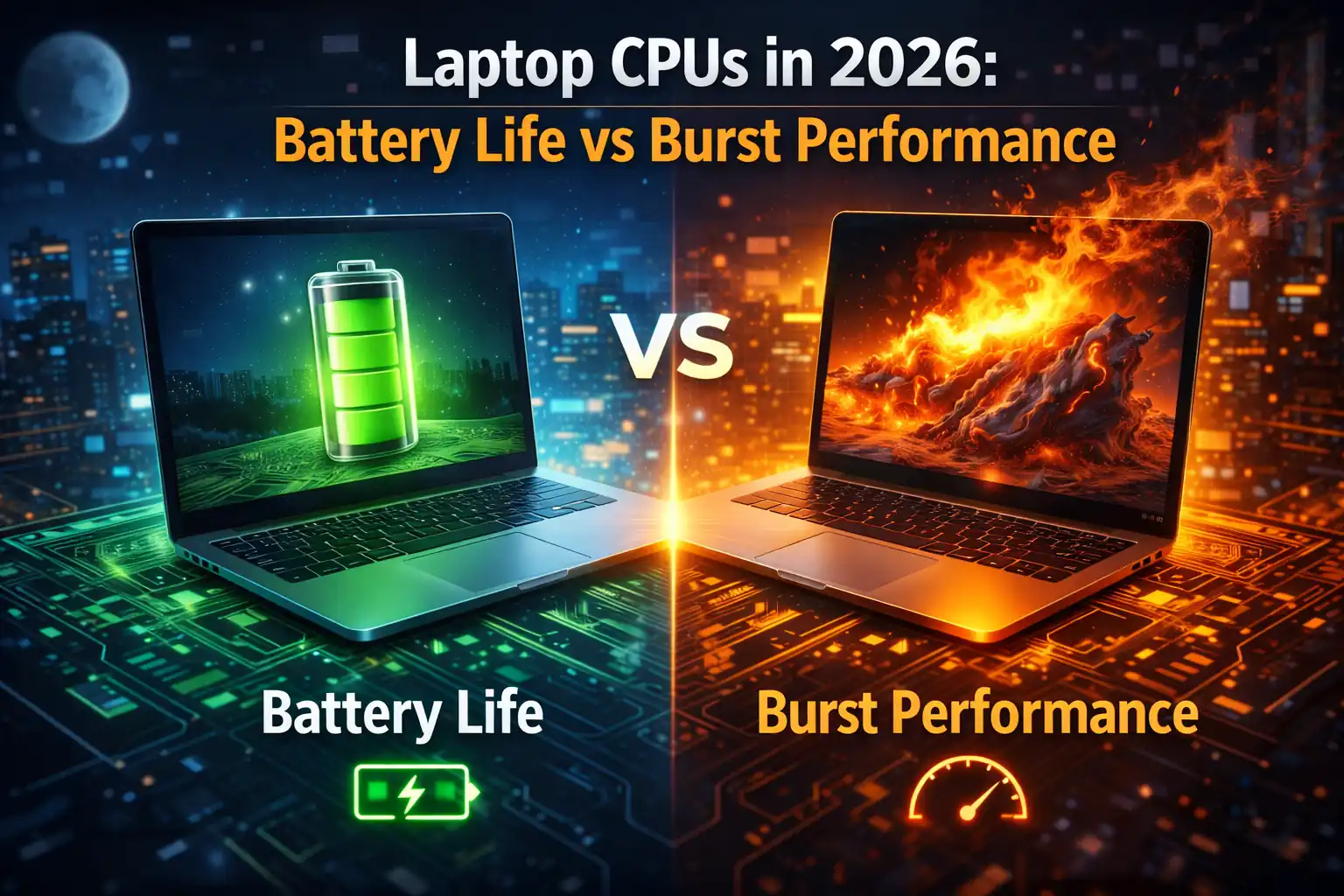
Porque o debate bateria contra explosão ficou mais afiado em 2026
O problema principal é a física: laptops só podem dissipar tanto calor, e as baterias só podem fornecer tanta energia antes que o sistema tenha que travar. Os fornecedores podem fazer um laptop se sentir “instante”, permitindo curtos surtos de alta potência – às vezes muito acima do que o chassi pode sustentar. Essa explosão faz o aplicativo lançar rapidamente, as abas do navegador renderizar rapidamente e as planilhas recalc em um piscar de olhos. Mas isso também significa que o sistema pode gastar energia agressivamente na frente e, em seguida, amontoar com força em um nível sustentado inferior uma vez que o calor constrói.
Em 2026, esta dinâmica é ampliada por três tendências: computação híbrida (diferentes tipos de núcleos com diferentes perfis de eficiência), plataforma IA (NPUs que alteram a história de programação e energia), e carga de trabalho spikiness (trabalho moderno é uma mistura de micro-bursts—notificações, indexação, varreduras de segurança, aplicativos da web, chamadas de vídeo—ao invés de um trabalho em lote longo e estável).
Burst performance: o que realmente compra na vida empresarial
“Burst” não é apenas um truque de referência. É uma verdadeira alavanca de experiência do usuário: o atraso entre clicar e ver algo acontecer. Em muitos cenários de escritório e conhecimento-trabalhador, a maioria do desempenho percebido vem de impulsos de CPU de curta duração emparelhados com armazenamento rápido e um thread de UI responsivo. Um laptop que estoura bem pode sentir premium mesmo se sua computação sustentada é média.
Mas a explosão tem custos ocultos. Pode desencadear:
- Espetos de rampa térmica e de ventoinha que interrompem reuniões e ambientes de escritório silenciosos.
- Bateria “carregamento frontal” onde a primeira hora se sente rápida e as próximas horas se sentem aceleradas.
- Desempenho inconsistente em modelos de laptop idênticos se as configurações de firmware, drivers e OS variam de acordo com a imagem.
- Queixas de temperatura da pele que se tornam um padrão helpdesk em frotas de chassis finos.
Em outras palavras: o rompimento é valioso, mas somente se a plataforma controlar a descida do rompimento para o desempenho sustentado de uma forma previsível e favorável às políticas.
Vida útil da bateria: porque “eficiência PCU” sozinho não decide
A vida útil da bateria é frequentemente discutida como se a CPU fosse toda a história. Na prática, a resistência da frota é matemática de plataforma: poder do painel de exibição, comportamento da taxa de atualização, características do modem Wi-Fi/5G, tipo de memória, estados de alimentação SSD, ferramentas de segurança de fundo, pipelines de conferência e comportamento standby podem superar a eficiência bruta da CPU.
É por isso que dois laptops com "a mesma CPU" pode ter resultados de bateria dramaticamente diferentes. Afinação de um fornecedor pode priorizar o silêncio e longo prazo; outro pode priorizar o benchmark “snappiness” e aceitar maior dreno ocioso. Se você quer resultados previsíveis da bateria, você avalia toda a configuração do dispositivo – não apenas o nome do silício.
O que há de diferente sobre 2026 plataformas de CPU laptop
A geração 2026 de CPUs móveis é fortemente moldada por requisitos de “AI PC” e pela maturidade de gerenciamento de energia. Plataformas mais novas tendem a empurrar mais inteligência para as camadas de hardware e firmware: transições mais rápidas entre estados de potência, políticas de impulso mais nuances e aceleração mais especializada (CPU + GPU + NPU) para impedir que a CPU faça tudo.
Praticamente, isso significa que suas alavancas de ajuste se multiplicam: não apenas "estado máximo do processador" ou "equilibrado vs alto desempenho", mas políticas que influenciam a atividade de fundo, o comportamento de espera moderno, a aceleração de conferência, e a rapidez com que a máquina é permitida para aumentar a potência para responsividade.
Como pensar sobre a decisão da CPU como um profissional de TI
Em vez de “bateria vs desempenho”, pense em perfis de carga de trabalho que mapeiam para o seu org:
O trabalhador do conhecimento da reunião-pesado
Chamadas de vídeo punem a vida útil da bateria de maneiras que os benchmarks apenas da CPU não capturam: câmera + microfone DSP, codificar/decodificar pipelines, desfoque de fundo, compartilhamento de tela e atividade de rádio constante. Aqui, a melhor plataforma é a que pode descarregar eficazmente (aceleração GPU/NPU onde suportada) mantendo os estados baixos e inativos estáveis da CPU. A explosão é importante para a capacidade de resposta, mas a resistência vem da redução do ruído de fundo desnecessário.
O desenvolvedor / engenheiro de construção
Compilações, contêineres, IC local e testes são cargas de trabalho sustentadas disfarçadas de trabalho “bursty”. Um laptop que ganha rajadas rápidas, mas colapsa sob calor sustentado irá frustrar desenvolvedores e criar tempos de construção inconsistentes. Neste segmento, o desempenho sustentado por watt é rei, e chassis mais grosso com melhor resfriamento pode superar CPUs “mais rápidas” presas em projetos ultrafinos.
O analista / usuário de operações de segurança
Ferramentas SOC, consultas de log, múltiplas VMs, digitalização EDR e fluxos de trabalho pesados de navegador combinam carga de fundo constante com explosões de UI. Esses usuários se beneficiam de plataformas que permanecem eficientes sob constante utilização baixa a média e de dispositivos que mantêm os ventiladores sob controle durante longos turnos. A vida útil da bateria é muitas vezes menos sobre "o quão baixo pode ocioso" e mais sobre "o quão eficientemente pode permanecer em 15–35% de carga por horas".
O criador / engenheiro de estação de trabalho viajante
CAD, edição de vídeo e tarefas pesadas da GPU transformam o laptop em um concurso de gerenciamento de calor. O desempenho de explosão pode ajudar com limpeza de linha do tempo ou renderizações curtas, mas a capacidade de rendimento e refrigeração sustentadas decidem a experiência real. Para esses papéis, pode ser mais inteligente escolher um laptop que sustenta um pico ligeiramente inferior, mas o mantém por mais tempo sem estrangular, ou emparelhar um laptop mais leve com acesso remoto à estação de trabalho quando a mobilidade supera a potência local.
Realidade de aquisição: a “mesma CPU” pode se comportar como uma CPU diferente
Quando os fornecedores enviam laptops, eles enviam decisões políticas: limites de potência de firmware, curvas de ventilador, duração do impulso, configurações de memória, opções de painel e utilitários de fundo. Dois SKUs com marca de CPU idêntica podem fornecer duração de ruptura diferente, potência sustentada diferente, e dreno ocioso diferente. Em 2026, esta variância é grande o suficiente para que a TI não deve comprar no nome da CPU sozinho.
Uma abordagem prática é qualificar comportamento da plataforma: quão rápido ele aumenta, quão rápido ele acelera, quão alto ele fica, quão estável ele está na bateria, e quão consistente é em todas as atualizações da BIOS? Se você gerenciar centenas ou milhares de endpoints, consistência e previsibilidade bater “resultados herói” da melhor unidade caso de um revisor.
Uma abordagem de teste que realmente responde “bateria vs explosão”
Se seu teste piloto é apenas um benchmark sintético mais uma vaga “bateria parecia boa”, você vai perder os modos de falha que criam tickets. Você quer testes que representem a forma como os laptops gastam a maior parte do seu tempo: rajadas curtas, muitos inativos e alguma carga sustentada.
Considere um plano piloto construído em torno de cenários repetitivos:
- Correr para o buraco: abrir um conjunto de aplicativos padrão (browser com abas típicas, cliente de e-mail, chat, suíte de escritório), em seguida, medir a rapidez com que o sistema retorna aos estados de baixa potência após estouros.
- Resistência à conferência: uma sessão controlada Teams/Zoom/WebRTC com câmera ligada, efeitos de fundo ligados/desligados e compartilhamento de tela periódica – medição da drenagem de bateria e temperatura de superfície.
- Ponto de trabalho do conhecimento: exportações repetidas de documentos, recalques de planilha, renderização de PDF e aplicativos web pesados de navegador. Acompanhe o tempo-para-completar e o padrão de saque de energia.
- Computação mantida: uma carga de trabalho de compilação/render/teste de 20 a 30 minutos para revelar comportamento de estrangulamento em estado estacionário.
- Realidade de espera: Meça a drenagem noturna com configurações modernas de standby/sono usadas em seu ambiente, incluindo VPN, EDR e políticas corporativas de Wi-Fi.
O objetivo é produzir uma “impressão digital do comportamento” para cada modelo candidato: resposta de ruptura, piso sustentado, estabilidade ociosa e dreno de espera. Essa impressão digital é muito mais preditiva do que uma única pontuação de referência.
As alavancas de ajuste TI podem realmente controlar
Uma vantagem que a TI tem em 2026 é a capacidade de gestão. Muitos dos comportamentos que definem bateria vs explosão podem ser conduzidos através de políticas, padrões de imagem e disciplina de atualização.
As alavancas úteis incluem:
- Padrões de modo de potência: Defina o que significa “Balanced” na sua org e quando “Melhor desempenho” é permitido. A configuração padrão do usuário pode decidir silenciosamente toda a reputação da bateria de sua frota.
- Firmware e cadência do condutor: tratar BIOS + chipset + gráficos como um desempenho / bateria “stack,” atualizações não opcionais. Erros de gerenciamento de energia muitas vezes se parecem com “má eficiência de CPU.”
- Disciplina de carga de fundo: racionalizar itens de inicialização, duplicação de telemetria e sobreposição de agentes de segurança. Acordamentos pequenos constantes podem destruir a vida da bateria mais eficazmente do que qualquer explosão curta.
- Configuração da conferência: garantir caminhos de aceleração de hardware são ativados onde estável; padronizar políticas de efeitos de câmera se eles impactam materialmente a resistência em seus modelos escolhidos.
- Política de exibição: alto brilho e alta atualização pode dominar o poder de desenhar. Se sua frota usa painéis de 120-240Hz, considere orientações de política que alteram os padrões dinâmicos de atualização ou sensíveis.
O ponto não é para “desempenho grave”. É para evitar que o comportamento de explosão não gerenciado se transforme em queixas de bateria não gerenciada. Um laptop bem ajustado ainda pode se sentir rápido, evitando picos desperdiçados.
Escolher a classe de laptop certo para o trabalho
Uma verdade simples, mas muitas vezes ignorada: a classe de chassis determina se você está comprando a vida útil da bateria, estourando ou desempenho sustentado. Os ultraportáveis podem fornecer excelente capacidade de resposta e boa resistência, mas podem não suportar cargas de trabalho pesadas. Cadernos de desempenho mais grossos podem sustentar mais potência, mas podem ficar mais ociosos e pesar mais, ferindo a mobilidade do mundo real.
Muitas organizações obtêm os melhores resultados com níveis baseados em funções: sistemas finos e leves otimizados para conferência e produtividade de escritório, e sistemas separados de “performance traveler” para desenvolvedores, engenheiros e criadores que realmente precisam de rendimento sustentado. Isto é muitas vezes mais barato do que comprar a todos um laptop overpowered que funciona quente e decepciona na bateria.
O que esperar através do resto de 2026
Espere que as plataformas de CPU do laptop continuem empurrando para um agendamento mais inteligente, aceleração mais especializada e mais agressivo, mas melhor gerenciado, inicializando. Para TI, a mudança de habilidade é de “escolha a CPU mais rápida” para “escolha a plataforma mais previsível sob nossas políticas”. A vida útil da bateria será cada vez mais um resultado de integração de sistemas, não uma especificação de um único componente.
Se você pegar uma lição operacional do ciclo de 2026, faça isso: defina o que “bom” significa para sua org – alvos de resposta, comportamento de ventilador aceitável, conferência de resistência, dreno em espera – e pilote contra esses resultados. Em um mundo de cargas de trabalho e plataformas de laptops da era IA, a escolha certa da CPU do laptop é a que se comporta bem na realidade confusa da vida empresarial.

 12977
12977  IT Pro