Late January 2026 has brought a dense fog of public reporting, official messaging, and fast-moving regional dynamics around Iran. For IT professionals, the uncomfortable truth is that uncertainty itself is a risk multiplier. Whether escalation materializes as a short burst of activity, a prolonged standoff, or a de-escalation that still leaves tensions high, the cyber environment tends to behave the same way: activity spikes, attackers take advantage of distraction, and seemingly “ordinary” security gaps become high-impact failures under crisis pressure.
This piece is deliberately defensive. It is not an operational playbook for offensive actions, and it does not assume certainty about events. Instead, it examines the IT mission sets that typically emerge on all sides of a geopolitical flashpoint, how those mission sets translate into enterprise risk, and what practical controls most reliably reduce blast radius. The audience is IT pros: security engineers, SOC analysts, sysadmins, cloud architects, network engineers, and leaders who will be asked to give confident answers in a moment where confidence is hard to earn.
The Cyber Reality of a Kinetic Crisis
When geopolitical tension rises, cyber risk changes less in “category” than in “tempo.” Attackers do not suddenly invent a new internet. They accelerate what already works: credential abuse, identity persistence, known-vulnerability exploitation, third-party compromise, and influence campaigns that weaponize confusion. The most common organizational failure mode is not a single catastrophic breach; it is a pile-up of concurrent incidents—fraud, DDoS noise, phishing, vendor outages, and disinformation—each small enough to seem manageable until they collide.
Crisis conditions also compress decision loops. A security team may have excellent standards “on paper,” but still fail if approvals are slow, escalation paths are unclear, or change-control exceptions multiply. The difference between a contained incident and a prolonged outage often comes down to whether identity governance and recovery procedures hold up when executives are demanding speed.
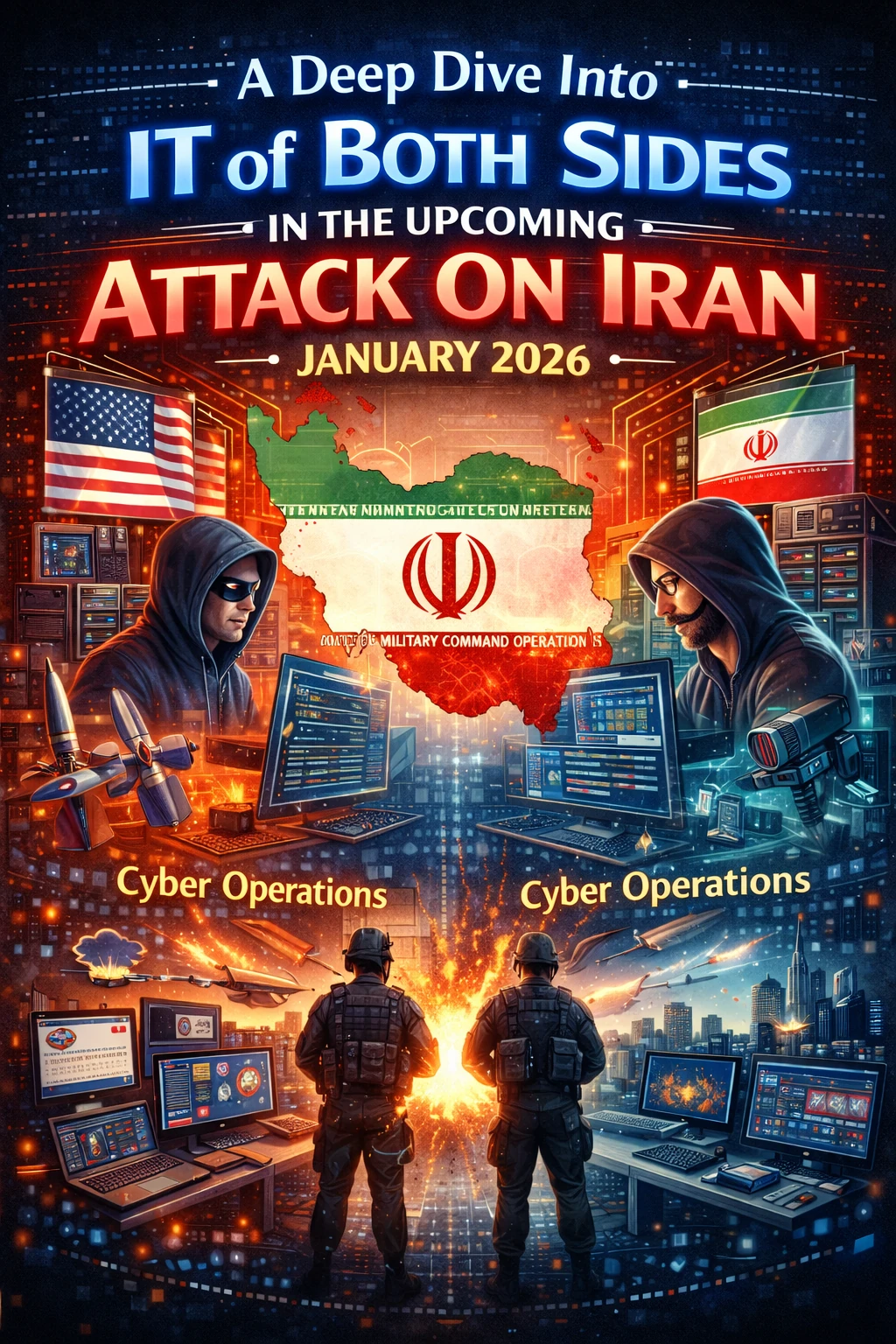
“Both Sides” in IT Terms: The Mission Sets
In modern conflict, the digital environment is a parallel theater with objectives that map cleanly to traditional goals. The actors vary—state services, contractors, aligned groups, opportunists, and criminals—but the mission sets repeat. Thinking in mission sets helps defenders anticipate what pressure will look like without guessing which logo is behind it.
- Intelligence collection at speed: access to communications, planning, logistics, and decision-making. In enterprise terms, this often manifests as identity compromise, mailbox access, cloud tenant abuse, and data harvesting from collaboration platforms.
- Operational disruption: limiting the reliability of services that shape mobility, communications, energy delivery, finance, and confidence. The IT shape is outages, destructive malware in some cases, and sustained recovery friction.
- Information effects: shaping narratives, demoralizing opponents, and creating social distrust using leaks, impersonation, and synthetic media. For organizations, this becomes brand risk, fraud enablement, and costly internal confusion.
- Deterrence and signaling: visible actions calibrated to send a message without escalating beyond a chosen threshold. In practice, this can look like selective disruptions or carefully timed leaks designed for maximum attention.
- Asymmetric retaliation: pressure applied through indirect digital routes when direct response is constrained. Target selection may include perceived supporters, partners, suppliers, and high-visibility commercial entities.
The defender takeaway is that you do not need to know exactly who is “on the keyboard” to reduce risk. You need to be ready for the behaviors those mission sets produce: identity abuse, availability attacks, and influence-driven incidents that blur technical and non-technical response.
The Iran-Linked Pattern: Identity, Access, and Persistence
Public advisories and industry reporting have repeatedly emphasized an Iran-linked pattern that is especially relevant in a crisis window: credential access methods that are scalable, coupled with persistence mechanisms that are easy to overlook. For many organizations, the highest-risk time is not the initial intrusion but the period after the first “cleanup,” when attackers return via identity footholds that survived.
The practical defensive lens is to assume a broad ecosystem of actors and approaches. Some operations are quiet and patient, prioritizing access and data. Others are loud and performative, optimized for attention. Still others resemble criminal tradecraft—because criminal services and state-aligned priorities can overlap during high-tension periods.
Why identity becomes the battlefield
Identity is the shortest path to business impact. Once an attacker can authenticate as a real user or workload identity, many “perimeter” controls become irrelevant. Cloud-first environments are particularly exposed because so much operational authority is expressed through tokens, roles, conditional access policies, and delegated privileges. The best-prepared teams treat their identity provider and cloud control plane as crown jewels, with higher monitoring fidelity than traditional network controls.
- Credential access noise: password spraying, brute-force attempts, and credential stuffing tend to spike in crisis periods because they are cheap, fast, and often successful against organizations with legacy password hygiene.
- MFA workflow abuse: “push fatigue” style abuse and manipulations of MFA registration can turn multi-factor from a shield into a liability when helpdesks are stressed and exceptions become normal.
- Persistence through legitimate paths: changes to MFA devices, creation of new app registrations, additions of OAuth grants, new forwarding rules, and delegated access can provide long-lived re-entry without malware.
The Counter-Pressure: What a High-Resource Adversary Environment Looks Like
In a major escalation, “the other side” of the cyber equation may involve actors with high resources, broad intelligence, and disciplined operational security. From a defender’s standpoint, that means fewer obvious signals and more activity that looks like normal admin behavior until it is too late. It also means a stronger chance of multi-domain pressure: influence narratives, supply chain disruptions, and targeted outages coordinated with real-world events to maximize confusion.
The most important posture shift for IT teams is to treat crisis readiness as a resilience problem, not a detection contest. You may not “catch” everything early. Your win condition is rapid containment and reliable recovery without making the situation worse through rushed changes or unclear communications.
Likely Target Sets: Who Gets Hit, Even If They’re Not “Involved”
In geopolitical tension, targeting logic expands. Organizations may be targeted because they are directly relevant, because they are symbolically valuable, because they share infrastructure with relevant organizations, or because they are simply easy. Even out-of-region enterprises can be pulled in through third-party dependencies and shared platforms.
IT teams should assume elevated risk if they touch any of the following domains, either directly or through suppliers: energy and utilities, telecommunications, financial services, transportation, government contractors, media and communications platforms, higher education and research, and managed service providers. Healthcare and local government often become collateral targets because disruption is easy and attention is high.
The “shared dependency” trap
Many organizations underestimate how much they share with everyone else: identity providers, email and productivity suites, DNS and registrar accounts, CDN/WAF services, payment processors, remote management tooling, VPN concentrators, and endpoint update channels. A crisis can expose these dependencies when providers become overloaded, when attackers concentrate on a few widely used services, or when organizations rush changes that create misconfigurations.
Cloud and SaaS Under Stress: The Quiet Compromise Problem
Cloud and SaaS are double-edged in crisis periods. They can provide elasticity and continuity, but they also concentrate authority. A single compromised identity may expose mailboxes, file shares, chat logs, access keys, CI/CD pipelines, and admin consoles across the environment. Worse, the compromise may look like “business as usual” in logs unless you have high-quality baselines and alerting.
The highest-value defensive improvements here are governance and visibility: least privilege, separation of duties, stronger controls for app registrations and OAuth grants, and alerting on tenant-wide configuration changes. If you only add endpoint protections, you may miss the control-plane failures that matter most.
- Token and session risk: once an attacker has durable sessions, revoking access becomes harder than simply resetting passwords.
- Abuse of trusted apps: “legitimate” app permissions can enable data access and persistence without deploying malware.
- Mailbox and collaboration manipulation: forwarding rules, hidden inbox rules, and delegated access can create ongoing visibility into executive communications.
- Admin deception: in crisis periods, attackers often use urgency to push exceptions, bypass approvals, or trick support teams into granting access.
OT/ICS and Critical Infrastructure: Where IT Meets Safety and Uptime
Industrial environments are frequently discussed during geopolitical escalation because disruption has visible impact. For defenders, the important reality is that OT is rarely compromised through a dramatic “direct” attack on a controller. It is more commonly reached through the connective tissue: remote access pathways, vendor tooling, engineering workstations, historian servers, and the IT-to-OT integration points built for convenience.
OT teams and IT teams often share a single enemy: assumptions. Assumptions that networks are isolated, that credentials are unique, that remote access is temporary, that backups will restore cleanly, and that “visibility equals security.” Crisis conditions punish assumptions because troubleshooting becomes hurried and exceptions become permanent.
OT defensive priorities that survive a crisis
- Remote access governance: limit who can connect, from where, and under what approval and monitoring conditions. Treat vendor access as privileged access.
- Segmentation and choke points: ensure OT networks have deliberate control points, not accidental flatness.
- Asset visibility that is operationally safe: maintain accurate inventories without disrupting fragile environments.
- Recovery realism: validate that restoration procedures work under constraints, including limited staff and disrupted external connectivity.
Availability Attacks: DDoS, DNS, and the Business of Distraction
During high-tension periods, availability incidents surge because they generate immediate, visible pain. They also create distraction. A sustained DDoS event can consume every engineering hour, push rushed changes into production, and open space for quieter compromises elsewhere. This is why availability defense is not just “a networking problem”; it is part of incident response discipline.
DNS and registrar security deserve special attention. Domain-level compromise can be more damaging than a server breach because it can redirect users, intercept email flows, and undermine trust. The defenders who fare best in crisis periods are those who treat DNS and registrar accounts like privileged infrastructure: strong authentication, limited admin access, strict change control, and clear recovery procedures.
What “good” looks like for availability readiness
- Pre-established escalation: a tested path to your ISP, CDN/WAF provider, and DNS provider with clear after-hours contacts.
- Protected authentication endpoints: rate limiting and bot controls for login and password reset workflows.
- Change control under pressure: the ability to respond without making “temporary” configuration shortcuts permanent.
Information Effects: Leaks, Impersonation, and Synthetic Media
The information environment is inseparable from IT during crisis periods. Leaks may be used as influence tools rather than purely extortion tools. Impersonation may target helpdesks, finance teams, and executives. Synthetic media can add a layer of plausible confusion to already fast-moving events. Security teams that treat this as “someone else’s problem” end up stuck in reactive mode when reputational damage and fraud intersect with technical response.
A resilient organization builds verification into workflows. High-impact requests should not be validated through channels that are easy to impersonate. If approvals depend on a single phone call, a single chat message, or a single email thread, you should assume an attacker will eventually exploit that dependency—especially in a crisis where urgency is socially acceptable.
Controls that reduce influence-driven business risk
- Stronger email authenticity posture: use domain protection and policy enforcement so attackers have a harder time abusing your brand for phishing and fraud.
- Out-of-band verification for money and access: require robust verification for payment changes, vendor bank updates, privileged access grants, and emergency account recovery.
- Comms-Sec alignment: security, legal, and communications should share a framework for handling leaks, partial truths, and manipulated context.
- Helpdesk hardening: support teams need protected procedures, not just awareness, because they become a high-value gateway during “urgent” incidents.
The Supply Chain Reality: Vendors, MSPs, and Shared Tools
In a crisis-driven threat environment, suppliers and service providers are not just dependencies—they are shared attack surfaces. Organizations that rely on MSPs, remote monitoring and management tooling, external identity integrations, and SaaS marketplaces should assume heightened attention on those pathways. Attackers pursue leverage. A single compromise that grants access to multiple downstream customers is far more efficient than compromising each customer directly.
The defensive answer is not to eliminate suppliers. It is to reduce trust by default. “Zero trust” is often marketed as a product category; in reality, it is an organizational habit of requiring verification, limiting blast radius, and instrumenting access. Your vendor posture in a crisis is defined less by questionnaires and more by technical guardrails: least privilege, segmentation, and strong monitoring for the accounts vendors use.
Supplier risk controls that work in practice
- Vendor accounts are privileged accounts: treat them as such with stronger authentication, tighter scope, and explicit monitoring.
- Separate tooling planes: isolate management tooling from production workloads where possible.
- Tenant boundary protections: for MSPs, enforce per-customer isolation and prevent cross-tenant lateral movement by design.
- Emergency revocation playbook: have a quick way to suspend vendor access without breaking your ability to operate.
Defensive Blueprint for IT Pros: Controls by Layer
Crisis hardening is most effective when it is layered and selective. The goal is not to “do everything.” The goal is to reduce attacker options and increase your ability to contain and recover. The following themes consistently deliver the best return, especially during periods of heightened geopolitical risk.
Identity and access
- Use stronger MFA for privileged roles and sensitive business functions where feasible, with a preference for phishing-resistant approaches.
- Reduce standing privilege and move toward just-in-time elevation for administrative actions.
- Audit and reduce OAuth grants, app registrations, and delegated access that are not essential to operations.
- Harden account recovery and helpdesk processes so urgency cannot bypass verification.
- Increase monitoring for identity anomalies: unusual sign-ins, risky locations, unfamiliar devices, and sudden permission changes.
Endpoint and server resilience
- Confirm EDR coverage and logging on endpoints and servers that matter most, including admin workstations.
- Limit local admin rights and restrict the tools that can perform remote execution.
- Prioritize patching of internet-facing services and remote access infrastructure, then focus on high-value internal systems.
- Maintain clean rebuild capability with validated images and a plan that does not depend on a single person’s memory.
Network and remote access
- Reduce exposed remote access surfaces and enforce stricter authentication and monitoring for those that remain.
- Segment high-value systems so a single compromised identity cannot reach everything.
- Implement egress controls and DNS protections that reduce covert exfiltration and command-and-control flexibility.
- Ensure that emergency access paths are logged and reviewed, not treated as “invisible.”
Cloud control plane and SaaS governance
- Lock down who can create app registrations, modify tenant-wide policies, or grant high-impact permissions.
- Enable and retain audit logs for identity, mail, file access, and admin operations with a retention window that supports investigations.
- Use conditional access and device posture where appropriate, with careful testing to avoid self-inflicted outages.
- Reduce the number of global admins and protect “break glass” accounts with strong safeguards and monitoring.
Backups and recovery
- Validate offline or immutable backups with real restore tests, not assumptions.
- Protect backup administration as a separate privileged domain with additional monitoring and stronger access controls.
- Document recovery decision-making so restoration can happen quickly without chaos and blame cycles.
- Plan for partial restoration and degraded-mode operations in case dependencies are also impacted.
SOC Operations in a Crisis Window: Triage Without Losing the Plot
In crisis periods, the SOC’s greatest enemy is not the attacker—it is alert fatigue and misprioritization. If every alert becomes “high,” nothing is high. The best SOC posture is to predefine what matters most, instrument it well, and accept that some noise will be ignored by design.
High-signal detection tends to cluster around identity, privilege, and unexpected changes. A typical “quiet compromise” story includes authentication anomalies, privilege escalation events, creation of persistence-friendly artifacts, and unusual access to data repositories. The more your triage is built around these narratives, the less you will be manipulated by distractions like low-impact scanning.
Operational discipline that protects SOC effectiveness
- Create an identity-first watch view: surface unusual sign-in patterns, privilege changes, risky app grants, and mailbox forwarding behaviors in a single high-priority view.
- Protect your own tooling: SIEM, ticketing systems, and SOAR platforms are part of the battle space—ensure strong authentication, restricted admin roles, and robust logging.
- Separate containment from investigation: in many incidents, fast containment is the business win; investigation depth can follow after immediate risk is reduced.
- Pre-negotiate business trade-offs: define what systems can be isolated without executive debate every time; debate is a luxury during active incidents.
- Document decisions: written decisions prevent re-litigation during stress and help leadership understand why actions were taken.
Incident Response: Technical Actions and Human Coordination
The most damaging incidents in a crisis period are often made worse by internal misalignment. Security knows one thing, IT operations knows another, legal is cautious, communications is reactive, and leadership wants certainty. The attacker does not need to be perfect when your organization is conflicted and slow.
A resilient incident response posture focuses on a few principles: maintain trusted communications, preserve evidence without paralyzing response, contain quickly, and recover cleanly. It also assumes that influence and fraud can be part of the same incident as technical compromise.
IR readiness elements that matter most under geopolitical stress
- War room model: define who is in the core response team and how they communicate if primary systems are degraded.
- Vendor coordination: know how to rapidly engage cloud providers, identity providers, and critical SaaS vendors with the right account context.
- Fraud and security alignment: treat account compromise and payment diversion as one continuum of risk.
- Controlled communications: avoid contradictory internal messages; clarity prevents panic-driven mistakes.
- Legal and regulatory awareness: ensure leadership understands reporting obligations, data handling constraints, and how disclosures will be managed.
What IT Leaders Should Tell Executives Right Now
Leaders often ask for predictions: “Will we be targeted?” The honest, useful answer is to reframe the question: “What are the most likely failure modes, and what have we done to reduce them?” Executives need to know what is being protected, how quickly you can contain an incident, and whether recovery is reliable.
A strong executive update is not a threat-intel slideshow. It is a clear view of risk reduction and readiness. Emphasize identity posture, backup and recovery validation, provider escalation readiness, and the organization’s ability to operate in degraded mode if external dependencies are disrupted.
- We are reducing credential and identity risk: stronger authentication, fewer privileged accounts, tighter app permissions, and better anomaly monitoring.
- We have a clear containment posture: we know what we can isolate quickly and who can authorize isolation.
- We have validated recovery: backups are tested, rebuild procedures are current, and the plan survives staff constraints.
- We have escalation paths: contacts for DNS/registrar, CDN/WAF, cloud providers, and key vendors are current and tested.
- We are ready for influence and fraud: verification workflows exist for high-impact actions and communications are coordinated.
For Organizations with Limited Resources: The Minimal Viable Hardening
Not every organization has a SOC, an IR retainer, or a deep bench of engineers. In a crisis risk window, the minimal viable posture is still meaningful. It prioritizes controls that reduce the most common compromise paths and preserve your ability to recover.
- Strengthen authentication for email and admin accounts; protect the accounts that can reset other accounts.
- Patch internet-facing services and remote access tools; remove anything you do not need.
- Enable logging and keep it long enough to investigate; at minimum, retain identity and admin audit logs.
- Back up critical data in a way that cannot be overwritten by a compromised admin account; test restores.
- Define a short list of “shutdown switches” that can stop damage quickly, such as disabling a compromised account or isolating a system.
Closing View: Prepare for the Patterns, Not the Headlines
The most responsible IT posture in late January 2026 is to avoid certainty about what will happen next, while acting decisively on what is already consistent across crises. Cyber activity accelerates. Identity becomes the battleground. Availability incidents surge. Influence campaigns collide with fraud. Supply chains become leverage points. Recovery capability becomes a competitive advantage.
If your organization can defend identity, observe control-plane changes, contain quickly, and restore cleanly, you can withstand most crisis-driven cyber effects—regardless of which direction events move. Build for resilience, keep your changes disciplined, and treat your people and processes as part of the security system.

 12977
12977  IT Pro