As organizations continue migrating to Windows 11, one of the most consistent complaints from IT departments and end users alike is the perception that Windows 11 updates are slower, larger, and more disruptive compared to those on Windows 10. While this perception varies depending on hardware configurations and deployment strategies, there are real architectural, security, and service-level changes within Windows 11 that influence how updates are downloaded, installed, and applied.
For IT professionals responsible for update management, endpoint performance, and user productivity, understanding the root causes of these differences is essential for planning maintenance windows, optimizing deployments, and avoiding unnecessary downtime across enterprise fleets.
A More Complex OS Architecture with Additional Components
Windows 11 introduces a modernized system architecture that comes with new frameworks, enhanced security layers, and updated UI components. These additions increase the size of the operating system footprint and, by extension, the updates needed to maintain it.
Windows 11 relies heavily on modular components such as redesigned subsystems for the Taskbar, Start Menu, and File Explorer—as well as deeper integration with cloud-based services such as OneDrive, Windows Update for Business, and Microsoft account–based personalization. Each of these modules requires frequent updates, resulting in more granular and often larger patch payloads compared to Windows 10.
Heavier Security Patches and Virtualization-Based Security
One of the major drivers of larger update sizes is Windows 11’s expanded security model. Virtualization-Based Security (VBS), Hypervisor-Protected Code Integrity (HVCI), and Memory Integrity all require additional system components, kernel drivers, and hypervisor layers that must be patched alongside the core OS.
These security modules significantly improve endpoint protection, but they result in more files being serviced during every update cycle. Because many enterprises enable these features by default, update packages must account for the additional drivers, isolation layers, and validation routines.
Changes to the Windows Servicing Stack
Windows 11 uses a more sophisticated servicing stack than Windows 10, incorporating new dependency validation mechanisms, component store management methods, and update resiliency tools. These additions help ensure update reliability—but they also increase the total number of components that must be processed during installation.
The Servicing Stack Updates (SSUs) included in Windows 11 are often larger and more complex because they support a broader set of modular OS components. This results in longer installation times and additional disk usage during the update process.
Cumulative Update Sizes Continue to Grow
Just like Windows 10, Windows 11 uses cumulative updates. However, the size of Windows 11’s baseline OS and its monthly rollups tends to be larger due to increased system complexity. Cumulative updates bundle all previous fixes, causing monthly packages to grow, especially on devices that have not updated recently.
On systems that miss multiple cycles, update sizes can exceed several gigabytes. This results in longer download periods, slower installation, and more strain on network resources—especially in organizations lacking optimized caching or deployment infrastructure.
More Frequent Feature Rollouts Under the Continuous Enhancement Model
Windows 11 follows a more aggressive feature release strategy than Windows 10, driven by Microsoft’s continuous enhancement model. Instead of large, twice-yearly feature updates, Windows 11 delivers new features throughout the year via:
• Online Service Experience Packs
• Moment updates
• Cloud-driven feature drops
• Microsoft Store application updates
These feature rollouts often include new UI elements, updated system apps, and additional integration capabilities. Even when installed silently, they increase the overall update volume experienced by end users and IT teams.
Reduced Optimization for Legacy Hardware
Windows 11 is optimized primarily for modern CPUs, SSD-based systems, and devices designed around its security requirements. On older hardware—especially systems barely meeting minimum requirements—updates can take significantly longer due to:
• Slower disk I/O on SATA SSDs or HDDs
• Older TPM modules that delay verification steps
• CPUs lacking optimized microcode for new scheduling mechanisms
While enterprise-grade machines handle updates more efficiently, legacy or minimally compliant devices will experience noticeable slowdowns compared to Windows 10.
Post-Update Optimization and Indexing Tasks
After installing updates, Windows 11 performs additional background tasks that may not be immediately obvious. These include:
• Index rebuilding for search
• Application preloading
• Cloud sync checks
• Component store cleanup
• Security baseline revalidation
These processes consume CPU, disk, and I/O resources, often creating the impression that updates are still ongoing or that the system is running slower after reboot. While temporary, they contribute to the overall perception of slower updates.
Network Impacts in Enterprise Environments
Because update sizes tend to be larger, IT departments may see increased bandwidth consumption across branch offices, VPN tunnels, or remote endpoints. Organizations without peer-to-peer caching, on-premises update distribution tools, or cloud-optimized deployment frameworks may experience network saturation.
Remote workers using metered connections or low-speed home networks often perceive updates as significantly slower compared to Windows 10’s more compact update packages.
Cloud-Integrated Components Require Additional Servicing
Windows 11 features deeper cloud integration than its predecessor. Components tied to Microsoft accounts, OneDrive, Teams, Widgets, and Windows Copilot require frequent updates independent of core system patches.
While these updates improve responsiveness and feature availability, they contribute to a steady increase in background data usage and patch volume—factors that reinforce the perception of slower, heavier updates.
Conclusion
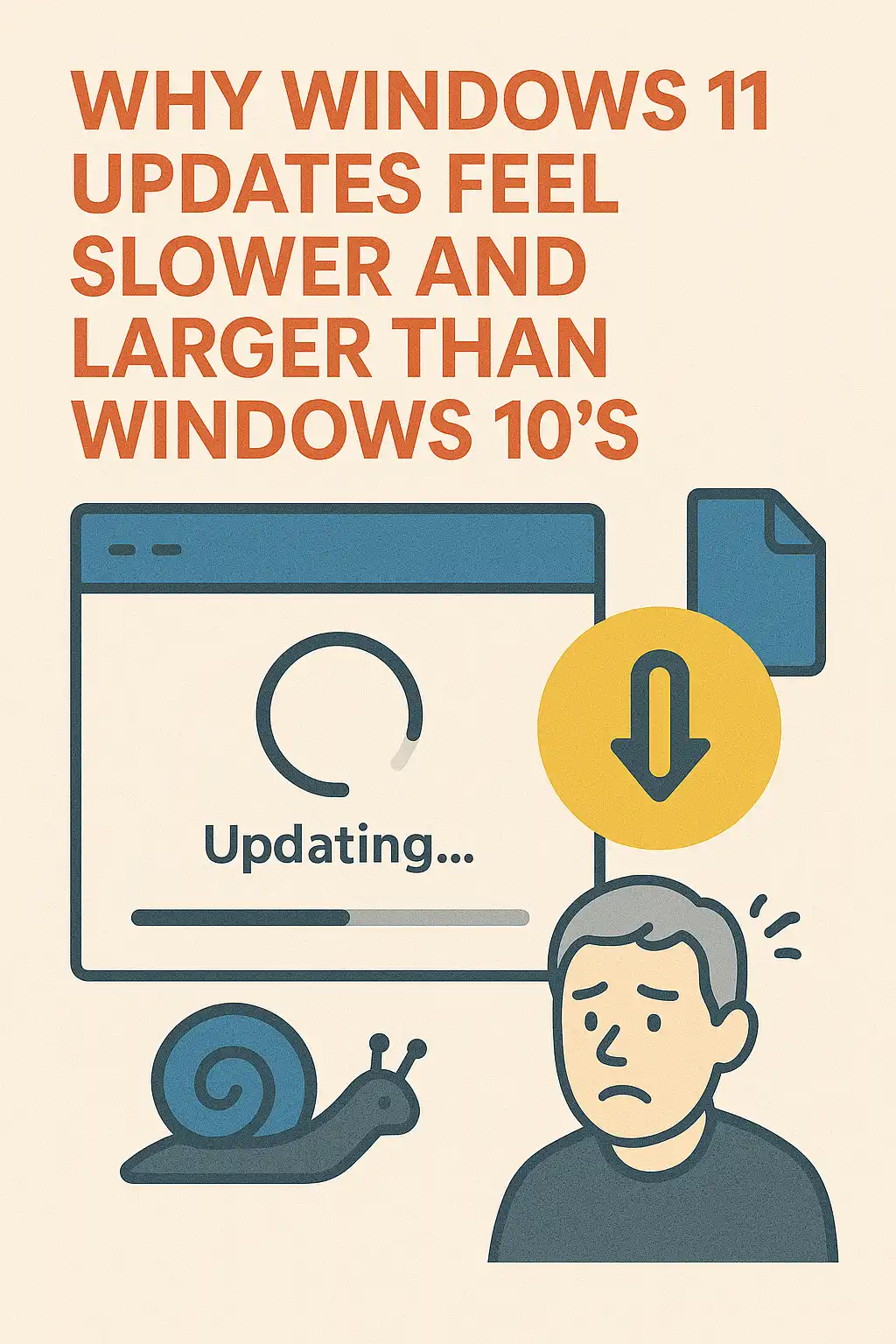
Windows 11 updates feel slower and larger than Windows 10’s for several interconnected reasons: a more complex OS architecture, expanded security layers, heavier cumulative updates, cloud-centric components, and new background servicing models. For IT professionals, mitigating these challenges requires optimizing update delivery infrastructure, using Windows Update for Business policies effectively, and ensuring devices meet modern hardware standards.
With the right configuration and deployment strategy, organizations can balance update performance with security and stability—ensuring Windows 11 delivers long-term value without unnecessary disruption to users or the network.


 10536
10536  IT Pro