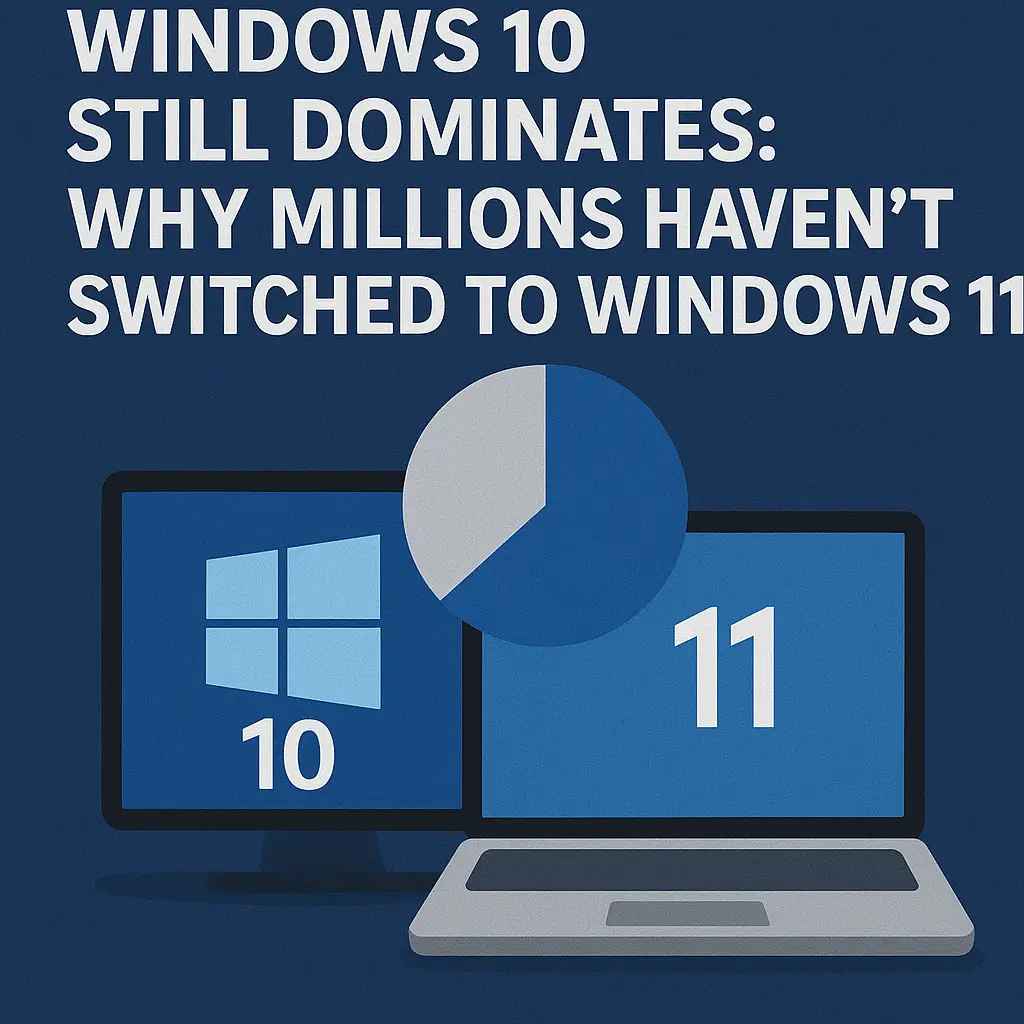
Even four years after the release of Windows 11, Windows 10 continues to hold a massive share of the global desktop operating system market. Despite Microsoft’s modernization efforts, Windows 10 remains deeply entrenched across enterprises, small businesses, educational institutions, and even consumer households. For IT professionals tasked with planning migration strategies, understanding why Windows 10 maintains such dominance is essential for future infrastructure decisions, lifecycle planning, and organizational readiness.
This article explores the key reasons millions of users and organizations still choose to remain on Windows 10—and why Windows 11 adoption is progressing more slowly than Microsoft anticipated.
Legacy Hardware Constraints and the TPM 2.0 Roadblock
One of the most significant barriers preventing widespread Windows 11 adoption is Microsoft’s strict hardware compatibility requirements. TPM 2.0, Secure Boot, and supported CPU generations collectively eliminate large portions of older—but still fully functional—hardware from eligibility.
For enterprises managing thousands of devices, these requirements translate directly into:
• Larger hardware refresh budgets
• Accelerated device replacement cycles
• Increased e-waste concerns
Many organizations cannot justify replacing stable, productive hardware simply to meet an OS requirement, especially in sectors where budgets are constrained or hardware refresh cycles span five to eight years.
Application Compatibility and Legacy System Dependencies
Enterprise environments often rely on legacy applications built for Windows 7 or early Windows 10 frameworks. These applications may depend on older drivers, deprecated APIs, or specific behavior that Windows 11 no longer supports. Rebuilding or replacing such applications requires extensive testing and significant financial investment, making Windows 10 the practical option for maintaining operational continuity.
Industries most affected include manufacturing, logistics, education, finance, and healthcare—where specialized software is often mission-critical and extremely sensitive to OS-level changes.
Stability and Predictability in Long-Term Environments
Windows 10’s maturity is one of its greatest strengths. After a decade of refinement, the OS offers predictable behavior, stable driver support, and well-understood deployment practices. IT teams have invested years in building reliable ecosystem controls around Windows 10, including:
• Group Policy structures
• Imaging workflows
• Software distribution pipelines
• Patch management routines
• Security baselines
Windows 11, while stable, continues to evolve rapidly—often requiring adjustments to UI, configuration tools, deployment strategies, and security policies. For long-term operational environments, predictability outweighs novelty.
User Interface Changes That Disrupt Established Workflows
Windows 11 introduces substantial UI redesigns, including changes to the Start Menu, Taskbar, context menus, and File Explorer. While visually modern, these changes alter well-established workflows, leading to user confusion and increased support requests.
For IT departments, any interface shift requires:
• New training materials
• Updated documentation
• Increased helpdesk volume
• Additional onboarding time
Organizations prioritizing productivity and minimizing operational friction often prefer to maintain Windows 10’s familiar interface until they are ready for a structured, well-planned migration.
Concerns About Update Size, Frequency, and Performance
Windows 11 updates are perceived as larger and more intrusive than those of Windows 10 due to expanded security layers, cloud integration, and more complex servicing stack components. Organizations with limited bandwidth, distributed offices, or aging infrastructure may face:
• Longer installation windows
• Greater bandwidth usage
• More user downtime
Additionally, performance differences—especially on older or minimally compliant devices—create skepticism about Windows 11’s readiness for broad deployment.
Privacy and Compliance Considerations
Windows 11’s deeper cloud integration, AI-assisted features, and Microsoft account dependencies raise new questions for privacy-sensitive industries. While enterprise tools exist to limit data collection, organizations subject to strict compliance regulations are cautious about migrating to a platform with more cloud-facing components.
Sectors such as government, healthcare, and finance often delay migration until privacy models are fully understood, validated, and compatible with internal policies.
Cost, Budgeting, and Procurement Cycles
Large-scale migrations involve not only software considerations but also hardware procurement, staff training, system reconfiguration, and workflow adjustments. Many organizations simply cannot align these changes with current budget cycles.
Windows 10’s Extended Security Updates (ESUs) provide breathing room, allowing organizations to remain secure without rushing into migration. This extended support encourages phased adoption instead of forced transitions.
Resistance to Change and Organizational Fatigue
Digital transformation initiatives, cloud migrations, cybersecurity overhauls, and remote-work infrastructure upgrades have already stretched IT resources. Many organizations are simply not prepared to take on another major OS migration so soon.
User resistance also plays a role. Employees accustomed to Windows 10 may push back against UI changes or new behaviors introduced in Windows 11, further slowing adoption.
Insufficient Compelling Benefits for Many Use Cases
While Windows 11 offers improvements in security, design, and hybrid CPU optimization, many users do not perceive significant functional advantages. For typical productivity use cases—email, web browsing, office applications—the experience between Windows 10 and Windows 11 is largely similar.
Without clear, compelling reasons to switch, users and IT leaders prioritize stability over new features.
Conclusion
Windows 10 continues to dominate because it delivers stability, compatibility, and reliability at a level that Windows 11 has not yet fully matched across all environments. Hardware constraints, legacy application dependencies, cost considerations, privacy concerns, and user resistance all contribute to the slow migration pace.
For IT professionals, the decision to migrate should be based on readiness, not pressure. Windows 11 will eventually become the standard, but until its ecosystem matures further—and enterprises complete their hardware and software modernization cycles—Windows 10 will remain firmly entrenched as the operating system millions continue to rely on every day.

 12985
12985  IT Pro