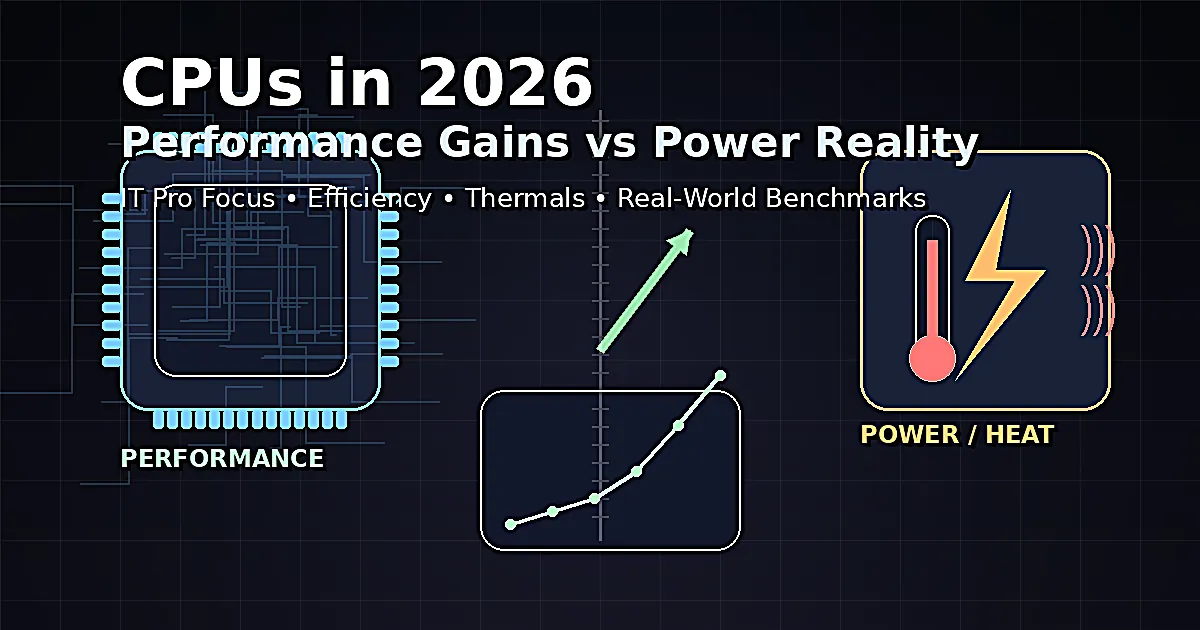
CPUs през 2026: Performance Gains vs Power Reality
За ИТ професионалистите, по-бързи процесори рядко е цялата история. През 2026 г. разговорът е по-малко за това дали един нов процесор може да надмине референтна диаграма и повече за това дали това представяне се повтаря във вашите ограничения в реалния свят: бюджети за мощност на багажника, офис терми, цели на лаптопа, изисквания за съответствие и управление на флота.
Пейзажът 2026 CPU се определя от постоянната търговия: повече throughput per цокъл и по-добра отзивчивост на ядрото, но и по-сложна в това как се осигурява и поддържа ефективността. Усилване на часовниците, турбо, хибридни ядра, напреднали състояния на мощност, и агресивен настройка платформа-ниво може да достави впечатляващи пикове.Въпреки това вашите потребители и работни места живеят в устойчив средата, а не на маркетинг пик.
Новата база данни: повече ядра, по-интелигентен Scheduling, и по-широко работно натоварване
CPU подобренията през 2026 са по-малко за един единствен готин архитектурен скок и повече за подреждане на много по-малки печалби, които се добавят в съвременните среди. Основните бройки и капацитета на резбата продължават да нарастват, но практическата стойност зависи от софтуерния стек: лицензионни модели, нишка мащабиране, и колко добре се разпределя натовареността. За виртуализацията, контейнерите, тръбопроводите на CI и мултитеннтовите услуги постоянното разширяване на основните ресурси остава ясна победа. За наследствените бизнес приложения и някои модели на VDI, ползата все още зависи от per-core изпълнение и латентност.
Осъвременяването и топологията се превърнаха в първокласни съображения. Хибридните и асиметричните дизайни могат да бъдат много ефективни, когато операционната система и хипервизорът работят интелигентно. Когато те не го правят, ИТ екипите могат да видят объркващи симптоми: неравномерно изпълнение през VMs, по-бързо от време на време това преживяване на потребителя, или термално триене, което се появява само при специфични смесени товари. През 2026 г. пърформансното инженерство все повече включва утвърждаване на това как нишките се приземяват, не само колко бързо може да се движи една нишка.
Междувременно натоварването на процесора е по-широко от преди. Дори ако заглавието на тенденцията е навсякъде готварски, много от ежедневните цикли на процесора все още са похарчени за криптиране, компресиране, обработка на данни, уеб услуги, обсерватори, крайна сигурност, както и надстройката на оркестрация. Съвременният процесор е помолен да направи всичко наведнъж, а печалбите, които имат най-голямо значение за ИТ често са тези, които са от значение: по-ниска латентност на опашката под натоварване, по-добре чрез използване на ограничена мощност, и по-малко регресиии в различни софтуер.
Peak Performance vs Performance: The Metric that really Pay Your Bills
Повечето CPU ревюта все още подчертават пиков тласък на числата и краткосрочните индикатори. По отношение на ИТ операциите по-разкриващият показател е устойчивото изпълнение при реалистични ограничения. А процесор, който удря ефектен турбо часовник в продължение на секунди, но отстъпва рязко, тъй като топлина и мощност граници рита в може да изглежда страхотно в графика и разочарова в производството на intful ... особено в гъста стелажи, ръб шкафове, или тънък и светлина лаптопи.
Трайната производителност зависи от цялата платформа: доставка на дънна платка, по подразбиране на BIOS, охладителна мощност, въздушен поток на шасито, околна температура и политиките, прилагани от фърмуера и OS. В много 2026 системи, можете да получите готварски допълнителни производителност от релаксиращи граници на цената на топлината, шум от вентилатор, енергия, а понякога и на надеждността маржове. Тази търговия може да бъде приемлива за работа като работна станция, но тя е често неприемливо за флотилия от лаптопи, предназначени да останат тихи, или за сървъри, където властта се споделя през багажник и центъра за данни е вече на своя лимит.
ИТ екипите трябва да се отнасят към трайното представяне като към въпрос SLA: какво можете да издържите с часове в организацията си? Оценка на процесори чрез този обектив често се променя в сравнение с чист пик-пърформанс престрелка.
Изпълнение на Watt Истинското състезание
През 2026 г. най-важното бойно поле не е суровата скорост на движение. Това има значение навсякъде:
В центъра за данни мощността и охлаждането са капиталови ограничения. Ако вашето съоръжение е с ограничен капацитет, въпросът става: може ли този процесор да достави по-полезна работа на ват при цокъла на мощността, която трябва да се подчини? Когато мощността е таванът, ефективността определя колко услуги можете да изпълнявате, колко плътни можете да опаковате и колко столова имате за пикови периоди.
От страна на клиента, изпълнение-на-ват се усеща директно като живот на батерията, акустика, и консистенцията на потребителя опит. Лаптоп, който остава в ефективна банда по-дълго често е по-бърз за реални задачи, защото поддържа неподвижна без термичен колапс. В 2026 реалност е, че много потребители ценят стабилността повече от изригвания: машината, която се чувства бързо в 9 сутринта трябва все още да се чувстват бързо в 3 PM.
Пърформанс-на-ват също е бюджетна история. Дори ако разходите за енергия на kWh варират, потреблението се увеличава бързо. Скромно подобряване на ефективността, умножено по хиляди крайни точки или стотици сървъри, се превръща в значително оперативно намаление на разходите, което често е по-голямо от делтата на покупната цена между CPU подреждането.
Power Reality: Turbo Policies, PL Limits, and the BIOS горнище
През 2026 г. много системи кораб с агресивни настройки по подразбиране фърмуер, предназначени да максимизират резултатите от бенчмарка. Това не означава, че те са грешен, но това не означава, че трябва да знаете това, което сте украшение. Две идентични процесори могат да се държат много различно в зависимост от целите на BIOS мощност, увеличаване на продължителността граници, термални цели, и криви на вентилатора.
За ИТ професионалистите това превръща работата на процесора в проблем с управлението. Ако се снабдявате от няколко ПОО, може да купувате непостоянно поведение, освен ако не стандартизиране на енергийните политики. Ако опресните флота и запазите същия модел на процесора, но промените платформата, все още можете да видите промени в устойчивото представяне, защото новото шаси и фърмуера тласкат силикона по различен начин.
Практичният подход е да се определят профилите на мощността по същия начин, по който се определят базовите стойности на сигурността. Решете кои системи трябва да приоритизират ефективността и акустиката (повечето потребителски лаптопи), които трябва да приоритизират трайното изпълнение на определена капачка (повечето сървъри), и които трябва да имат право да се движат с ненатоварено (изберете работни станции). След това се потвърди, че Oermoel по подразбиране съвпадат с вашия ненамерен или да ги отмени.
Топлина и плътност: Охлаждането сега е част от процесора Spec
CPU селекцията през 2026 г. е неразделна от термодизайн. CPU с отлична теоретична ефективност може да предостави посредствени резултати в ограничено шаси или претъпкан багажник. От друга страна, малко по-ниско ниво процесор в по-добра термална среда може да надмине неговия бърз по-близо, защото поддържа своите часовници.
Това е особено видимо при разгръщане на ръба. Шкафовете често имат слаб въздушен поток, по-високи температури на околната среда и ограничен толеранс на шума. Ако средата ви работи горещо, можете да разчитате на турбо поведение; трябва да планирате около устойчиви часовници и термални триене прагове. Същото се отнася и за гъста виртуализация домакини, където други компоненти на НОКС, SSDs, GPUs също се хвърля топлина в същия въздушен поток пътека.
ИТ екипите, които третират охлаждането като след мисъл, често се оказват прекалено купуващи процесори, за да компенсират триенето. По-рентабилният ход често е да се инвестира в по-добър въздушен поток, по-предсказуеми политики на вентилатора и валидирана топлоснабдителна зала, след което да се управляват процесори в стабилна, ефективна точка.
The Client Side in 2026: Responsiveness, Battery, and ..
За крайните точки на предприятията основните въпроси се променят. Много работници на знанието не се нуждаят от максимална производителност; те се нуждаят от надеждни неустойки: бързо събуждане, рязък мултитаскинг, стабилни видео разговори, и гладка браузър-тежък работа. През 2026 г. процесорите често предоставят много високи резултати за тези задачи, така че решаващият фактор се превръща в начина, по който системата се държи под постоянния фонов товар на агентите за сигурност, синхронизиране на клиентите, раздели на браузъра и инструменти за сътрудничество.
Quiet fast... се е превърнал в истинска използваемост. Потребителите все по-често съдят лаптоп дали той остава хладно и тихо, докато върши нормална работа. CPU, който е ефективен на умерена мощност, може да накара устройството да се чувства премиум и надежден, докато процесор, който се нуждае от висока мощност, за да се чувства бързо, може да превърне всяка среща във фен-шум събитие.
Животът на батерията остава оперативно предимство, а не просто елемент на комфорт. По-малко по обяд такси означават по-малко разчитане на непредсказуем достъп до енергия, по-малко цикли на батерии, и по-малко оплаквания подкрепа. За флотилиите тази стабилност намалява триенето и намалява помощта за sk skzzzzáan подценена полза.
Сървъри в 2026: Socket е бюджетна линия
От страна на сървъра, процесорът все повече е бюджетираща единица. А по-голям . . . . . . . . . Много организации вече проектират за целеви ватове-на-рак и избират конфигурации на процесора, които максимизират входовете в този плик.
Виртуализация и контейнер платформи възнаграждават предсказуем капацитет. Ако можете да задържите стабилно представяне на определена горна граница, можете да планирате консолидационни съотношения, да се провалите в главната зала и прогнози за капацитет с повече увереност. Когато една платформа е настроен за агресивни изригвания и често throutling, вие получавате непредсказуемо поведение, което води до консервативно оразмеряване и загуба на капацитет.
Друга 2026 реалност е, че годна за използване на процесора включва екосистемата: паметта и латентността, наличието на ПОИ лента, както и възможността да се прикрепят ускорители или високоскоростно съхранение без неточности. Много работни места, които изглеждат свързани с процесора са всъщност памет- или IO-обучени. Правилният процесор е този, който отговаря на нуждите на цялата платформа, а не този с най-високата единична метрична.
Електричеството е стратегия, а не компромис.
Електрическата тапа звучи като концесия. През 2026 г. често тя е най-добрата практика. Работещите процесори с малко по-ниска граница на мощността могат да подобрят драстично ефективността, като същевременно намалят топлината, шума на вентилатора и тропат събитията. Резултатът може да бъде по-последователен и по-добър опит на потребителя.
В сървърите, силовото покритие позволява по-висока плътност и по-гладко върхово управление. Вместо няколко възела да скочат непредсказуемо и ограниченията на съоръжението за пътуване, вие поддържате предсказуема мощност, която се привлича във флота. В лаптопите разумните капачки на захранването могат да предотвратят бързо-топло-то-тогава-ниско-надолу цикъл, който кара устройствата да се чувстват непоследователни.
Ключът е да се третират границите на мощността като политика за улов на риба тон. Показатели на Вашата предвидена капачка. Валидна производителност в рамките на истинския работен микс. След това стандартизиране на профилите през устройства, така че планиране на капацитета и потребителски опит са предвидими.
Сигурност, Patches и Microcode: Скритата променлива в изпълнение
CPU производителност през 2026 г. Обновяването на софтуера, микрокодът и смекчаването на сигурността могат да променят поведението. Повечето организации правилно приоритизират сигурността и стабилността, но е важно да се помни, че базовите показатели могат да се движат с течение на времето. Платформа, която е настроена за максимален достъп, може да се държи по различен начин след обновяване на фърмуер, който променя засилването на поведението, топлинната реакция или неизпълнението на сигурността.
Операционният подход е към изходните показатели по същия начин, по който се поддържа сигурността. Поддържане на известен-добър конфигурационен комплект, документиране на мощност и термополитика, и измерване на трайните резултати след големи BIOS/микрокод промени. Това предотвратява изненадващи регресии и избягва безкрайни това се чувства по-бавно и след рутинни актуализации.
Как да се оцени един 2026 процесор покупка като ИТ про
Най-умните оценки на процесора през 2026 г. са насочени по-скоро към сценарии, отколкото към референтни стойности. Вместо да зададете въпрос кой процесор е най-недостъпен?
Дали този процесор предоставя силно представяне на лимита на мощността, която всъщност можем да си позволим? Може ли да поддържа тази ефективност в типичните ни температури и ограничения на шасито? Колко последователна е латентността при смесени товари, фонови агенти и истински мултифункционалност? Дали платформата осигурява характеристиките на паметта и IO, от които се нуждаем, за нашата работа? Можем ли да стандартизираме енергийната и топлинната политика между продавачите, за да избегнем изненадите?
За крайни точки, включват батерията и акустиката в изпитването за приемане, а не само чрез пропускане. За сървъри, валидирайте в плътност на багажника и под реалистична консолидация. Приоритизирай предвидимостта над шиповете. CPU, който се държи последователно съгласно политиката е по-лесно да се поддържа, по-лесно да се прогнозира, и често по-евтино да се работи.
Където печалбите са реални през 2026 г.
Най-надеждните подобрения са склонни да се появят в многожични процепи, по-добра ефективност при умерена мощност и по-гладка работа при смесено натоварване. Много платформи доставят забележими печалби в това време за реални задачи: по-бързи конструкции, по-бързо сканиране, гладка виртуализация плътност, и по-малко заекване, когато множество услуги са активни.
С други думи, 2026 печалби на процесора са реални, но те често са спечелени чрез интелигентно управление на мощността и дизайн платформа, не само по-високи часовници. Когато прилагате политики, които съответстват на вашата околна среда, виждате подобренията. Когато разполагате на автопилот и разчитате на агресивни по подразбиране, можете просто да търгувате електричество и топлина за кратки върхове.
Където все още живее Hype
Надпреварата обикновено е в предположението, че върхът на ефективността се равнява на по-добър опит. В много среди, най-добрият CPU неоткрива този, който публикува най-високия шип; той е този, който остава в своята ефективна лента и продължава да предоставя стабилни резултати. Друга хип-зона е oversimplifying CPU избор на един-единствен заглавие . . .
ИТ специалистите могат да намалят хипитата чрез фокусиране върху политиката, последователността и измеримите резултати: по-малко застояли сгради, по-добра консолидация, по-малко тромави събития, по-тихи флоти и стабилни прогнози за капацитета.
Долната линия: 2026 процесорите са по-добри, но властта определя правилата
CPU през 2026 са безспорно по-способни. Те предлагат по-висока производителност, по-интелигентна работа и по-добра ефективност при конфигурирани добре. Но енергията и топлината все повече определят това, което всъщност получавате в производството. За ИТ професионалистите печелившата стратегия е да се третират резултатите на процесора като управляван ресурс, а не фиксиран атрибут.
Ако оцените процесорите чрез трайно изпълнение на реалните си лимити на мощност, стандартизиране на политиката на платформата и валидиране на поведението под вашия микс за работно време, ще видите истинските печалби 2026 трябва да предложи. Ако преследвате върховете и игнорирате реалността на захранването, ще похарчите повече за електричество, ще се борите с по-голямо напрежение и все още се чудите защо най-бързият процесор не се чувства бързо, когато има значение.

 12985
12985  IT Pro