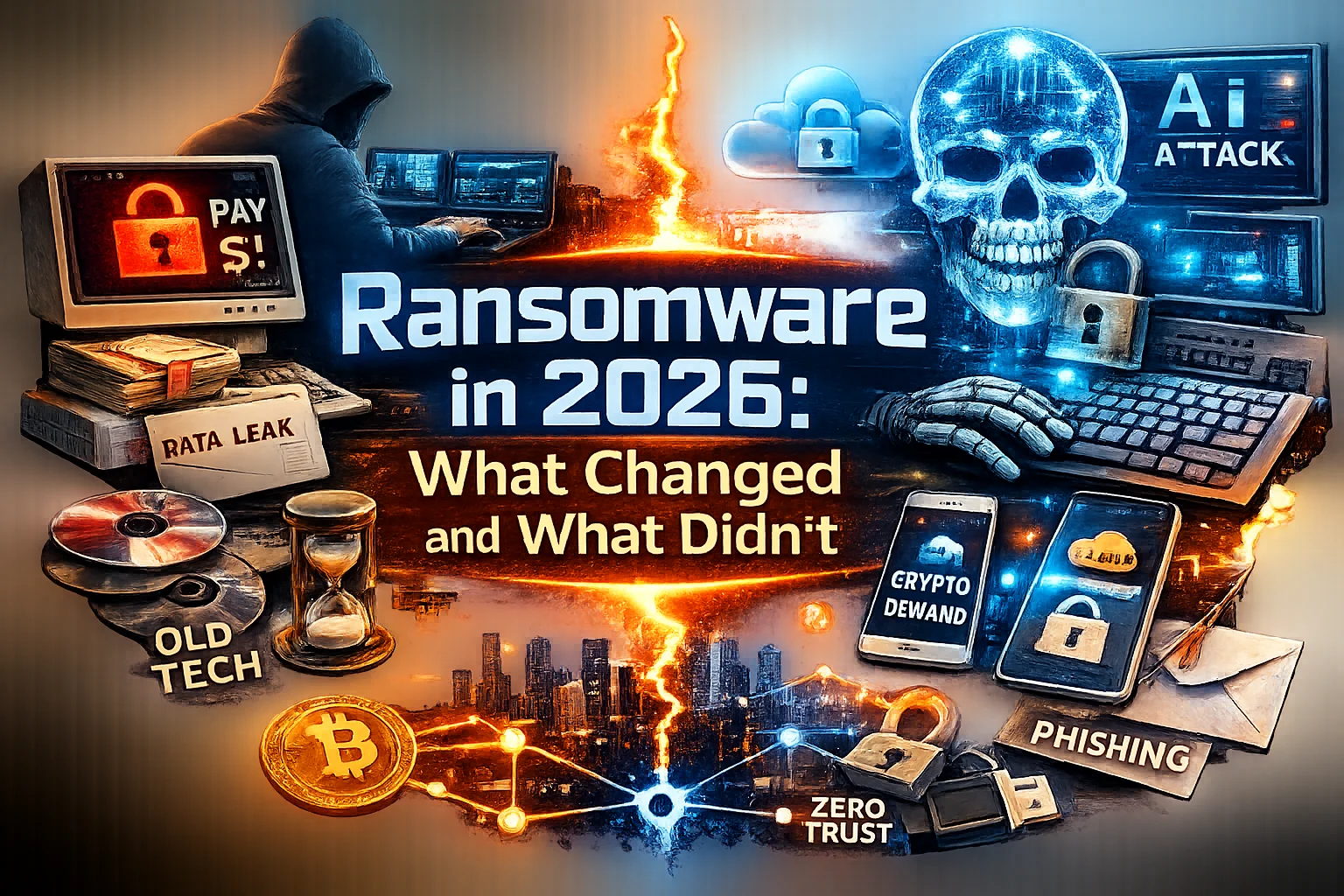
Ransomware през 2026 г. все още е горска, но центъра на тежестта продължава да се движи. За много организации заглавието на събитието вече не е просто кодирани файлове и драматична бележка за откуп. По-последователният резултат е прекъсването на бизнеса: забавени операции, разбити системи за идентичност, недостижими приложения и данни, които могат да надживеят самия инцидент. Нападателите все още са мотивирани от пари, все още използват предсказуеми слабости и все още разчитат на пазар на достъп, инструменти и филиали. Това, което е различно, е темпото, опционалността и натискът: играчите на заплахата могат да печелят дори когато криптирането никога не се случва, а защитниците все повече се преценяват колко бързо могат да съдържат влияние и да поддържат организацията.
Тази статия е написана за ИТ специалисти, които трябва да преведат риска от откупа в системи за проектиране, оперативна дисциплина и изпълнителни резултати. Той се фокусира върху смените, които имат значение за планиране от 2026 г., и основите, които продължават да решават дали проникването става криза.
Най-голямата промяна: откупът вече е меню с резултати
Класическият това, което играе вече не е единственият (или дори предпочитаният) маршрут за много екипажи. Съвременните кампании често смесват множество точки на натиск: кражба на данни, прекъсване, заплахи за уведомяване на регулатори или клиенти, тормоз на водачеството, и избирателно унищожаване, което забавя възстановяването. Криптопирането остава опасно, защото то е видимо и веднага болезнено, но нападателите са научили, че видимостта намалява и двата начина: силното криптиране привлича бърза реакция, вниманието на правоприлагането и често закоравял отказ за плащане.
През 2026 г. е по-безопасно да се предположи, че операция за изнудване може да успее с частичен достъп. Ако актьор може да открадне чувствителни данни, да компрометира самолета за самоличност и да демонстрира способността да прекъсва операции, той може да преговаря от позиция на ливъридж, дори ако криптиране на крайните точки е блокирано. За защитниците това променя условието за победа. Ние спряхме, не е същото като да спрем това.
Икономиката се промени: плащането стана по-трудно да се оправдае, не винаги по-малко скъпо
Икономиката на откупа е под натиск от множество посоки: подобрена устойчивост, повече организации отказват да плащат, увеличават проследяването и поглъщанията, както и политически предложения, които повишават законната и реномирана цена за изпращане на пари на престъпници. Обемът на плащане показва признаци на спад, но .. decline .. не е поражение. Нападателите се адаптират чрез смяна на филиали, смяна на марки, насочване на по-малки организации, или клонене по-трудно на данни изнудване и оперативни смущения.
За ИТ лидерите, практическото вземане на храна е, че трябва да се планира по-малко решения. Дори когато една организация отказва плащане и възстановява от архивиране, скритите разходи често остават: съдебномедицински услуги, възстановяване на труда, забавени проекти, клиенти churn, регулаторен контрол, и вътрешния морал хит, който следва продължително прекъсване. Бюджетирането само за откупа е остарял модел; бюджетирането за капацитет за реагиране и скорост за възстановяване е съвременният.
Какво не се промени: първоначалният достъп все още е фулкрума
Колкото и сложна да изглежда крайната игра, откупът все още се нуждае от входна точка. На практика повечето инциденти с предприятията все още са изградени върху малък набор от повтарящи се модели за достъп: експлоатирани уязвимости, кражба на ценни книжа и повторна употреба, ненадежден отдалечен достъп, слабо управление на идентичността и неуправляеми или зле наблюдавани устройства. Инструментизмът се развива, но защо работи, остава познат.
Затова най-ефективните програми за откуп през 2026 г. изглеждат небрежно неблагодарни. Те закърпват програми, които затварят излагането по-бързо, отколкото противниците могат да го използват. Това са програми за самоличност, които намаляват радиуса на взрива на откраднатите документи. Това са програми за активи, които премахват непознати интернет-видящи системи. Те са оперативни програми, които третират архивирането като производствени услуги и рутинно доказват, че възстановяването работи.
Ransomware- as-a-Service узрели, след това счупени, след това узрели отново
Моделът RaaS продължава, тъй като той подравнява стимулите: ядро разработчиците предоставят злонамерен софтуер, инфраструктура, теч сайтове, и гол, докато филиалите носят достъп и оперативен търговски занаят. Нарушенията в правоприлагането и недоверието към екосистемата могат временно да раздробят пейзажа, но пазарните стимули го сглобяват. Когато голям екипаж е прекъснат, той рядко премахва търсенето; той го преразпределя. Съдружниците мигрират. Появяват се нови марки. Старите кодови бази се появяват под нови имена. Нетният ефект е churn, който усложнява проследяването, но не намалява риска.
За защитниците, това означава, че IOC- witten-a-mole. Вашата програма трябва да поеме способността е гъбична: ако една марка е блокирана, друга може да използва отново същия достъп. Трайните проверки са тези, които отричат ескалацията на привилегиите, ограничават страничното движение и правят извличането на данни видимо и скъпо.
Прекъсванията в бизнеса станаха показател за успеха по подразбиране
Много операции по откупуване сега измерват успеха чрез прекъсване, не само криптиране. Разрушаването може да включва:
- Прекъсвания за самоличност, които блокират администраторите и потребителите в най-лошия възможен момент.
- Виртуализация платформа въздействия, които превръщат един компромис в стотици недостъпни работни места.
- Подкрепление и възстановяване саботаж, който конвертирате го рестартирате и да се преместите на го натрупват и се молят.
- Прицелване помощ бюра и подкрепа на работни потоци за бавно задържане и създаване на объркване.
- Селективно разрушаване на конфигурация, скриптове, или управленски самолети, които са трудни за възстановяване.
Ето защо съвременната готовност за откупа е дисциплина за сигурност, колкото и дисциплина за сигурност. Ако вашата способност да работите зависи от малък набор от системи за управление, услуги за идентичност, и инструмент за виртуализация, тогава те не са най-малко . Те са критична инфраструктура, а актьорите се отнасят така с тях.
Идентичността е бойното поле, и достатъчно добро MFA не винаги е достатъчно добро
Екипажите на Ransomware надеждно преследват правата на администратор, защото правата на администратор се сриват от време на време до въздействие. Компромисът на идентичността може да дойде от класически phishing и infosstealers, от парола ненапълно, от слабо управление на сметка за услуги, от помощ бюро социално инженерство, или от сенчесто администратор . Дори и с MFA, има често срещани режими на неуспехи: заветни протоколи, които заобикалят модерните контроли, лошо управлявани сметки за счупени стъкла, неогледани admin привилегии, и застояли изключения, създадени за отстраняване вчера.
Смяната на стойката 2026 е да се третира контрола на идентичността като инженерна система, а не политическа декларация. Това означава да се затяга как се предоставя привилегирован достъп, как се наблюдава и как се възстановява по време на инцидент. Това означава също да предположим, че противник ще се опита да разруши отговора ви, като атакува същите инструменти за самоличност, които трябва да се борите.
Практическа идентичност втвърдяващи теми, които продължават да се отплащат:
- Фишинг-резистентен MFA за привилегировани потребители и системи с висока стойност, с план за премахване на пътя за установяване на наследство.
- Tiered администрация, която разделя работна станция администратор, сървър администратор, и директория / администратор равнина привилегии.
- Точно във времето или във времето привилегия, когато е възможно, с одобрения и силна сеч.
- Собственост върху сметката за услугата: ротация, проверка, трезор и извеждане от експлоатация.
- Помощ бюро за проверка процедури, които предполагат нападатели ще се опитат да се рестартира пътя си в околната среда.
The cloud and SaaS reality: Suppositware risk followed the data, not the servers
През 2026 г. много организации извършват хибридни операции, където основните бизнес данни живеят в SaaS платформи, съвместни апартаменти, клауд съхранение и управлявани услуги. Ransomware актьорите не се нуждаят от гонене на центъра за данни, за да създадат максимална болка; те трябва да достигнат данните и слой за идентичност, който го управлява.
Две неудобни истини карат модерното планиране:
- Неопровержението и прекомерното поемане на отговорност могат да направят кражбата на данни от облака по-бърза от кражбата на предмишниците.
- Native задържане и рециклиране характеристиките на коша не са пълна резервна стратегия, особено под активен противников натиск.
Готовността за откуп изглежда като видимост, проверка и възстановяване:
- Централизирано регистриране и сигнализиране за събития за самоличност и мащабно движение на данни.
- Политика за условен достъп, която намалява рисковите пътища за установяване на идентичността.
- Разделяне на задълженията между администрацията на наемателите, администрацията на сигурността и администрацията на идентичността.
- Неправилни или логически изолирани резервни копия за съдържание на SaaS, които имат значение за бизнеса.
- Упражнения за възстановяване, които доказват, че можете да възстановите данните, които вашите ръководители ще изискват първо.
Ал промени върха на фунията: социалното инженерство е по-бързо, по-евтино и по-персонализирано
AI didn't magically smote the supportware playbook, but it implified the most scalable parts of it: Inconnaissance, impresonation, примамливо писане, многоезичен и убеждаване. Практическото въздействие е, че повече организации виждат надеждни, целеви съобщения, които изглеждат вътрешни, съвпадат с контекста на получателя и пристигат чрез множество канали. Това увеличава шансовете за поверителен компромис и намалява времезащитниците трябва да забележат и реагират.
Правилната отбранителна поза е по-малко за опитване да на място перфектни фалшификати и повече за вземане на един компрометиран потребител недостатъчно за катастрофални достъп. Когато контролът на идентичността, хигиената на устройствата и границите на привилегиите са силни, Al-засиленото phishing става друг шумен сигнал, а не гарантиран път за нарушение.
Кражба на данни и налягане на изтичане: план за дълга опашка
Изнудването на данни въвежда дълга опашка, която само криптиране не винаги създава. Дори и след възстановяването организацията може да бъде изправена пред продължаващи заплахи от преговори, потенциално публикуване на данни, уведомления за клиенти, последствия от договора и щети на марката. Това е мястото, където сигурността и информационните технологии се нуждаят от тясно привеждане в съответствие с правните, неприкосновеността на личния живот, комуникациите и изпълнителната власт.
Една зряла програма от 2026 г. третира "ексфилт" като първа класа:
- Знаейки къде в действителност живеят чувствителните данни, включително копия, износ и акции, станали постоянни.
- Мониторинг на необичайни модели на достъп и движение на едро, особено от привилегировани сметки и директори на услуги.
- Току-що и акредитивни процеси на отнемане, които са бързи и практикувани, а не импровизирани при стрес.
- Ясни пътища за вземане на решения за уведомления, регулаторни задължения и комуникации с клиенти.
Възстановяването се превърна в конкурентно предимство: устойчивостта сега е част от позата за сигурност
През 2026 г. устойчивостта на софтуера за откуп се оценява от време, за да се съхрани и време за възстановяване, а не на пръв поглед ни удари. Организации със силна сегментация, защитени подкрепления и репетирани пътеки за възстановяване могат да превърнат голям инцидент в ограничена прекъсване. Тези без тях често изпитват удължена парализа и краширащ провал.
Позата за възстановяване, която последователно изпълнява добре:
- Резервни части, които са изолирани от равнината за самоличност, използвана за ежедневни операции, с неизменимост, когато е възможно.
- Редовни възстанови тестове, които включват системите, които действително трябва да управлява бизнеса, а не само файлови акции.
- "Златен път" за игрални книги за основни услуги (директни услуги, управление на виртуализациите, портали за отдалечен достъп, мониторинг, билети).
- Предстъпални чисти административни работни станции и аварийни методи за достъп, които не зависят от компрометирани инструменти.
- Документирани зависимости: знаейки какво трябва да излезе първо, за да работи всичко останало.
Промяната на нагласата е важна: откупът не е просто събитие за сигурност; това е събитие за приемственост. IT, инфраструктура и екипи за кандидатстване са централни участници в резултата.
Какво се е променило в отбраната: подобреният инструмент за прекъсване, но само там, където съществуват основите
Endpoint откриване и отговор, управлявани откриване, и автоматизирано задържане са се подобрили в реалния свят въздействие. Много организации вече могат да разрушат подозрителната дейност преди няколко години. Но те се определят от околната среда: неуправляеми устройства, непостоянни сеч, прекомерни привилегии и фрагментирана собственост намаляват стойността на дори отлично откриване.
За ИТ специалистите практическото послание е, че защитните инструменти и ИТ хигиената са свързани. Съвременният SOC е много по-ефективен, когато:
- Вещественият инвентар е достатъчно точен, за да знае какво означава "нормално."
- Покритието на крайната точка е широко, включително сървъри, привилегировани работни станции и отдалечени устройства.
- Привилегированият достъп е рядък, видим и ограничен от времето, а не повсеместен и постоянен.
- Мрежовите пътища между редовете са умишлени, а не исторически инциденти.
- По време на инцидента има входни тръбопроводи, които имат достъп до тях.
Натискът върху правоприлагането и предложенията за политики промениха оценката на риска
Разрушаването на големите операции за откупуване, както и увеличаването на контрола около плащанията и докладването на инциденти, направиха екосистемата по-малко стабилна за престъпниците и по-сложна за жертвите. Резултатът не е безопасен свят, а свят, в който нападателите трябва да работят по-усърдно, за да поддържат доверието и парите, и където организациите на жертвите са изправени пред повече въпроси относно решенията, взети по време на криза.
На практика това води до три изисквания 2026:
- Документирани процеси за вземане на решения за реагиране при инциденти, включително кой може да разреши извънредни действия.
- Готовност за бързо докладване и координация с органите, когато е целесъобразно.
- Изпълнително ниво подравняване на позицията на организацията по отношение на плащането и договарянето, преди инцидент да наложи въпроса.
Планът от 2026 г.: програма за откуп, която оцелява в реалността
Силна 2026 изкупителна поза не е нито един продукт или един проект. Това е набор от възможности, които намаляват вероятността за първоначален достъп, намаляват радиуса на взрива на компромис, и увеличават скоростта и увереността на възстановяване. Ако трябва да приоритизирате, приоритизирайте възможностите, които най-директно променят резултатите през първите часове от инцидента.
Основни възможности, които многократно определят резултатите:
- Управление на експозицията: бързо закърпване за интернет, дисциплинирана конфигурация и премахване на непознати услуги.
- Втвърдяване на самоличността: силно истинност за привилегирован достъп, ограничен администратор се разпростря и ясно управление на стъклото.
- Разделяне вследствие на: да изолират системи за идентичност, резервна инфраструктура, управление на виртуализацията и критични приложения.
- Подкрепление: изолирани/неизменими резервни части, защитени пълномощия и често възстановяване на валидирането.
- Откриване и отговор: сигнали с висока увереност за ескалация на привилегиите, странично движение и движение на масивни данни.
- Инженеринг на възстановяването: репетирани пътища за възстановяване и известни зависимости за основните услуги.
- Оперативна готовност: tabletop упражнения, които включват ИТ операции, не само екипи за сигурност.
Ако вашата организация има ограничен капацитет, фокусирайте се върху превръщането на най-големите единични точки на неуспех в инженерни системи. Ransomware нападателите обичат среди, където един Credential отваря всяка врата, където една система за управление контролира всяка работа, и където един резервен администратор може да се използва за изтриване на възстановяване. Махнете тези единични точки на провал и накарайте нападателите да действат по-бавно.
Метри, които имат значение за лидерите: измерване на резултатите, а не дейност
Директорите рядко се нуждаят от списък на блокирани зловредни събития. Те трябва да знаят дали откупът става екзистенциално събитие или управляемо прекъсване. Полезни 2026 метри са тези, които карта до изхода:
- Време е да закърпим критичните експозиции върху интернет-поглеждащи активи.
- Процент на привилегированите самоличности с фишинг-устойчиво удостоверяване.
- Обхват на крайните точки и сървърите чрез телеметрия на сигурността и инструмент за реагиране.
- Време за възстановяване обективно изпълнение в реални възстановителни тестове за критични системи.
- Време за отмяна на сесиите/токовете и смяна на пълномощията при спешен работен процес.
- Доказателство, че архивните регистри са изолирани и защитени от отделен контрол на самоличността.
Тези показатели създават продуктивни разговори. Те разкриват кои инвестиции купуват по-нисък риск, и кои контрол са само документация.
Реалистична заключителна мисъл за 2026 планиране
Ransomware все още е един от най-ясните примери за противник, принуждаващ бизнеса да плаща технически дълг в реално време. Това, което се промени е, че гъвкавите нападатели имат и скоростта, с която могат да превърнат малките пукнатини в големи смущения. Това, което не се промени, е, че организациите, които плащат най-добре, са тези, които третират идентичност, кръпка, архивиране, архивиране и възстановяване като инженерни услуги, а не най-добрите задачи.
Ако строите 2026 г., се стремите към поза, при която компромисът може да се осъществи чрез дизайн: ограничена привилегия, ограничено движение, видим достъп до данни и доказано възстановяване. Това е разликата между трудна седмица и определящо бедствие.

 12992
12992  IT Pro