В момента в лаптопите се показва навсякъде и лесно се лекува като GHz от ерата на AI: по-голям брой, по-добро устройство. За ИТ специалисти този начин на мислене може да доведе до шумни решения за възлагане на обществени поръчки, несъгласувани потребителски очаквания и флоти, които изглеждат впечатляващи на хартия, докато не се доставят в реални работни процеси.
TOPS може да бъде полезен, но само когато разберете какво измерва, какво игнорира и как картира нещата, за които бизнесът наистина се грижи: живот на батерията, реагиране, стойка за сигурност, управляемост и предсказуемо представяне в смесен флот.
Бързото определение: какво е TOPS и какво не е
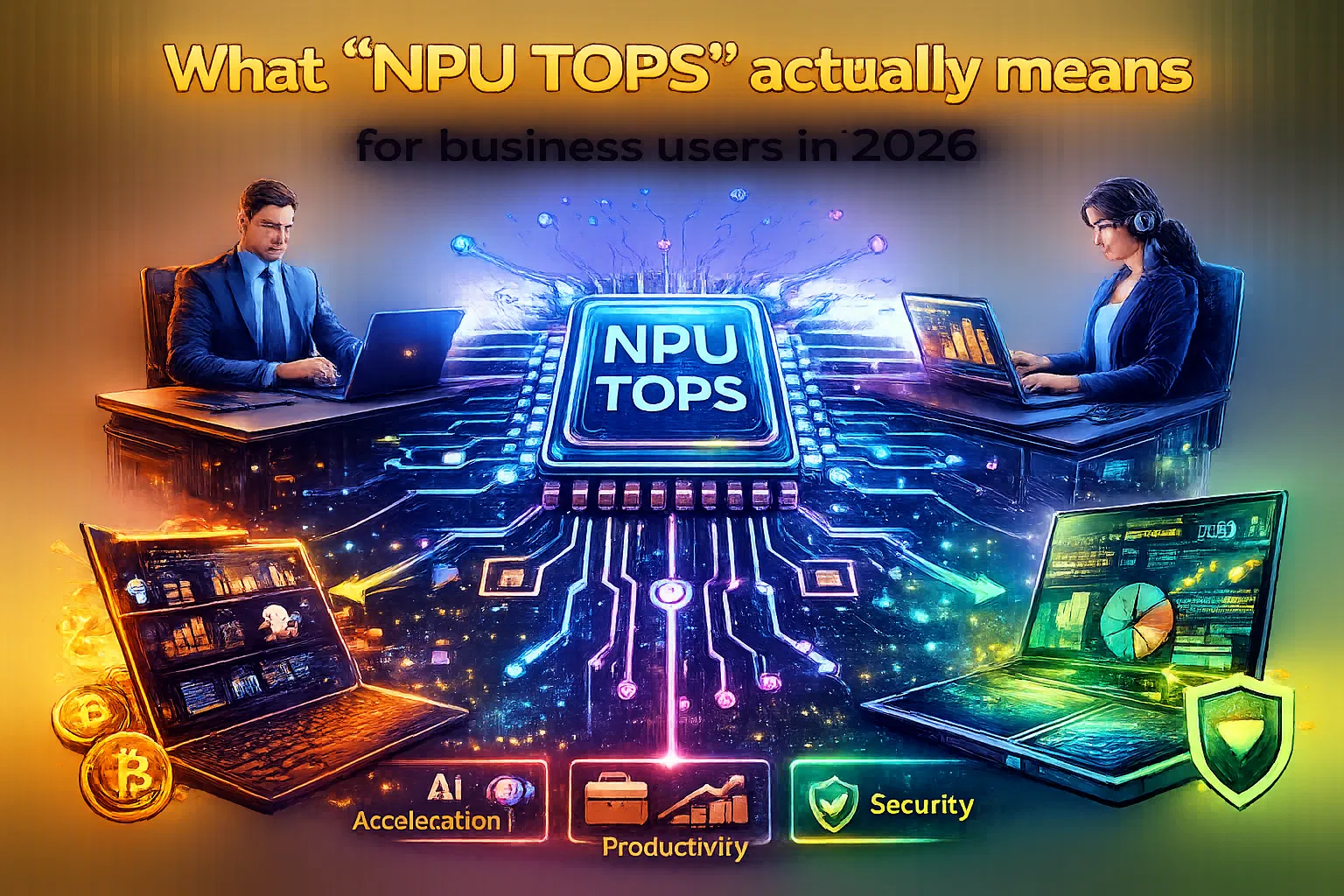
TOPS означава трилиони операции в секунда. В контекста на НРУ, обикновено е цитиран като пиков теоретичен образ: колко прости математически операции NPU може да изпълни в секунда при идеални условия.
Уловът е, че думата "шоу" е хлъзгава. В зависимост от продавача и методологията на бенчмарка, дадено действие може да бъде цяло число, умножение-натрупване (MAC), разтопена инструкция, или нещо, преброено под предположения като рядкост. Заглавието TOPS номер също често отразява най-добрия режим на прецизност (обикновено ниско-прецизно цяло число математика), че много реални опашки може да .
Мислете за НПУ TOPS като таванНе е гаранция. Това е сигнал за потенциален капацитет, а не обещание за опит на крайния потребител.
Защо бизнес купувачите трябва да се интересуват от NPUs изобщо
NPUs са от значение в предприятието, защото те изместват някои AI наноматериали от по-малко от Клуд или GPU- само за себе си към почти винаги-на, местно, енергийно ефективно. Това променя цената и риска.
- Относителна стойност: NPU могат да изпълняват непрекъснати или чести задачи на извод без захранването на GPU. За мобилните служители, това може да бъде разликата между функциите на AI са винаги на разположение и функции на AI са изключени след обяд.
- Поверителност и пребиваване на данните: Някои задачи на AI могат да останат на устройство, намаляване на експозицията на чувствително съдържание и опростяване на разговорите за съответствие около това, което оставя крайната точка.
- Съвкупност и офлайн работни потоци: По отношение на устройството изводът може да поддържа общи помощни функции, които реагират дори на лоши мрежи или по време на пътуване и работа на място.
- Прогнозни разходи на място: Разтоварването на задачи на местно ниво може да намали зависимостта от на-кери или на място облак AI харчат, особено за повсеместно на-на-субекти.
NPU не заменя процесора или GPU. Това е третата компютен лента, оптимизирана за конкретен клас на неточности: плътна математика над тензори, обикновено за извод и все повече за светлина на разположение персонализация работни потоци.
Маркетингов капан: третира TOPS като универсална оценка на скоростта
ИТ екипите за възлагане на обществени поръчки са виждали този модел преди: един синтетичен номер се превръща в стоящ за многоизмерно преживяване. Той се е случил с това да се сетиш за турбо часовниците на процесора, SSD последователни скорости, Wi-Fi върховете, и фотоапарат мегапиксели. Полицаите са тръгнали по същия път.
Две машини могат да рекламират подобни TOPS и се чувстват много различни в ежедневните AI функции. Това е така, защото потребителският опит зависи от много повече от сурова аритметика throughput.
Това, което трябва да попитате преди да се доверите на номер TOPS
Точност: TOPS при кой цифров формат?
Много TOPS вземания приемат ниска точност цяло математика (често INT8 или подобно). Това е често валидно за извод, но не и универсално. Някои модели, слоеве или стъпки след обработка могат да изискват по-висока прецизност за приемлива точност или стабилност.
За IT ключовата точка е проста: TOPS обикновено е режим на най-добър случай. Ако вашите целеви приложения не се стартират напълно в този режим, реализиран чрез пут може да бъде значително по-ниска.
Може ли да издържи на батериите?
Лаптопите на "Ентърпрайз" прекарват много време на батерия, в топли чували, в конферентни зали и на докове със смесени термални станции. Рейтингът на TOPS не ви казва как се държи NPU след няколко минути на непрекъснато използване или под реалистичен профил на мощността.
Потърсете показатели за устойчива ефективност и енергийна ефективност. Ако вашата организация разчита на винаги-на функции (шум подтискане на звука, ефекти от камерата, транскрипция, класификация на фона), стабилността има повече значение от кратки изригвания.
Широчина на паметта и движение на данните: тихия ограничител
AI натовареността не е само математика; те също са движение на данни. Ако моделните тежести и активации могат ефективно да се захранват с NPU, NPU може да седи на празен ход, докато чака паметта. Това е една от причините две устройства с подобни TOPS могат да покажат много различни времена на реалния свят.
На практика конфигурациите на предприятията (капацитет на RAM, канали за памет и как платформата споделя паметта между процесора/GPU/NPU) могат да имат по-голямо въздействие върху AI.
Софтуерен стек: ускорява ли NPU приложенията, които всъщност използвате?
TOPS не е от значение, ако не се достигне NPU. Пътят от край до край зависи от драйверите, времената на движение и рамковата поддръжка, както и от това дали продавачите или ISV действително са интегрирали ускорението за този NPU.
За ИТ екипи практическият въпрос е: Кой от нашите работни потоци е ускорен на тази платформа днес? Не на теория, не и скоро, а в тествания си образ, с вашата сигурност стека, с вашата целева версия на приложението.
Модел съвместимост: какво работи на местно ниво, и на какво качество?
Местните AI функции често разчитат на специфични модели архитектури и размери. Някои крайни точки могат да работят по-малки, оптимизирани модели на местно ниво и да се върнат към облака за по-големи задачи. Други могат да предложат много качествени плочки.
IT трябва да приведе очакванията: местните функции могат да бъдат отлични за определени задачи (филтри в реално време, сумиране на малко съдържание, бърза класификация), докато по-големите разсъждения или работни места за генериране все още могат да бъдат по-рентабилни в облака в зависимост от вашата политика и бюджет.
Първата интерпретация на TOPS
Ако превеждате PFU TOPS в бизнес резултати, третирайте го като един вход в по-широк профил на възможностите. По-висок рейтинг TOPS може да покаже, че е по-вероятно платформата да се справи едновременно с множество AI потоци (например, ефекти на камерата плюс транскрипция плюс местна класификация) без заекване. Но истинският въпрос е как се държи устройството под комбинираното натоварване, което вашите потребители генерират.
Един полезен умствен модел за ИТ е да се интерпретира TOPS като груб индикатор на Главно помещение за онлайн AI функции, а не директен предсказуемост на това колко бързо асистент пише имейл. Главното е най-важно, когато функции работят непрекъснато или едновременно, и когато искате тези функции да останат активирани по подразбиране през вашия флот.
Общи сценарии на предприятията, в които реално се появява капацитетът на ППУ
Видеоконферентна връзка в мащаб
Фонови ефекти на камерата, корекция на контакта с очите, потискане на шума, изолация на гласа и транскрипция в реално време може да се натрупва. В средата на предприятието, тези функции не са подходящи за това, те влияят на производителността, достъпността и качеството на срещите.
По-висока NSU зала може да намали frame капки, аудио артефакти, и термо рампа, особено когато потребителите работят срещи, докато споделяне на екрана и multitasking през множество раздели на браузъра и линия на бизнес приложения.
Класификация на местното съдържание и инструмент на политиката
Предприятията все по-често искат класификация на устройствата за чувствителни работни потоци: бързо етикетиране на съдържанието, откриване на регулирани модели на данни или предоставяне на помощно търсене в локални файлове с контрол на политиката. Когато тези функции работят на местно ниво, те могат да бъдат по-бързи и да намалят експозицията на облаците, но също така разчитат на надеждно ускорение на устройството.
Достъпност и UX усилване
На живо надписи, превод и подобряване на речта могат да бъдат трансформиращи за разпределени екипи. ИТ екипите следва да считат това за част от стандартите за приобщаващо работно място. NPU с подходяща зала може да запази тези функции отзивчиви, без да наказва живота на батерията.
Работни процеси на разработчици и анализатори
За някои роли, он-лайн AI е по-малко за готварски и повече за ускорение вътре инструменти: завършване на код, генериране на тест, изготвяне на документация, лог клъстериране, или олекотено местно извличане над проект контракции. В тези случаи стойността на NPU почти зависи от това как се интегрират инструментите.
NTU TOPS срещу GPU TOPS: защо сравнението може да заблуди
Понякога ще видите платформи рекламна комбинация .AI TOPS. Докато това може да комуникира с цялостната си способност, то може да скрие и критична оперативна подробност: където работното натоварване променя мощността, топлинната енергия, графика и границите на сигурността.
- NTU: обикновено е най-добре за постоянна интерференция на ниска мощност, идеален за винаги-на функции.
- GPU: често най-доброто за високо-преходни паралелни работни места, но може да консумират повече мощност и може да противоречи на графичната натовареност.
- CPU: гъвкави и универсални, но обикновено най-малко ефективни за тензорно-тежък извод в сравнение със специализирани единици.
За планиране на флота, третирайте NTU TOPS като своя категория. Устройство с възможност за GPU, но слаб NPU все още може да се чувствам готино в кратки демота, но това може да не е най-доброто място за винаги на предприятие функции, които трябва да останат активирани през целия ден.
Сигурност и съответствие: какво се променя, когато AI работи на устройство
AI може да намали количеството данни, изпратени от крайната точка, но не решава автоматично управлението. Променя контролната повърхност. ИТ екипите трябва да оценят:
- Граници на данните: Какво съдържание се обработва локално? Какво съдържание се изпраща на облачни услуги? Дали това поведение може да се конфигурира чрез политика?
- Обновяване на модела канали: Как се актуализират, подписват, връщат и валидират моделите? Дали актуализациите уважават смяната на прозорците?
- Телеметрия: Каква телеметрия се генерира от AI функции, къде се съхранява, и може ли да бъде ограничена за регулирани среди?
- Обработване и обработка на съдържанието: Ако местните функции индекс файлове или анализ на документи, как това взаимодейства с DLP, eDiscovery, и крайната защита?
- Атакуваща повърхност: AI runtimes и драйвери стават част от крайната купчина. Уверете се, че те отговарят на вашата кръпка и програма за управление на уязвимостта.
С други думи, NPU TOPS не е само дискусия за изпълнение. Тя косвено влияе върху характеристиките, които можете безопасно да запазите на местно ниво срещу които избирате да поддържате облачно медиирани за видимост и контрол.
Поръчки през 2026 г.: как IT трябва да оцени лаптопите, готови за AI, без да се заблуждава
Ако изграждате стандарти за закупуване или опреснявате ръководството, най-практичният подход е да се преведат възможностите на НРУ в тестови изисквания, а не пазарни прагове. Помислете за изграждане на малък апартамент за приемане на Ali можете да работите на кандидат устройства.
Определяне на базовата стойност на предприятието по сценарий, а не по заглавие TOPS
Започнете с работните потоци, които имат значение за вашата организация и ги групирайте в профили. Примерите включват тежки роли за срещи, мобилни полеви роли, разработчици и анализатори. След това да се определи какво означава за всеки профил: неоторизирани цели, удар на батерията, термален комфорт, както и набор от функции.
Измерване на реакцията при реалистично натоварване
Стартирай конферентна връзка плюс типичен мултитаскинг. Наблюдавайте дали функциите на AI остават стабилни. Внимавай за пулсиране на батерията. Обърнете внимание на поведението на феновете. Ако тестовата ви лаборатория може да тегли мощност, сравнете по-голяма мощност, отколкото с други функции.
Валидна съвместимост на софтуера във вашето управлявано изображение
Уверете се, че вашите агенти за сигурност, инструменти за управление на крайните точки, както и втвърдяване на базовите стойности не прекъсват ускорението на ППУ или силата на извъртания, които променят работните места на процесора/GPU неочаквано. AI функции, които се държат добре на чист имидж на ПОО може да се държи по различен начин под контрола на предприятията.
Попитайте продавачите за подробностите зад номера
В RFPs или технически оценки, натиснете над заглавието:
- С каква прецизност се измерва рекламната програма TOPS?
- Дали цифрата за NPU е само, или обобщена в процесора/GPU/NPU?
- Има ли постоянни номера под типичните ограничения на лаптопа?
- Кои runtimes и рамки се поддържат, и каква е актуализацията на драйвера?
- Какви проверки на политиката на предприятията съществуват за функции на AI на устройства и актуализации на модели?
Оперативно въздействие: какви промени в управлението на крайните точки
Тъй като AI на устройството става нормално, ИТ операции вероятно ще видите нови категории билети и нови въпроси конфигурация. Планирането напред може да попречи на организацията за подкрепа да преследва духове.
Новите оплаквания за изпълнение няма да изглеждат като високо процесор
Потребителите могат да изпитат заеква в срещи или забавени надписи без очевидни CPU шипове, тъй като повратната точка може да бъде NPU планиране, аргумент на паметта, или топлинни ограничения. Вашата книга за отстраняване на проблеми трябва да се разшири, за да включва AI функция превключване и платформа-специфична диагностика.
Управление на Patch се разширява до AI runtimes и модели
Шофьорите и бегачите стават по-критични. Ако драйвер се актуализира промените, които натовареността удари NTU, потребителите могат да докладват промени в батерията, топлината, или поведението функция. Отнасяйте се към тези актуализации със същата дисциплина като GPU драйверите в творческите орги: инсцениран ролкаут, мониторинг, rollback план.
Разнородността на флота става по-видима
В смесени флотилии, някои потребители ще имат гладка .AI-първи опит, докато други виждат ограничени или клауд-независими функции. Това може да създаде проблеми с справедливостта и объркването, освен ако не дефинирате ясни стандарти и не съобщите кои роли получават класа на устройството и защо.
Практическо правило на палеца за ИТ специалисти през 2026 г.
Използвайте NTU TOPS начина, по който използвате всяка отделна специфика: като ранен филтър, а не окончателно решение. По-високите TOPS могат да корелират с по-добра мултифункционална зала за AI функции на устройството, но не замества валидирането на софтуерна поддръжка, устойчиво поведение и управляемост във Вашата среда.
Ако искате просто предприятие-готова интерпретация, помислете на слоеве:
- Пластмасов слой: Има ли платформата достатъчно NPU столова, за да стартира функциите, които очакваме да бъдат стандартни за нашите потребители?
- Включване на слой: Дали нашите приложения и OS функции действително използват NPU надеждно под нашето управлявано изображение?
- Операционен слой: Можем ли да закърпим, управляваме, проверяваме и подкрепяме тези функции без изненади?
Когато тези слоеве се подреждат, TOPS става значим. Когато не го правят, това е просто число, което изглежда добре в спецификация лист.
Контролен списък за поръчки можете да копирате във вашите стандарти doc
По-долу е неномериран списък можете да се адаптирате за вътрешна употреба, когато оценяте .AI PCs и NSU вземания:
- Потвърдете прецизността на режима зад рекламирания NTU TOPS и дали отразява Вашата целева натовареност.
- Валидирайте постоянно поведение на батерията по време на непрекъсната конферентна връзка плюс мултитаскинг.
- Тестови ключови приложения на предприятието и инструменти за срещи във вашето управлявано изображение и да проверите ускорението на НРУ всъщност се използва, където се очаква.
- Контрол на политиката за функции на AI на устройства, актуализации на модели, телеметрия и граници на данни.
- Потвърдете напредъка на драйвера и времето за изпълнение, ангажиментите за подкрепа на предприятията и опциите за връщане назад.
- Документ, който потребителските профили се възползват от по-високи нива на NPU и подравняване на устройствата съответно.
През 2026 г. е полезна част от разговора, но не и целия разговор. ИТ екипите, които го третират като сигнал за капацитет, валидират софтуерния път и оперират управлението ще получат реална стойност от AI на устройство. Всеки друг рискува закупуване на впечатляващи спецификации, които не се превеждат в по-добър работен ден.

 12985
12985  IT Pro