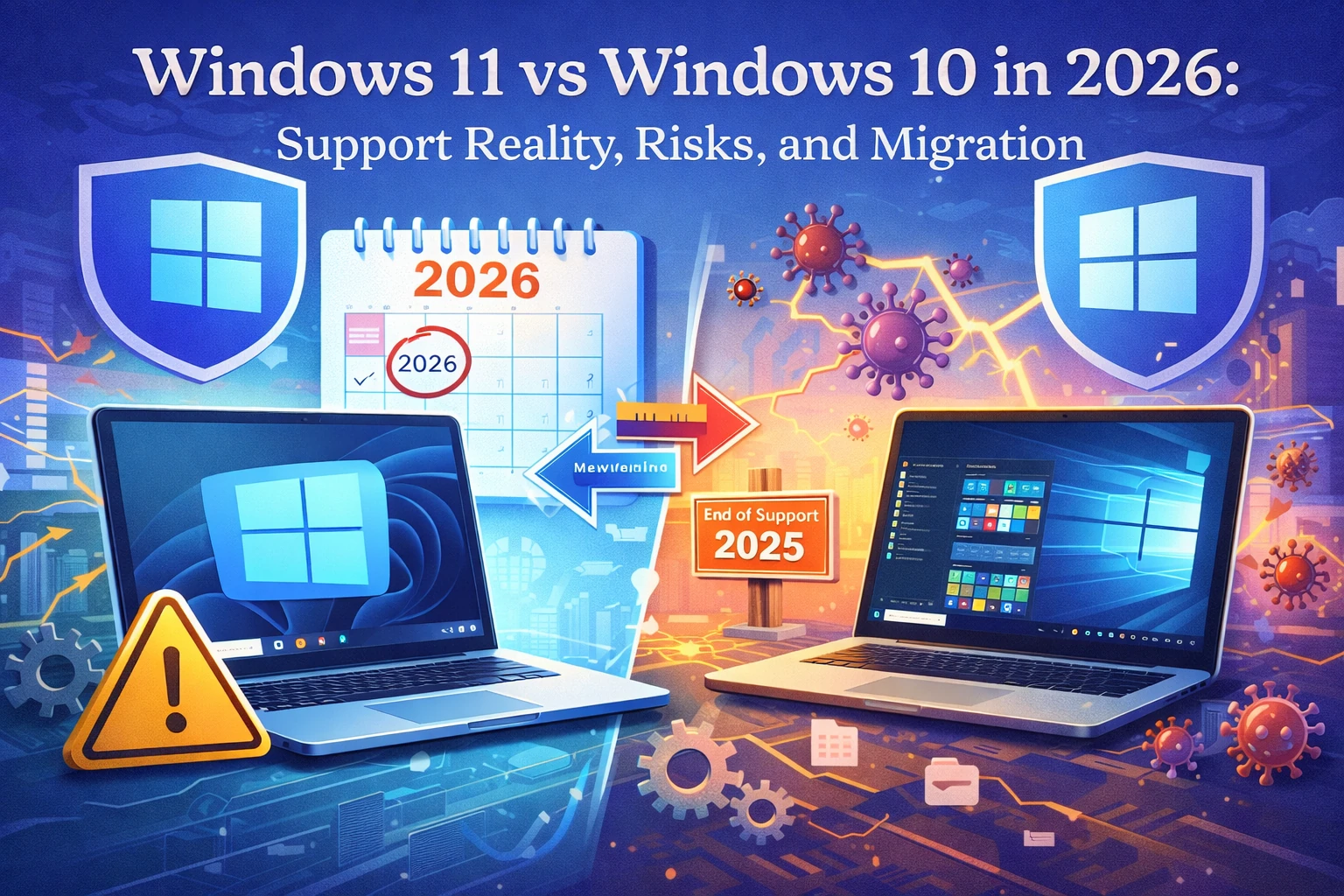
През 2026 г., Windows 11 срещу Windows 10 по-късно не е предпочитан дебат. В него се съдържа решение за подпомагане, което засяга закърпването, позата за спазване на изискванията, резултатите от одита и готовността за реагиране при инциденти. Windows 10 остава широко разположени в предприятията, особено когато хардуерни опреснителни цикли изостават, линия-на-бизнес приложения са чупливи, или устройства флоти включват по-стари крайни точки, които няма да отговарят на съвременните бази за сигурност. Но реалността на подкрепата се промени: Windows 10 излезе от стандартната подкрепа и операционният риск да останем на нея без ясен план се увеличава всеки месец.
Тази статия е написана за ИТ професионалисти, които се нуждаят от практически насоки за това, което Windows 10 все още работи през 2026 . . . . . . . . . . . . . . . . . . . .
Реалността на подкрепата през 2026
Подкрепата на Windows 10 завърши през октомври 2025 г. за основните издания, което означава, че месечните актуализации на сигурността и качеството вече не се доставят при нормалния жизнен цикъл. През 2026 г. единственият безопасен начин да запазите Windows 10 закърпени крайни точки е изрично да бъдат обхванати от разширена програма за обновяване на сигурността (ESU), или да се провежда специализирано издание, което следва различни правила за жизнения цикъл.
От оперативна гледна точка, това създава три категории Windows 10 устройства в 2026:
- Неподдържан Windows 10 (най-висок риск): няма актуализации на сигурността, няма предсказуема времева линия за възстановяване на уязвимостта и все по-голяма трудност за справяне с основните проверки, изисквани от много рамки.
- Windows 10 с покритие ESU (временно намаляване на риска): все още получава критични актуализации за сигурността, но обикновено с ограничения (задължителни изисквания, изисквания за записване и трудна крайна дата).
- Специално предназначение Windows 10 изгражда: Ниша предприятие/въз основа на сценарии може да има различни условия за подкрепа, но те следва да се третират като изключения и да се уреждат стриктно.
Ключовото послание за 2026 планиране е просто: ЕСУ е мост, а не дестинация. Печели време за миграция или заместване. Тя не възстановява дългосрочен поддържан жизнен цикъл за общите разполагане на Windows 10.
Какво всъщност решава ЕСУ?
Разширените актуализации на сигурността могат да намалят излагането на новооткрити слабости, но това не променя стратегическата посока: Windows 10 е в пенсионната фаза. ЕСУ също не е пълен опит в областта на неофициалното възприемане на много организации. Трябва да третирате ЕСУ като програма за ограничаване на риска с известни ограничения.
ESU може да помогне в тези сценарии:
- Имате регулирана среда, където Валутата на пластира е задължителна по време на миграция.
- Вашият хардуерен флот опресняване не може да завърши преди вашата организация да е следващата проверка на съответствието.
- Критичното приложение или драйвер на устройството изисква одобрен път за надграждане и допълнително време за изпитване.
- Подравнявате настолната миграция с модернизация на идентичността (например, условен достъп, устойчива на фишинг MFA и консолидация на управлението на крайните точки).
ЕСУ не решава тези въпроси:
- Стагнация на функции: Windows 10 не придобива възможности за платформи, необходими за съвременните работни потоци.
- Екосистемни дрейфове: с течение на времето, ПОО, софтуерни доставчици, охранителни инструменти и инструменти за управление все повече ще оптимизират за Windows 11.
- Базови очаквания за сигурност: организациите са постоянно тласкани към хардуерно подкрепяна сигурност и по-силни по подразбиране.
- Дългосрочна стойност: Отлагането на миграцията обикновено увеличава оперативния товар (изключвания, работни места, технически дълг и фрагментация на устройствата).
Узрялият подход е да се третират покритите с ESU устройства като горно карантина с контрол на специалните политики, ограничен обхват и планирана дата на пенсиониране, която е видима за лидерството.
Windows 11 в 2026: Защо не е просто UI Upgrade
Много среди първоначално се съпротивляваха на Windows 11 поради хардуерни изисквания, преквалификация на потребителите, или възприемане на прекъсване на производителността. До 2026 г. предложението за стойност е по-ясно: Windows 11 е платформата, която Microsoft проектира около съвременните по подразбиране сигурност и по-стандартизиран модел за обслужване. Той също така се приравнява по-добре с реалността на хибридната работа и облачно управляваните крайни точки.
Разговорът с Windows 11 трябва да бъде в рамка около три резултата:
- По-силна стойка за сигурност с по-малко изключения
- По-ниска промяна в изходните стойности за съответствие на устройствата
- Управление на жизнения цикъл с предсказуем каданс и поддържани версии
Охранителна стойка: Windows 10 in 2026 vs Windows 11 in 2026
Най-голямата разлика, която има значение за екипите за информационна сигурност, не е нито една функция, но посоката: Windows 11 е предназначена за стандартизиране на хардуерно обезпечените сигурност и повишаване на базовата линия по подразбиране. Това е от значение, когато се опитвате да намалите атаките за самоличност, откупите живеят във времето, поверителните кражби и механизмите за постоянство.
Практически примери, при които Windows 11 обикновено подобрява резултатите:
- Хардуерно вкоренено доверие: Съвременната TPM употреба и измерените очаквания за обувка стават по-последователни във флота.
- По-добра стандартизация за криптиране и защита: по-малко изключения от класацията, които тихо отслабват крайната стойка.
- По-предсказуема актуализация на сигурността: Обслужването на Windows 11 е приоритетната писта.
За отговор на инцидента, разликата се показва в събитията от време на време. В едно място, където Windows 10 крайни точки се смесват между неподдържани, частично поддържани, и специално изключение на това, че вашите книги за задържане играят по-бавно, защото прилагането е неравномерно. Windows 11 намалява тази променливост, когато се разполага с последователни управленски политики.
Хардуерни изисквания и бариерата за миграция в реалния свят
Най-честата причина Windows 10 все още присъства в 2026 е проста: хардуер допустимост. Много от тях могат да оправдаят заместването на големи флоти от перфектно функционални крайни точки само за да отговорят на по-новите изисквания. Това е разбираемо, но трябва да се управлява.
На практика искате да разделите устройствата на миграционни пътища:
- Допустими устройства: Приоритизиране на тези за ъпгрейд на място или бързо повторно изображение на Windows 11.
- Недопустими устройства: устройства, които могат да бъдат направени в съответствие с промените в конфигурацията на фърмуера (когато са поддържани и одобрени).
- Недопустими устройства: поддържа ги на контролиран път: ESU + ограничен достъп + планирано пенсиониране.
За ИТ операциите, най-лошият резултат е да се позволи на недопустимите за използване устройства да се отнесат към критични за бизнеса роли. Ако те трябва да съществуват, те следва умишлено да бъдат ограничени до случаи на използване с по-нисък риск и да бъдат сегментирани чрез контрол на идентичността и мрежата.
Сервиране и управление на жизнения цикъл: планиране с реални дати
През 2026 г. планирането на жизнения цикъл става календарно упражнение. Windows 11 използва ежегодно обновяване на функции с определени прозорци за поддръжка. Това е полезно, защото ви позволява да се отнасяте към OS неустойка като програма, а не изненада.
Практическата дисциплина за жизнения цикъл на предприятията изглежда така:
- Поддържане основен поддържан вариант по- голямата част от крайните точки.
- Запазване второстепенна поддържана версия за случаи на съвместимост и инсценирани подобрения.
- Елиминирай дългите опашки OS версии, които тихо натрупват риск.
За изданията на Enterprise and Education, поддържащите прозорци обикновено се разширяват по-дълго от изданията Home/Pro, което улеснява стандартизирането на Windows 11. Резултатът за IT е по-малко спешни ъпгрейди и по-малко frantic . . . . . .
Съвместимост на приложението: Центърът за скрити разходи
Най-често срещаните Windows 11 не е самата OS . . . . Много организации все още имат шепа наследени приложения, които определят миграционния темп.
Работата по съвместимост е най-ефективна, когато се третира като задвижвана от данни, а не като анекдотална:
- Изграждане на опис на приложения чрез инсталиране на база, собственик на бизнес, критичност, и последна актуализация дата.
- Идентифициране на приложения, които взаимодействат с границите на сигурността: драйвери за ядро, критични работни потоци, мрежово филтриране, или криптиране инструмент.
- Заверявания на пилоти с представителни потребителски групи, не само ИТ тестови машини.
В зряла среда, списъкът с приложения обикновено е малък, но организационният ефект е голям. Решаване на най-добрите блокери първо, и миграцията се ускорява драстично.
Reality: Group Policy vs Cloud Management in 2026
Независимо дали работите по Group Policy, Configuration Manager, Intune, или хибриден модел, Windows 11 се вписва чисто в съвременните модели за управление на крайните точки. Това не означава, че всяка организация трябва да стане само облак. Това означава, че трябва да рационализирате архитектурата си на управление, така че да не поддържате много припокриващи се контролни самолети за неопределено време.
Практическа цел за управление на крайните точки 2026 е:
- Използване последователно прилагане на политиката през кохорти на устройства.
- Стандартизиране изходни стойности за сигурността Така че изключенията са видими и оправдани.
- Намаляване инструмент splaw в работните процеси за захващане и управление на конфигурацията.
Windows 10 устройства, които остават в експлоатация, не трябва да се управляват като нормални, освен ако не са напълно поддържани. Третирайте ги като отделна политическа група с по-силни изисквания за ограничаване.
Разбивка на риска: Какво всъщност се обърква, когато останеш на Windows 10
Рискът да останеш на Windows 10 през 2026 не е теоретичен. Той става измерим при ежедневни операции:
- Уязвимост растеж на гърба: неподдържаните устройства натрупват излагане на новооткрити атакувани пътища.
- Триене на одита: изключения се умножават, събирането на доказателства става по-трудно, и компенсиране на контрола се превръща в норма.
- Дрифт за инструменти: продуктите за сигурност могат да останат съвместими, но напредналите интеграции все по-често поемат изходните стойности на Windows 11.
- Влачене на обхвата за реагиране при инциденти: Прекарвате време, идентифицирайки кои устройства все още могат да бъдат използвани, вместо да съдържат заплахата.
Ако имате нужда от едно изречение за лидерство: Windows 10 през 2026 е покрит с риск, само когато тя е документирана подкрепа покритие, силни компенсационни контроли, и финансиран изход план.
Миграционна стратегия, която работи в реални предприятия
Най-добрите планове за миграция на Windows 11 не са събития с голям взрив. Те са повтарящи се процеси, които движат устройства на вълните, като същевременно намаляват Helpdesk шипове и минимизират прекъсването на бизнеса.
Практическата програма за миграция обикновено включва:
- Дискавъри: хардуерна готовност, инвентаризация на приложенията, зависимости от водача, валидиране на инструментите за сигурност.
- Пилот: IT, потребители на енергия, отдели с висока вариация, и известни съвпадения edge cape ... екипи.
- Широко разпространение: автоматизирани пръстени за разполагане, ясна комуникация с потребителя, планирани прозорци за възстановяване.
- Почистване на дълги опашки: оставащи изключения, подмяна на устройства, модернизация на приложението и пенсиониране на стари изображения.
Ако вашата организация се е борила с OS ъпгрейди в миналото, лостът за подобрение не е по-неотложен. По-добре да се подреди, по-добри проверки за готовност и свеждане до минимум на персонализацията, която създава крехки изображения.
Препоръчителни контроли за Windows 10 Holdouts през 2026
Ако трябва да поддържате Windows 10 крайни точки работи в 2026, го направи умишлено. Безопасният подход обикновено включва:
- Записване и проверка на ЕСУ с автоматизирано докладване за съответствие.
- Внедряване на самоличност: силни изисквания за MFA, условен достъп и съответствие на устройствата за чувствителни приложения.
- Мрежова сегментация: ограничаване на страничните възможности за движение и намаляване на радиуса на взрива.
- Най-малка привилегия: премахване на локалния администратор по подразбиране и изискват привилегировани работни потоци.
- Приложение позволява списък за високорискови устройства: намаляване на вероятността за изпълнение на стокови зловреден софтуер.
Вашата цел е да гарантирате, че Windows 10 ще се превърне в изключение, управлявано от политиката, а не от невидимо неизпълнение, криещо се във флота.
Когато Windows 10 все още има смисъл през 2026
Има ситуации, в които Windows 10 остава налице поради основателни причини:
- Специализиран хардуер с валидирани драйвери само на Windows 10.
- Наследство индустриални работни потоци, където смяната на прозорците са строго контролирани.
- по-широки сертифицирани стека и промяната задейства повторно.
Професионалната позиция не трябва да изчезва веднага. Позицията е: ако Windows 10 остане, той трябва да бъде умишлено управляван, подкрепян и планиран за пенсиониране.
Рамка на решението за 2026 IT лидери
Ако се нуждаете от рамка за чисто решение:
- Преместване в Windows 11 сега когато хардуерът е допустим и портфолиото на приложението е достатъчно модерно.
- Използване на ЕСУ като мост когато хардуерът освежава или приложението се нуждае от контролирано време.
- Замяна на устройства когато разходите за обработка на изключения надхвърлят разходите за освежаване.
- Модернизиране на блокерите когато те са единственото нещо, което предотвратява спазването на жизнения цикъл.
Windows 11 през 2026 не е нов OS експеримент. Това е поддържаната базова линия. Windows 10 в 2026 е изключение за жизнения цикъл. Лечението на тези две състояния е това, което разделя стабилни ИТ операции от текущото натрупване на риск от крайна точка.
Затваряне на насоките за миграционните програми
Успешните миграции са предвидими, скучни и автоматизирани. Най-бързият път към стабилността е да се стандартизира Вашата цел Windows 11, да се изгради, да се намали персонализацията в изображения, да се третира наследство Windows 10 устройства като изключение група, и да се запази rollout движение в контролирани пръстени.
През 2026 г. най-важният резултат не е просто да се подобри. Това е, че вашата крайна точка некролог се връща в чисто поддържано състояние, с невалидно изходно ниво, управляемо неофициално каданс, и по-малко сигурност и съответствие изненади.

 12985
12985  IT Pro