As organizations migrate their users from Windows 10 to Windows 11, a recurring question among IT professionals concerns the scope and nature of Microsoft’s data collection practices. Windows has long included telemetry and diagnostic data mechanisms to improve reliability, security, and user experience. However, the deeper cloud integration and AI-driven capabilities of Windows 11 have raised new questions about whether the operating system collects more data than its predecessor—and what that means for enterprise environments.
This review examines the privacy landscape surrounding Windows 11, highlights key differences from Windows 10, and outlines considerations IT teams must evaluate when deploying the OS across business environments.
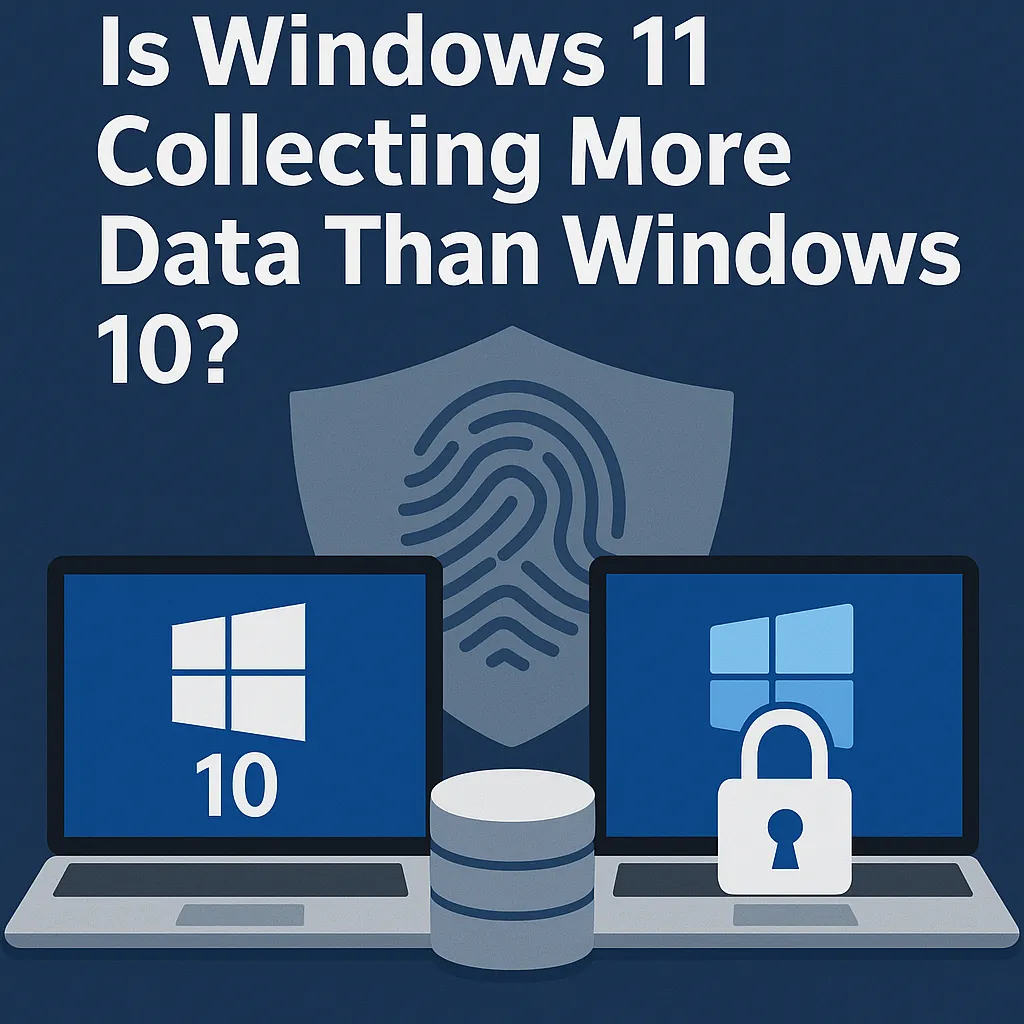
Expanded Cloud Integration Leads to Broader Data Touchpoints
Windows 11 was designed with cloud-first functionality in mind. Features such as Widgets, Microsoft Teams integration, OneDrive synchronization, Windows Copilot, and cloud-based personalization services rely on data exchanges between the device and Microsoft’s cloud infrastructure.
Compared to Windows 10, which offered cloud features but did not tightly bind them into core workflow components, Windows 11 introduces a broader set of cloud-driven elements and background services. This inherently increases the amount of metadata the system may collect, particularly around:
• Usage patterns
• Interaction habits
• Content recommendations
• Device and account configuration
These elements are tied to improving user experience but also contribute to heightened scrutiny from privacy-conscious organizations.
Diagnostic Data Categories Remain Similar—But the Ecosystem Has Expanded
Microsoft maintains that Windows 11 collects no more diagnostic data than Windows 10. In terms of core telemetry categories—device health, performance metrics, application crash logs, and security signals—the overall framework remains largely the same.
However, the operating system interacts with more cloud-connected services than Windows 10, which broadens the range of scenarios where data may be collected. IT teams must therefore differentiate between:
• OS-level diagnostic telemetry
• Application-level cloud telemetry
• AI-driven service telemetry
The OS itself may not collect significantly more diagnostic data, but the surrounding ecosystem and bundled applications often do.
AI-Powered Features Introduce New Data Considerations
Windows 11 increasingly integrates AI-based features, including personalized recommendations, automated task suggestions, and Microsoft Copilot functionalities. These services rely on analyzing user activity, contextual information, and behavioral patterns to deliver insights or automation.
While enterprise environments can disable many of these capabilities via Group Policy, Intune, or cloud configuration, their default presence means organizations must carefully evaluate how data is processed, transmitted, and potentially retained.
AI-driven features may analyze:
• Recent document usage
• Search patterns
• Application behavior
• Workflow trends
Such data is typically anonymized or used in aggregate, but compliance-sensitive industries may consider the scope too broad without fine-tuned administrative controls.
Increased Account Dependency and Identity-Based Data Collection
Windows 11 places stronger emphasis on Microsoft account integration, particularly for consumer installations. While enterprise domains typically rely on Azure AD or local Active Directory, the shift towards cloud identity frameworks increases metadata related to authentication and identity-driven services.
For enterprise deployments, this shift leads to more granular collection of identity-related events, including:
• Sign-in patterns
• Device trust signals
• Conditional access events
• Cloud authentication telemetry
These insights improve security posture but can raise data residency or compliance questions depending on jurisdiction.
Widgets, Suggestions, and Content Feeds Increase Behavioral Telemetry
The introduction of Widgets and personalized feeds in Windows 11 creates a new, persistent channel for data-driven content. These components rely on:
• Location data
• Search data
• App usage patterns
• Microsoft ecosystem preferences
While these services can be disabled, they represent a notable departure from Windows 10’s more static interface. They also serve as a reminder that Windows 11 is more tightly aligned with cloud-based personalization tools.
Enterprise Controls Remain Strong—But Must Be Configured Proactively
Windows 11 retains extensive privacy controls suitable for enterprise environments, including Group Policy restrictions, Windows Update for Business controls, the ability to disable Consumer Experience Components, and tools to limit or block telemetry. However, these controls are not always enabled by default.
Organizations can enforce:
• Telemetry at the minimum data setting
• Restrictions on cloud-based features
• Blocking of consumer-oriented apps and services
• Data minimization policies for device usage
• Visibility into data flows via Microsoft Endpoint Manager
Failure to configure these settings can lead to unintentional data collection that might violate internal compliance requirements.
Comparing Windows 10 and Windows 11 in Practical Terms
From a strict telemetry classification perspective, Windows 11 is not collecting more diagnostic data than Windows 10. The privacy frameworks and enterprise controls remain broadly similar. What has changed is the OS ecosystem: Windows 11 is built around cloud services, AI-driven personalization, and integrated applications that inherently generate more “interaction data.”
Thus, the perception of increased data collection stems from:
• More built-in cloud apps
• More integrated personalization services
• Increased identity and authentication activity
• AI features requiring behavioral input
These elements expand the types of data that may be processed—not necessarily the diagnostic payloads Microsoft collects.
Conclusion
Windows 11 does not fundamentally change Microsoft’s diagnostic data model relative to Windows 10, but its ecosystem introduces new cloud and AI-driven features that interact with user behavior more deeply. For IT professionals, the key challenge is not the raw telemetry itself but the increased number of services capable of collecting metadata. With proper configuration via Group Policy, Intune, and enterprise privacy controls, organizations can effectively limit data exposure and ensure compliance with regulatory requirements.
Ultimately, Windows 11’s privacy posture can remain secure and compliant—provided IT teams take a proactive role in configuring and monitoring data collection behaviors across the operating system and its associated cloud services.

 13004
13004  IT Pro