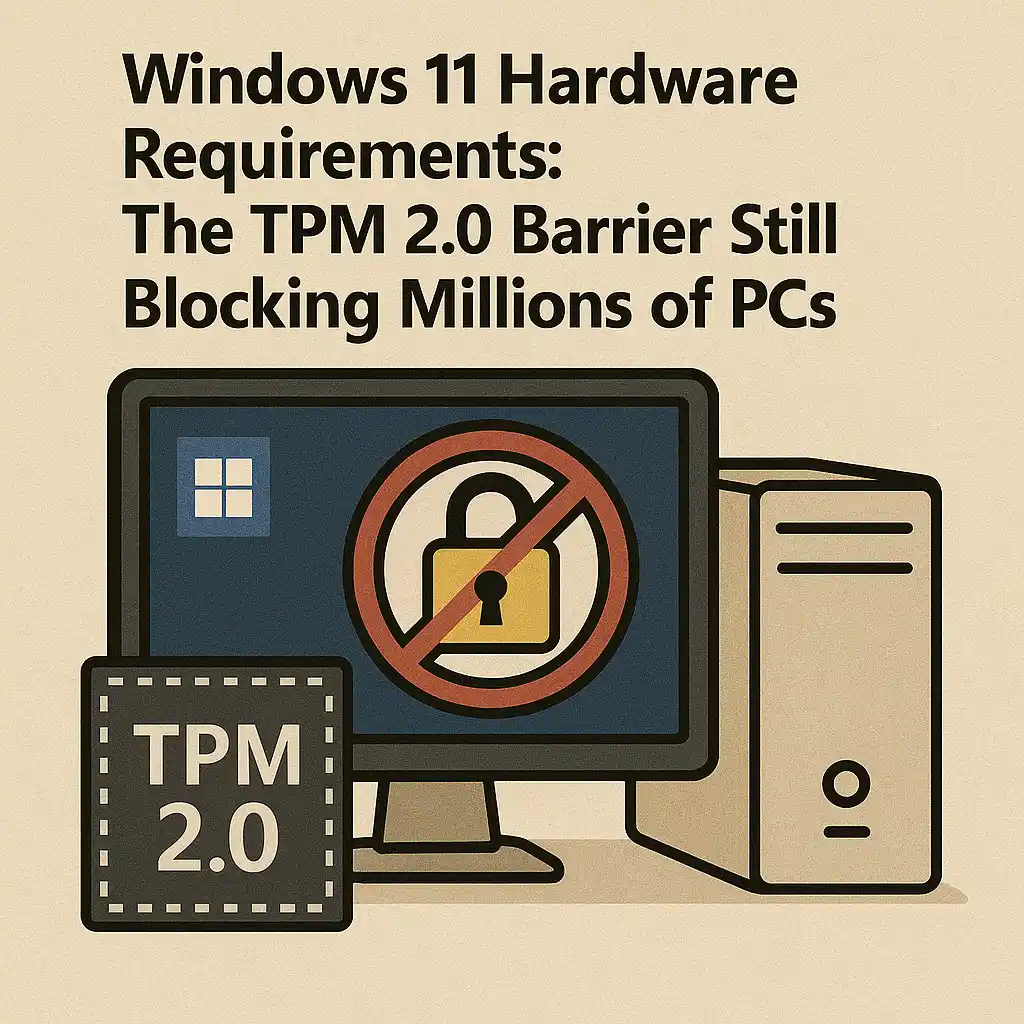
The rollout of Windows 11 introduced one of the most controversial hardware shifts in Microsoft’s operating system history: the mandatory requirement for Trusted Platform Module (TPM) 2.0. While the intention behind this requirement is rooted in strengthening endpoint security, the practical impact has been significant, particularly for organizations managing large, diverse fleets of devices. Even as adoption climbs, the TPM mandate continues to block millions of otherwise functional machines, creating operational challenges, budget pressures, and long-term planning concerns for IT professionals.
Understanding the Security Rationale Behind TPM 2.0
TPM 2.0 is not new to enterprise environments. It serves as the backbone of critical security features such as BitLocker Drive Encryption, Windows Hello, Secure Boot, and platform integrity checks. Microsoft’s decision to enforce TPM 2.0 for Windows 11 aligns with broader industry trends toward hardware-rooted security, ensuring cryptographic keys and authentication processes remain isolated from the operating system. This architecture mitigates firmware-level attacks, credential theft, and tampering attempts—risks that have grown more sophisticated in recent years.
While the rationale is technically sound, the enforcement has remained a major adoption hurdle, especially for organizations that maintain long hardware refresh cycles or operate specialized systems that cannot be easily replaced.
Why TPM 2.0 Is Still Blocking Millions of Devices
Even several years after Windows 11’s introduction, a surprising percentage of PCs in corporate and education environments remain incompatible due to missing TPM 2.0 modules or disabled firmware-level support in BIOS. Many systems produced before 2018 shipped with TPM 1.2 or lacked a discrete TPM module entirely. Others support TPM 2.0 through firmware but require a manual BIOS update—a process that is impractical at scale for distributed device fleets.
This gap has created a significant compatibility divide, leaving organizations in a difficult position: continue running Windows 10 on aging hardware or accelerate expensive refresh cycles earlier than planned.
The Firmware TPM Challenge
Most modern systems rely on firmware TPM (fTPM) rather than a dedicated hardware chip. Although fTPM meets Microsoft’s requirements, it introduces new complications. Some devices exhibit performance stutters, delays during boot, or instability tied to fTPM operations. BIOS updates from OEMs have mitigated these problems on many models, but they persist on certain AMD-based systems and embedded hardware, complicating upgrade decisions.
Organizations with mixed hardware vendors must often validate compatibility model-by-model, significantly increasing the testing burden before broad deployment.
The Impact on Device Refurbishment and Secondary Markets
The TPM requirement has disrupted device reuse across education, public-sector, and low-budget environments. Devices that remain powerful enough for modern workloads—but lack TPM 2.0—are often forced into early retirement, contributing to e-waste and limiting availability of refurbished systems. This also affects global markets where older enterprise hardware traditionally flows after replacement cycles.
IT departments that previously relied on multi-generation device lifecycles must now reconsider long-term sustainability and hardware depreciation strategies.
Upgrade Workarounds and Their Risks
Unofficial methods exist to bypass TPM checks during Windows 11 installations, including registry modifications and unsupported deployment scripts. While these approaches enable the OS to run on non-compliant hardware, they introduce serious operational risks. Unsupported installations may:
• Fail to receive critical updates
• Experience unpredictable crashes or driver issues
• Fall outside of vendor support agreements
• Cause compliance concerns in regulated industries
For IT professionals, relying on unsupported deployment paths is rarely advisable outside of isolated test environments or short-term, low-risk endpoints.
The Cost of Compliance: Budget and Procurement Pressures
As Windows 10 approaches its end of support, organizations must confront the financial impact of the TPM 2.0 requirement. Large-scale fleet replacements can strain budgets, especially in sectors with thin margins or fixed procurement cycles. Many IT leaders must also navigate supply chain delays, fluctuating component availability, and vendor pricing inconsistencies when planning mass hardware refreshes.
For enterprises with tens of thousands of endpoints, the budgetary implications can be substantial, making staged migrations and hybrid upgrade strategies essential.
Specialized Hardware and Industrial System Constraints
Industrial equipment, medical devices, and point-of-sale terminals often rely on embedded PCs not easily upgraded or replaced. These systems may run customized firmware or use proprietary components that do not support TPM 2.0. Upgrading such devices risks disrupting critical infrastructure or violating certification requirements.
In many cases, Windows 11 simply cannot be adopted until vendors update their hardware platforms, leaving organizations dependent on extended support programs or alternative operating system strategies.
Planning for Windows 11 in a Mixed-Compatibility Environment
Most enterprise environments will operate with a mixture of compliant and non-compliant devices for several years. IT departments must therefore adopt flexible strategies such as:
• Maintaining hybrid Windows 10/11 environments
• Prioritizing high-risk or high-value endpoints for upgrade
• Using device attestation metrics to classify upgrade readiness
• Coordinating BIOS updates and TPM enablement during maintenance cycles
Effective planning minimizes disruption while maintaining compliance and security posture.
Looking Ahead: The Long-Term Implications
TPM 2.0 is likely only the beginning of a broader shift toward hardware-anchored security across desktop and mobile platforms. Future Windows releases may introduce even stricter requirements, pushing organizations toward zero-trust architectures and deeper hardware-software integration. For IT leaders, understanding these trends is essential for building sustainable endpoint strategies that prioritize both security and operational efficiency.
Conclusion
Despite its security advantages, TPM 2.0 remains a significant adoption roadblock for millions of devices worldwide. For IT professionals, the challenge is to balance the long-term benefits of stronger security with the immediate impact on hardware lifecycles, budgets, and deployment planning. As the Windows 10 end-of-life deadline approaches, organizations must evaluate their hardware inventories, refine their migration strategies, and prepare for a future where hardware-based security is not optional, but foundational to the entire Windows ecosystem.

 13005
13005  IT Pro