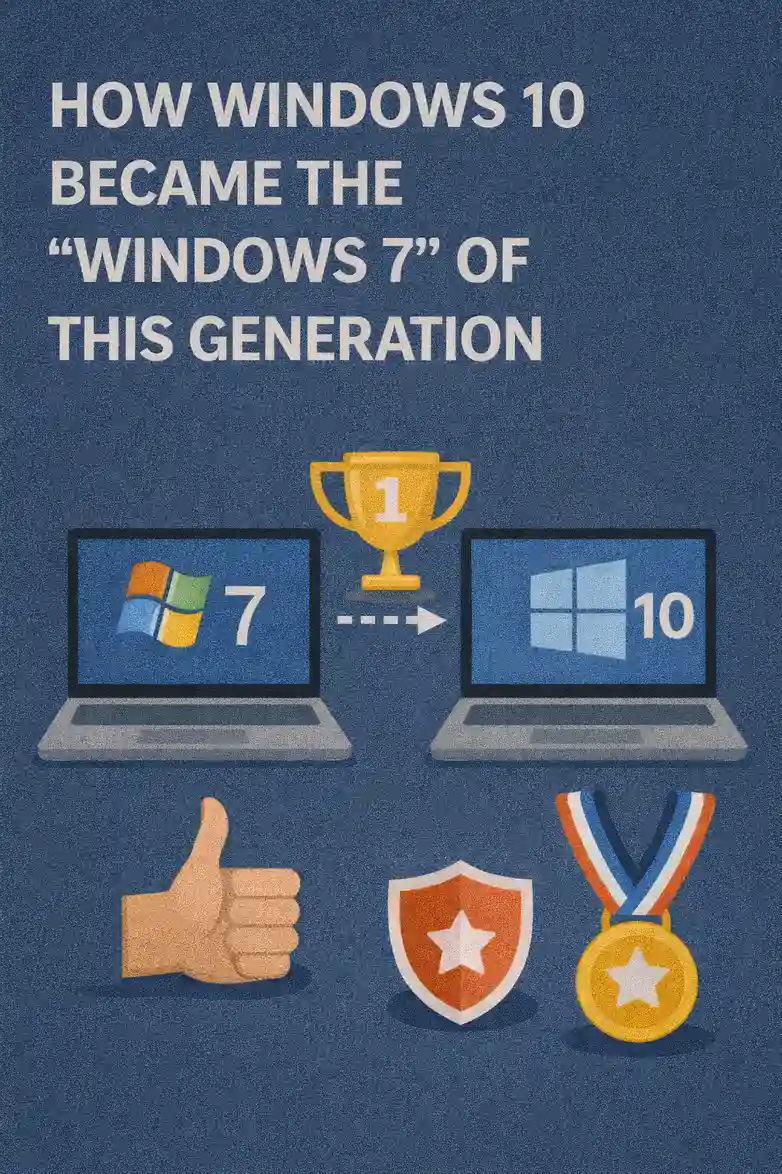
Every era of Windows has a “sticky” release—an operating system that becomes the default baseline long after its successor arrives. For a previous generation, that role belonged to Windows 7: the stable, familiar platform that people standardized on, optimized for, and resisted leaving. In this generation, Windows 10 has taken that mantle. Not because it was perfect, but because it hit the right blend of compatibility, performance, enterprise manageability, and user familiarity at the moment organizations were ready to consolidate.
For IT professionals, the “Windows 7 effect” is never about nostalgia. It’s about operational friction. It’s about the ecosystem around the OS—drivers, line-of-business apps, security tooling, management frameworks, device fleets, and the troubleshooting knowledge that accumulates over years of real deployments. When that ecosystem becomes mature enough, the OS stops being a moving target and becomes infrastructure. Windows 10 became infrastructure.
The Timing Was Perfect: A Consolidation Window After a Fragmented Decade
Windows 10 arrived into a world that had already experienced fragmentation in desktop environments. Many organizations had spent years juggling the realities of Windows 7, testing Windows 8/8.1 (often reluctantly), and managing mixed fleets that created inconsistent user experiences and inconsistent support outcomes. Windows 10 offered a clean consolidation story at a time when businesses and institutions were eager to simplify.
The consolidation wasn’t just aesthetic. It was operational. A unified Windows 10 standard reduced image sprawl, shrank the surface area of “weird issues,” and made patching models more consistent. The longer an organization ran Windows 10, the more tooling and tribal knowledge reinforced it as the default. Once that cycle starts, it becomes self-sustaining.
This is how an OS becomes the “Windows 7” of its era: it’s the platform people finally standardize on after years of change, and standardization creates inertia.
Windows 10 Hit the Sweet Spot Between Modernization and Familiarity
Windows 7 became beloved partly because it felt like a polished continuation of what users already understood, without forcing disruptive behavior changes. Windows 10 repeated that pattern. It modernized the platform, but it largely preserved the mental model of a desktop OS. The Start menu returned in a form people could recognize. Administrative workflows remained familiar. Most users could sit down and work without feeling like they needed retraining.
From an IT standpoint, this mattered more than comfort. Familiarity reduces support load. It reduces the number of “where did Microsoft move this setting” escalations. It reduces the amount of documentation you have to rewrite. It also lowers the risk of productivity dips during migrations because behavior remains close enough that users adapt quickly.
Windows 10 wasn’t static, but it was consistent enough to become a stable baseline for both users and support teams. That is the core recipe of the Windows 7 effect.
Compatibility Became a Strategic Advantage
The most practical reason an OS lingers is simple: critical software runs on it. Windows 10 benefited from a compatibility story that covered an enormous range—legacy Win32 applications, common enterprise tools, peripheral drivers, and the massive third-party ecosystem that had grown around Windows for decades.
Even when organizations wanted to move forward, compatibility testing was often the brake pedal. Vendors would certify their applications for Windows 10 first, especially in conservative verticals. Driver stacks matured. Peripheral issues were solved. And the longer Windows 10 remained dominant, the more vendors focused their support and QA cycles around it—which made Windows 10 even safer to keep.
IT professionals recognize this dynamic: the platform you can certify becomes the platform you can keep. Once Windows 10 became the “safe certification target,” it inherited the same gravitational pull Windows 7 once had.
Management and Deployment Practices Matured Around Windows 10
A “sticky” OS isn’t just popular with users; it becomes entrenched in IT operations. Windows 10 benefited from the fact that endpoint management was evolving quickly during its lifecycle. Organizations refined their approaches to deployment, patching, device compliance, and remote support—often building their workflows specifically around Windows 10’s cadence.
By the time Windows 11 arrived, many IT teams had already optimized Windows 10 images, hardened baselines, application packaging, and update rings. The environment was tuned. Changing the OS meant revisiting those assumptions and retesting everything. The default response in operations is predictable: if the current platform is stable and manageable, the business case for change must be strong.
In other words, Windows 10 didn’t just become the OS people used. It became the OS people built processes around. That is the real foundation of long-term dominance.
The Hardware Reality: Windows 10 Ran on “Everything,” and That Mattered
Windows 7 thrived partly because it ran well across a huge range of hardware. Windows 10 repeated the pattern, especially in organizations that don’t refresh devices on a short cycle. It ran on older PCs that were still operationally useful, and it supported the long tail of chipsets, storage controllers, and integrated graphics solutions found in real fleets.
When Windows 11 introduced stronger baseline requirements, it created a familiar tension: security and modern platform features versus continued usability of existing hardware. For IT pros, that tension has a budget attached. If the successor OS implies widespread hardware refresh, the default outcome is phased adoption, not immediate replacement.
Windows 10 became the “works everywhere” baseline. Once an OS earns that reputation, it becomes hard to dislodge, even when the successor is technically superior on newer machines.
Users Didn’t Fall in Love With Windows 10—They Stopped Thinking About It
The highest compliment a production OS can receive is silence. People can love features, but organizations love predictability. Windows 10 reached a point where users weren’t constantly thinking about the OS. Apps worked. Printers usually printed. VPNs connected. The basics stayed consistent.
That “invisible OS” status is exactly what Windows 7 achieved in its prime. It didn’t need to be exciting; it needed to be dependable. Once Windows 10 reached that steady state, it became the default answer to countless internal questions: Which OS should we image? Which OS should we certify? Which OS should we keep on older machines?
When an OS becomes the thing nobody wants to touch, it has effectively become the Windows 7 of its generation.
Security, Patching, and the Moment the “Windows 7 Effect” Turns Into Risk
Windows 7 eventually stopped being “the safe choice” and became “the risky legacy.” That transformation happened when the support lifecycle ended, security updates stopped, and attackers gained an advantage. Windows 10 is entering the same phase dynamic after the end of standard support in 2025.
For IT professionals, this is the key lesson: the Windows 7 effect is operationally understandable, but it has a deadline. If endpoints remain on Windows 10 without an Extended Security Updates path and without strong compensating controls, you eventually repeat the Windows 7 story in the worst way—by carrying an unsupported platform that becomes easier to exploit over time.
The fact that an OS is “comfortable” is not a security control. Comfort tends to delay migrations. Delayed migrations tend to collide with lifecycle reality. That collision is where many environments get hurt.
The Windows 11 Factor: Why the Successor Didn’t Instantly Replace the Standard
Windows 11 is not a repeat of the Windows 8 era; it offers real advantages, especially for newer hardware and modern security baselines. Yet Windows 10 persists because replacing a standard requires more than a better product. It requires an adoption path that is low-risk, low-friction, and financially reasonable.
Where Windows 11 introduced visible UX changes and stricter hardware requirements, Windows 10 remained the “don’t break my workflow” option. For organizations with long refresh cycles, mixed device fleets, or specialized apps, Windows 10 continued to be the easiest platform to keep stable at scale.
The result is a generational pattern: Windows 11 becomes the future, but Windows 10 remains the present for longer than anyone predicted—just as Windows 7 remained the present long after Windows 10 existed.
What This Means for IT Professionals in the Real World
If Windows 10 is the Windows 7 of this generation, then IT professionals should anticipate the same lifecycle arc and plan accordingly. The core job is to separate sentiment from strategy. Windows 10 can remain a stable operational baseline, but your risk posture depends on patching pathways, endpoint controls, and a structured migration timeline.
The environments that handle this well tend to do the following: keep Windows 10 in a shrinking exception group, maintain ESU coverage where needed, segment older endpoints, enforce strong identity controls, and focus upgrades where they deliver the most security and operational value. Instead of a big-bang migration, they run a steady modernization pipeline.
The environments that struggle do the opposite: they allow Windows 10 to remain the default without a timeline, assume the network will protect them, and treat lifecycle milestones as negotiable. That is how “the stable OS everyone loves” becomes “the legacy OS everyone fears.”
The Bottom Line: Windows 10 Earned Its Place, But It Can’t Stay There Forever
Windows 10 became the Windows 7 of this generation because it delivered what organizations actually need: broad compatibility, manageable complexity, stable day-to-day behavior, and years of accumulated operational confidence. It became the platform that endpoints, help desks, and deployment pipelines could depend on without constant reinvention.
But the Windows 7 story also contains a warning: a beloved OS can outstay its support window, and when that happens, comfort turns into exposure. In the coming years, the best-run IT environments will treat Windows 10 with respect for what it enabled, while also treating its long tail as a controlled transition—patched where necessary, isolated where appropriate, and steadily replaced with a modern baseline that restores a sustainable security posture.
That is how you honor the value of a stable platform without repeating the operational mistakes that stability sometimes encourages: postponement, complacency, and the slow drift into legacy risk.

 12977
12977  IT Pro