Présentation
Au cours de la dernière décennie, l'économie de l'édition numérique a fonctionné selon un principe simple : le trafic alimente les recettes publicitaires et le contenu alimente le trafic. Mais ce modèle est rapidement perturbé. De plus en plus d'outils d'intelligence artificielle, de résumés de moteurs de recherche et de transmission d'informations par chatbot donnent aux utilisateurs les réponses qu'ils veulent sans les envoyer aux sites web des éditeurs.
L'effet en aval : diminution de la vision des pages, diminution des impressions, diminution des MPC et pression généralisée sur les recettes. Bien que ce changement se soit produit rapidement, son impact va probablement durer. Les éditeurs doivent s'adapter, de manière agressive et stratégique, pour préserver la portée et les revenus de l'auditoire dans les années à venir.
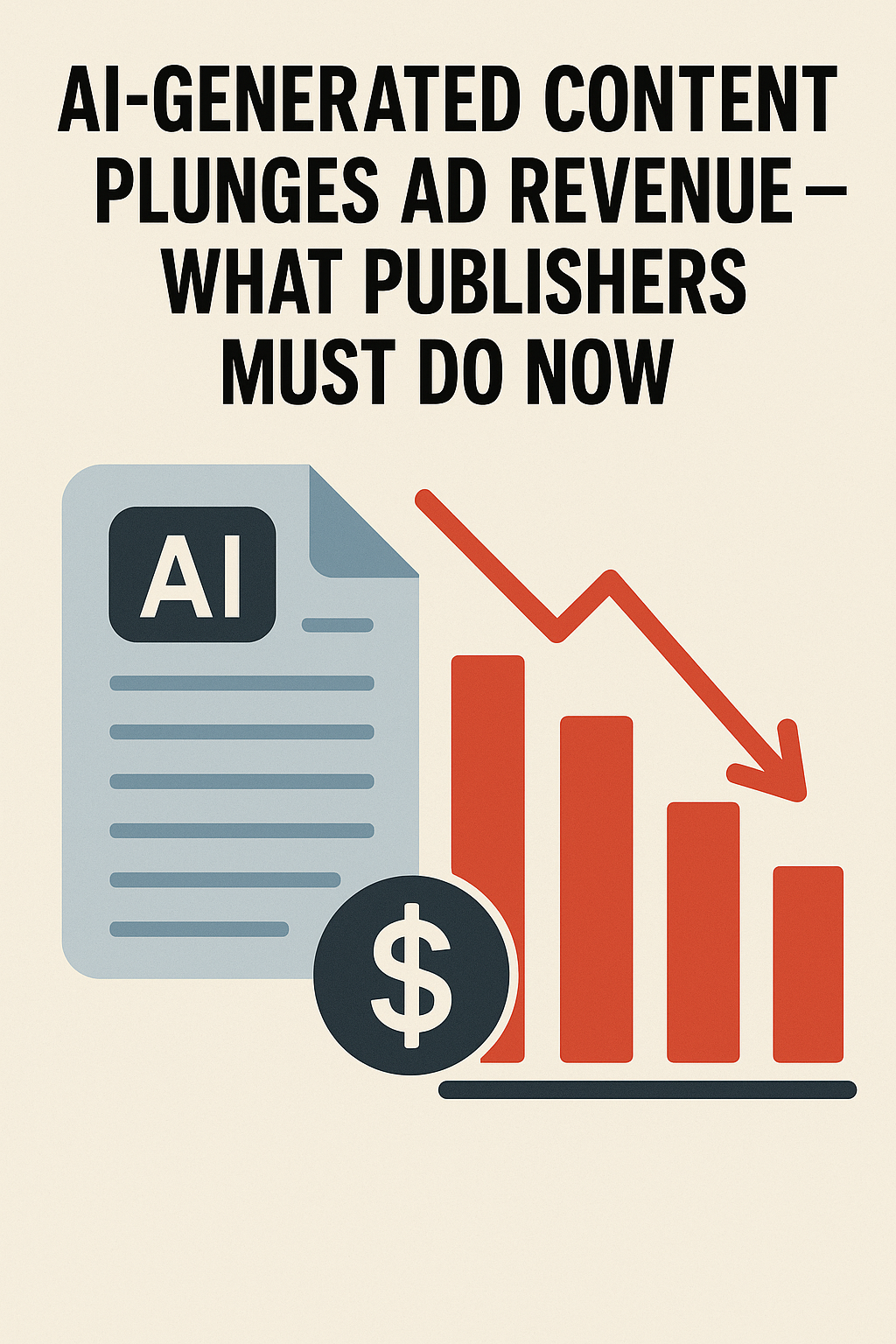
Pourquoi les recettes publicitaires sont en baisse
Les résumés AI réduisent les clics
Les moteurs de recherche et les assistants d'IA présentent maintenant des réponses directement — souvent en résumant le contenu de l'éditeur. Lorsque les utilisateurs obtiennent des informations sans cliquer, les pages vues tombent. Moins de visites signifie moins d'impressions et moins de rendement publicitaire.
Croissance massive de l'offre de contenu de faible qualité
L'IA rend la production de contenu nettement plus rapide et moins coûteuse. Cela entraîne:
-
Suroffre
-
Différence de contenu inférieure
-
Compétition plus étroite pour la visibilité
-
Moyennes CPM et eCPM inférieures sur le marché
Les annonceurs ont plus d'inventaire à choisir — ce qui fait baisser les prix.
Les plateformes deviennent les gardiens
Les éditeurs ne contrôlent plus le canal entre le contenu et le public.
Moteurs de recherche, chatbots AI, flux d'agrégation, plateformes sociales — contrôle de plus en plus:
-
Découverte
-
Portée
-
Durée de l ' attention
Cela affaiblit l'influence des éditeurs et le pouvoir de négociation.
La confiance des annonceurs diminue lorsque la qualité diminue
La montée en puissance des articles à faible intensité d'IA a créé :
-
Plus de désinformation
-
Moins d'engagement des utilisateurs
-
Problèmes de sécurité de la marque
Tous ceux qui suppriment la demande publicitaire et le prix publicitaire.
Ce que les éditeurs doivent faire maintenant
Voici une feuille de route stratégique conçue pour tous éditeur numérique cherchant à survivre à la perturbation actuelle.
1. Passage à des contenus différenciés et de grande valeur
L'ère générique, peu profonde, des articles produits en série s'effondre.
Les éditeurs doivent se concentrer sur :
-
Expertise
-
Perspectives
-
Recherche originale
-
Entretiens
-
Rapports à long terme
-
Enquêtes
-
Commentaire
-
Analyse axée sur les données
Le contenu doit fournir des résumés d'IA de profondeur ne peuvent pas remplacer complètement.
2. Diversifier les flux de revenus au-delà des annonces programmatiques
Une dépendance excessive à l'égard des annonces publicitaires est dangereuse.
Les éditeurs devraient explorer :
-
Adhésions / abonnements
-
Bulletins payants
-
Niveaux de contenu exclusifs
-
Modèles de licences
-
Contenu sponsorisé (dénomination transparente)
-
Événements / webinaires / cours en ligne
-
Produits numériques
-
Partenariats affiliés
L'objectif : la résilience des revenus.
3. Renforcer les relations directes avec le public
La dépendance sur les plateformes externes est risquée.
Les éditeurs devraient construire de manière agressive :
-
Visites directes
-
Listes de courriels
-
Opt-ins de notification poussée
-
Présence sociale des communautés
-
Répéter la lecture
-
Comportement fidèle du public
L'accès direct est l'antidote à perdre le trafic de référence de plate-forme.
4. Optimiser pour le nouvel environnement de recherche + AI
Les éditeurs devraient adapter les stratégies à la réalité selon laquelle les résumés d'IA coexistent à côté de leurs liens.
Les actions comprennent:
-
Audit des chutes de trafic par type de contenu
-
Amélioration du marquage des données et des schémas structurés
-
Augmentation de la valeur unique par article
-
Création de hubs de contenu connectés plus profonds
-
Conception de contenu où les résumés déclenchent la curiosité au lieu de la satisfaire
L'IA va racler la surface — les éditeurs doivent posséder la profondeur.
5. Protéger et monétiser la propriété intellectuelle
Les éditeurs doivent considérer leur contenu comme une propriété précieuse, et non comme du carburant jetable.
Les étapes critiques sont les suivantes :
-
Langue de licence claire
-
Application des conditions d'utilisation
-
Suivi des démolitions non autorisées
-
Négociation des possibilités d'octroi de licences dans la mesure du possible
-
Données/rapports sur les primes d'eau
-
Matériel exclusif de revêtement de la paie
-
Négocier des contrats de compensation lorsque les plateformes utilisent ou résument du contenu
Protéger d'abord — monétiser la seconde.
Une feuille de route d'action de 6 mois
Mois 1-2
Vérification et stratégisation
-
Identifier les baisses de trafic
-
Évaluer les points faibles de monétisation
-
Définir les possibilités de contenu premium
Mois 3-4
Diversifier les recettes
-
Ajouter un abonnement ou des fonctionnalités payantes
-
Lancer ou élargir une stratégie de bulletin
-
Parrainage sécurisé ou collaboration de marque
Mois 5-6
Optimiser & Échelle
-
Améliorer les fondamentaux du référencement
-
Retravailler des articles à feuilles persistantes pour la profondeur
-
Étendre les formats de contenu de longue durée
-
Améliorer et affiner la stratégie
L'occasion cachée dans la crise
La perturbation de l'IA n'est pas purement destructrice.
Elle oblige les éditeurs à:
-
Déplacer vers le haut du marché
-
Renforcer la loyauté
-
Professionaliser la monétisation
-
Formats innovants
-
Dépend moins des plateformes
-
Produire un journalisme de plus grande valeur
La prochaine génération d'édition ne sera pas construite sur le volume, mais sur la valeur.
Conclusion
La perturbation induite par l'IA remodele l'édition numérique à tous les niveaux - trafic, audience, économie publicitaire, découverte de contenu et modèles d'affaires. Les éditeurs qui continuent de s'appuyer uniquement sur des stratégies traditionnelles axées sur la publicité risquent une forte baisse des revenus.
La solution est de transformer:
-
Ce qui est publié
-
Comment le contenu gagne de l'argent
-
Comment conserver le public
-
La protection de la propriété
Ceux qui évoluent tôt se stabiliseront.
Ceux qui n'en ont pas auront du mal à survivre.

 12985
12985  IT Pro